
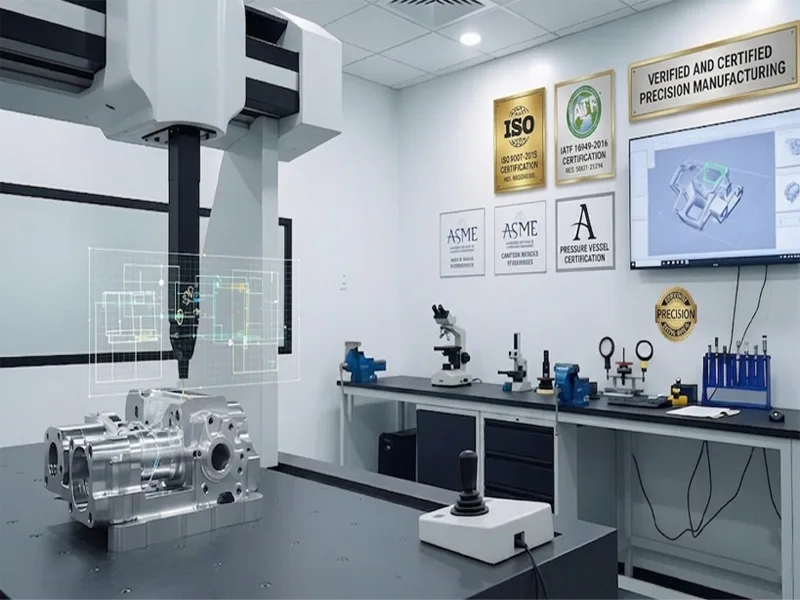
A precision metal parts manufacturer needs to have important quality certifications. These certifications prove the company is reliable and follows rules. Meeting international standards like ISO 9001 or AS9100 helps people trust the company. It also makes it easier to track products.
- Quality certifications mean there are fewer mistakes in design and the making of parts.
- They help companies pass safety checks faster.
- Companies can handle risks better and keep good records.
- Products work the same way every time and can be trusted.
- Certifications make it possible to sell products in the U.S. and other countries.
Picking a certified company lowers risk and gives good results.
Key Takeaways
- Certifications like ISO 9001 and AS9100 mean a manufacturer follows strict rules for quality and safety. Certified manufacturers are less risky. They make products that work well every time. ISO 13485 is very important for medical device makers. It helps them follow safety rules and laws. ISO 14001 helps companies protect the environment. It also brings in customers who care about nature. IATF 16949 is needed for car parts. It ensures that quality and safety checks are strong. Always check if a manufacturer’s certifications are up to date. Ask suppliers about their certifications and how they check quality. This helps you trust them more. Manufacturers need regular checks and updates to keep their certifications.
Table of Contents
Essential Quality Certifications for Precision Metal Parts Manufacturers
ISO 9001: Quality Management
Standardized Processes
ISO 9001 is the main quality certification for making precision metal parts. This standard says companies must write down each step they take. They do this from the first quote to the last check. These written steps help stop mistakes and make sure every part is made right. ISO 9001 helps with quality control by making each step clear. This way, products always match what is needed. Quality stays the same for every order.
Tip: Companies with ISO 9001 like to use the same steps every time. This helps them send the right parts on time, every time.
A table below shows why ISO 9001 is important in precision manufacturing:
| Certification Type | Description | Importance |
|---|---|---|
| ISO 9001:2015 | Written quality steps | Keeps the quality the same at every stage |
| Process Control | Strong process control | Makes sure production stays at a high level |
| Inspection Standards | Same inspection rules | Makes products safe and reliable |
| Traceability | Full traceability | Needed for aerospace, medical, automotive, and defense |
| Documentation | Correct, approved paperwork | Needed for the following rules and keeping quality |
Customer Satisfaction
ISO 9001 cares about customer happiness. It tells companies to listen to feedback and get better. This certification helps companies give customers what they want. When a company uses ISO certifications, customers know they will get good quality every time. This trust is important for long partnerships in precision machining.
AS9100: Aerospace Quality
Aerospace Requirements
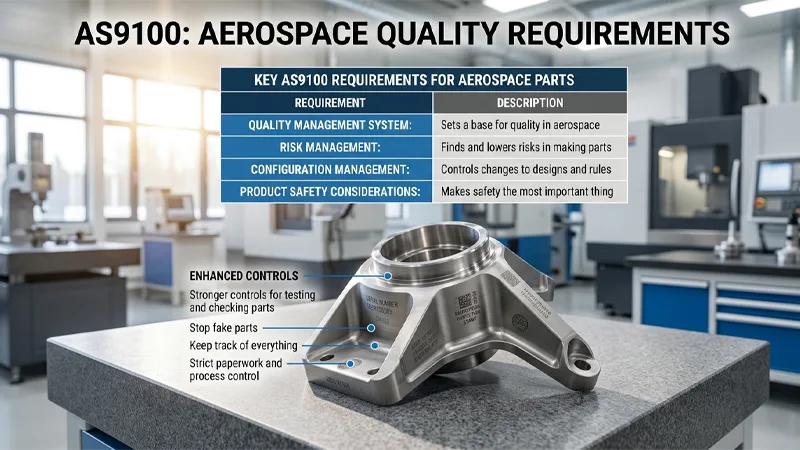
AS9100 is the quality standard for the aerospace industry. It uses ISO 9001 and adds more rules for making aerospace parts. Companies need a quality system that covers risk, changes to designs, and product safety. These extra steps make sure every part meets what aerospace clients need.
Here is a table that shows what AS9100 asks for in aerospace parts:
| Requirement | Description |
|---|---|
| Quality Management System | Sets a base for quality in aerospace |
| Risk Management | Finds and lowers risks in making parts |
| Configuration Management | Controls changes to designs and rules |
| Product Safety Considerations | Makes safety the most important thing |
Enhanced Controls
AS9100 needs stronger controls for testing and checking parts. Companies must stop using fake parts and keep track of everything. This standard also needs strict paperwork and process control. These rules help companies meet the tough needs of aerospace, where safety and trust matter a lot.
Note: Aerospace clients trust AS9100-certified suppliers to meet military rules and give parts that pass hard tests.
ISO 13485: Medical Devices
Regulatory Focus
ISO 13485 is the main quality standard for making medical devices. This certification helps companies follow both customer and government rules. It uses a step-by-step model to make quality better and keep things safe. ISO 13485 is known around the world and helps companies follow global rules.
- ISO 13485 gives a clear plan for following safety and quality rules.
- Certification shows a company cares about quality management, which is needed for following the rules.
- The standard helps lower risks of recalls or problems with the law.
Risk Management
ISO 13485 cares a lot about risk management. Companies must find and control risks at every step. This helps stop problems before they reach customers. By using ISO 13485, companies can take their steps better and meet the tough rules of the medical field.
- Keeps the best quality practices known around the world for medical devices.
- Helps companies follow many different global rules and needs.
- Gives a plan to check and improve steps to meet all rules.
Companies with ISO 13485 certification show they can make safe, reliable parts for medical use. This helps customers and rule-makers trust them.
ISO 14001: Environmental Management
Sustainability
ISO 14001 helps companies lower their impact on the environment. This certification gives a plan for using materials and energy better. It also helps companies follow environmental laws. Companies with ISO 14001 often save money by wasting less. Many customers want to work with companies that care about the planet.
- ISO 14001 is important for companies that want good sustainability ratings.
- It helps companies get noticed by groups like the Green Building Council of Australia (GBCA) and earn ‘Green Star Buildings’ ratings.
- It is needed for other certifications, such as GECA and SSA, which are important for green building projects.
Tip: ISO 14001 proves a manufacturer really works to protect the environment.
Environmental Impact
ISO 14001 certification helps companies control their effect on the environment. It helps them find ways to cut pollution and use safer materials. This certification also makes it easier to follow rules in different places. By making their Environmental Management System (EMS) better, companies can make their work cleaner and safer for everyone.
IATF 16949: Automotive Quality / Automotive Standards
Automotive Standards
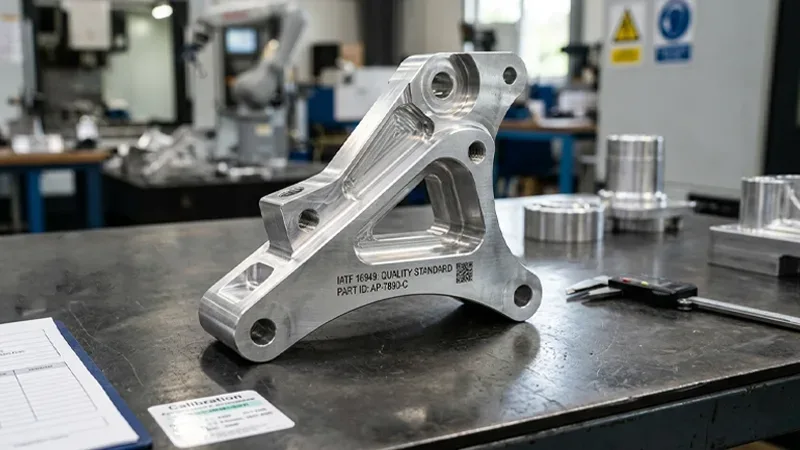
IATF 16949 is the main quality standard for car parts. This certification uses ISO 9001 rules and adds more steps for car makers. It makes sure every part meets tough safety and quality rules. Car companies trust suppliers with IATF 16949 because it covers all the important checks.
| Requirement Type | Details |
|---|---|
| Compliance with automotive requirements | Makes sure companies follow PPAP, APQP, and customer-specific rules. |
| Supplier selection criteria | Must include quality system (ISO 9001), process skills, past work, and technical skill. |
| Control of external providers | Includes checking supplier performance, plans for incoming parts, and checking activities. |
| Product safety requirements | Important parts must meet special safety rules. |
| PPAP & APQP | Needed for all new or changed parts to keep quality high. |
Continuous Improvement
IATF 16949 asks companies to always get better. It tells them to check their work, fix problems, and find new ways to improve. The standard also says companies must watch their suppliers closely. They must make sure every part, even from other companies, meets the same high standards. This focus on getting better helps stop mistakes and keeps customers safe.
- Clause 8.4.1 covers general rules for outside products and materials.
- Clause 8.4.2 explains how to pick and check suppliers.
- Clause 8.4.3 lists what information must go to suppliers, like order details.
ITAR: Defense Compliance
U.S. Regulations
ITAR stands for International Traffic in Arms Regulations. This certification is needed for companies that make defense or military parts. ITAR rules come from the U.S. government. They control who can see and work with defense designs and data. Companies must do more than just sign up. They must build security into every part of their work. This means controlling who enters their buildings and keeping important data safe. Staff must get regular training on ITAR rules to keep the company in compliance.
- ITAR compliance means following strict security steps every day.
- Companies must control who enters and protect all ITAR information.
- Employees need regular training to understand and follow ITAR rules.
Note: Certifications like AS9100 and ISO 9001:2015 also help show that a company meets high standards for quality and traceability, which is important for defense projects.
Export Controls
ITAR also controls how companies share and ship defense parts and information. If a company loses its ITAR registration, it cannot apply for export licenses. It cannot share technical data, like CAD files, with unregistered suppliers. Shipments may be delayed or stopped by U.S. Customs. Breaking ITAR rules can lead to losing export rights or facing legal penalties.
| Consequence | Description |
|---|---|
| Export License Applications | Cannot be sent to the DDTC if registration lapses. |
| Sharing Controlled Technical Data | Not allowed to share CAD files and drawings with unregistered suppliers. |
| Availability of ITAR Exemptions | Exemptions are not available if registration is not current. |
| Shipment Issues | Shipments may be delayed or taken by U.S. Customs and Border Protection. |
| Legal Penalties | Companies can lose export rights or face civil or criminal penalties. |
- Experience with mission-critical parts helps companies handle defense projects.
- Knowing the special needs of the defense industry makes a supplier more reliable.
CNC Machining Certifications
Industry-Specific Standards
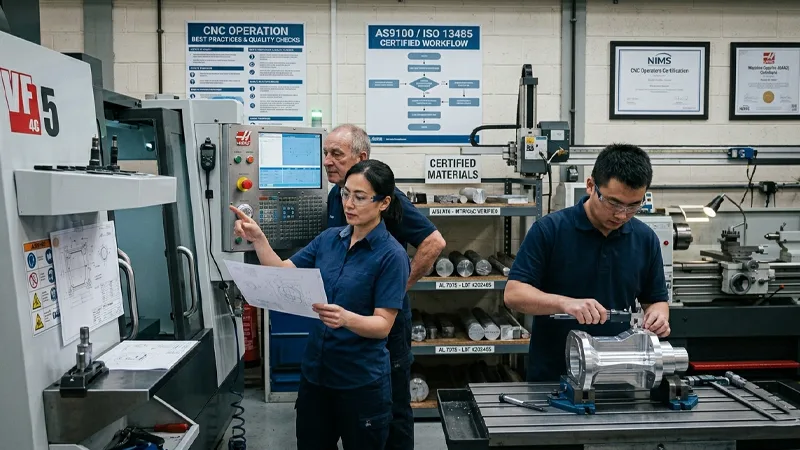
CNC machining is very important for making precision metal parts. Manufacturers need special certifications to show they are skilled and trustworthy. These certifications prove that a company can meet tough industry rules and give good results every time.
The table below shows important certifications for CNC machining in precision metal parts manufacturing:
| Certification Type | Description |
|---|---|
| NIMS CNC Operators Certification | Validates essential competencies in CNC operation, including blueprint reading and quality checks. |
| Machine-Specific Certifications | Offers specialized training tailored to specific machine brands or models. |
| ISO 9001 | An internationally recognized standard for quality management systems, ensuring consistent output. |
| CNC Programming Certifications | Validates expertise in CAM software operation and toolpath creation. |
| Material Certifications | Includes MTRs, CoCs, and industry-specific standards like AS9100 and ISO 13485. |
NIMS CNC Operators Certification shows a machinist can read blueprints, use machines, and check quality. Machine-specific certifications teach about certain brands or models, so operators know each machine well. ISO 9001 covers everything from planning to checking the final part. It helps keep every part at the same high quality. CNC programming certifications show a person can use CAM software to make toolpaths for hard shapes. Material certifications, like MTRs and CoCs, prove that the right materials are used for each job.
Tip: Picking a manufacturer with these certifications helps make sure every precision part meets industry rules and what customers want.
Precision Assurance
Precision is the main goal in CNC machining. Certifications help companies reach and keep this goal. They set clear rules for every step, from setting up machines to checking the final part.
- CNC machines do quality checks during work on every shape.
- Quality control experts look at and measure the part to make sure it matches the 3D model.
- Written work rules and steps are used to stop mistakes.
AS9100 and ISO 9001 certifications help keep process control strong. These standards also let companies track every part from start to finish. This control means customers get parts that fit and work right, every time.
Manufacturers use these certifications to build trust with clients. They show the company can do hard jobs and give precise results. When a manufacturer follows these rules, customers know they will get good, reliable metal parts for any project.
Note: Precision in CNC machining does not happen by luck. It comes from strict rules, skilled workers, and always caring about quality at every step.
Why Quality Certifications Matter
Product Quality and Consistency
Product Quality and Consistency
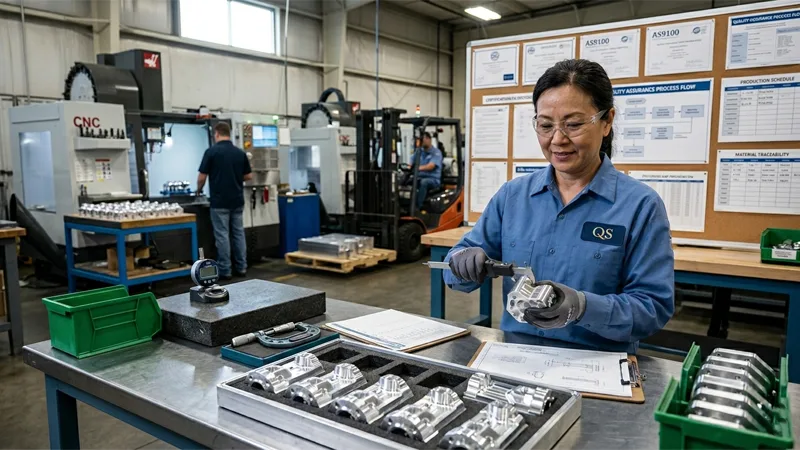
A precision metal parts manufacturer must make parts that fit tight rules every time. Quality certifications help companies set up a system to control every step. This system checks that each part matches the design, even if the shape is hard or the rules are strict.
- Sets up a clear way to manage quality so that parts are always the same.
- Helps companies get better and match what customers want.
- Shows customers the company cares about making good, reliable parts.
Quality control starts with picking the right materials. It keeps going through every step, like machining, testing, and checking. The table below shows how certifications help stop mistakes in making parts:
| Evidence Description | Link |
|---|---|
| Material certification makes sure metals are safe and strong, which helps stop mistakes in making parts. | Source |
| Quality assurance sets up a system to stop mistakes before they happen, making sure parts are always made the same way. | Source |
Certifications help companies focus on quality. This makes sure every part fits the rules and passes all tests.
Regulatory and Industry Compliance
Companies that make parts for planes, cars, and medical tools must follow strict rules. Quality certifications show a company can meet these rules. They help companies prove every part matches industry standards and passes all tests.
- Our quality system meets top industry rules and follows all laws.
- Certifications show customers that every part meets strict quality and tracking rules.
- Certifications make sure companies follow quality systems, which are needed in industries with lots of rules.
- They help track and check parts, which keeps products safe.
- Following rules like UL and ISO can help companies pass checks and audits.
- Certifications like ISO 13485 and FDA registration show a company wants to meet tough industry rules.
- These certifications help companies make parts with care and accuracy, which is important for following rules.
Making parts for planes needs full tracking and paperwork. Making medical devices must follow global rules. Certifications help companies pass checks and keep their good name.
Customer Confidence and Risk Reduction
Certifications help customers feel safe. They show a company can meet high standards for quality, accuracy, and safety. This matters when picking a supplier for important jobs.
Certifications like ISO 9001, IATF 16949, ISO 26262, and ISO 14001 give a clear plan for quality and following rules. This is important for car makers who need good lighting parts. Having all four certifications shows a supplier can do the job and lowers the risks of mistakes or breaking rules.
J.W. Speaker’s four certifications show how keeping certifications at every place makes programs stronger and lowers risks for safety lighting parts. This way, suppliers have good control over their work, which is needed in today’s car industry.
Customers can trust certified companies to make parts that fit all rules, pass every test, and follow every law.
Certifications help stop product recalls, failed checks, and expensive mistakes. They build trust and help companies work together for a long time.
Understanding ISO Certifications
ISO 9001 Overview
ISO 9001 is a well-known quality standard for making things. This certification means a company follows strict rules when making products. People from outside the company check if the company uses the best steps. If a manufacturer has ISO 9001, every step is planned and written down. This helps keep quality high and stops mistakes.
A company with ISO 9001 uses simple steps for each job. Workers know what to do and how to check their work. Customers can trust that every part will be made right. The company also tries to get better all the time. This standard helps track every part from start to finish.
ISO 9001 helps companies make customers happy by making sure products are safe, work well, and arrive on time.
ISO 13485 Overview
ISO 13485 is the main quality standard for medical device makers. This certification is important for companies that make parts for hospitals or clinics. It sets rules for safety, risk, and following laws. Companies must show they control every step, from design to shipping.
This standard helps lower the chance of recalls or legal problems. It also makes sure every product is safe for patients. ISO 13485 says companies must keep good records and check their work often. This focus on quality helps customers and rule-makers trust the company.
ISO 14001 Overview
ISO 14001 is the standard for caring about the environment. It helps companies lower their impact on the planet. This certification gives a plan for using resources well and producing less waste. Companies with ISO 14001 follow rules to protect air, water, and land.
Many customers want to work with companies that care about nature. ISO 14001 shows a company is serious about being green. It also helps companies save money by using less energy and materials.
| Certification | Description |
|---|---|
| ISO 9001:2015 | Meets world quality standards for process control and is getting better. |
| ITAR Compliance | Makes sure companies follow rules when needed. |
- ISO 9001 keeps the steps the same and organized.
- Makes it easy to track and check parts.
- Helps companies get better and keep customers happy.
ISO certifications help companies meet international rules for quality and follow laws. They show customers and partners that a manufacturer cares about doing things right. These certifications are important for building trust and keeping high standards in precision metal parts manufacturing.
Comparing ISO Certifications
Manufacturers see different kinds of ISO certifications. Each one is important for a different reason. Knowing the differences helps companies pick the best one for them.
The table below shows what each ISO certification is about and what matters most:
| Certification | Focus Area | Key Considerations |
|---|---|---|
| ISO 9001 | Universal Quality Management System | General quality management principles for all industries |
| ISO 13485 | Medical Device Quality Management | Patient safety, regulatory compliance, design controls, traceability |
| ISO 14001 | Environmental Management | Environmental impact, sustainability, and environmental regulations |
ISO 9001 can be used in many types of businesses. It helps companies make sure their products are good. This system checks that products match what customers want. ISO 13485 is for companies that make medical devices. It has extra rules for keeping patients safe and following health laws. Companies must keep track of every part and write down what they do. ISO 14001 is about helping the environment. It teaches companies to use less and pollute less.
The right ISO certification depends on what a company does. If a company makes medical parts, it should get ISO 13485. If a company wants to show it cares about nature, it should get ISO 14001. Many companies start with ISO 9001 for quality. Some companies use more than one certification to cover everything.
Tip: Customers and partners like to see these certifications when they choose a supplier. Having the right ISO certification helps people trust the company and shows it follows good rules.
Every ISO certification helps companies get better. They make clear rules for quality, safety, and the environment. These rules help companies follow laws, pass checks, and keep customers happy.
Certification Impact on Supply Chain Quality
Supplier Qualification
Certifications are very important when picking suppliers for precision metal parts. Companies use these certifications to choose who can join their supply chain. Some industries, like aerospace, need special certifications before a supplier can be picked. For example, NADCAP certification is needed for big aerospace companies. This rule controls who can sell parts and makes sure only top suppliers are chosen.
- NADCAP certification is required for big aerospace companies, so suppliers need it to sell parts.
- The need for certification grew from 47% to 76.12% between 2023 and 2024, showing that companies want better process controls.
- NADCAP checks how parts are made, making sure they are reliable and better than what basic certifications can do.
Certifications like ISO 9001, AS9100, and IATF 16949 help companies see if a supplier can follow strict quality and safety rules. These certifications show that a supplier uses good systems and follows industry rules. This helps companies trust new suppliers and lowers the chance of problems in the supply chain.
Tip: Always ask suppliers about their certifications before you start working with them. This step can help you avoid big mistakes later.
Traceability and Documentation
Certifications help companies keep track of every part and material in the supply chain. They make companies write down where materials come from and how parts are made. This is called traceability. It helps companies find and fix problems fast.
- Certifications check that materials are right and come from good places.
- They make sure companies follow customer rules, which helps with quality.
- Good traceability helps companies answer customer questions faster.
- It also helps fix problems quickly and builds better relationships with customers.
When a company can trace every part, it can answer questions fast. If something goes wrong, the company can find the problem and fix it quickly. Good records also help companies pass checks and follow the law. This makes customers trust the company and keeps the supply chain strong.
Continuous Improvement
Certifications do more than set rules—they help companies get better over time. ISO 9001:2015, for example, builds a system that helps companies do things right and make customers happy. This system tells companies to always look for ways to improve.
Velocity Metalworks, a certified company, uses ISO 9001:2015 to show it wants to get better and reach high goals. KMC Manufacturing has both ISO 9001 and IATF 16949 certifications. These certifications prove the company works hard to improve quality and traceability for every part.
A culture of continuous improvement means companies do not stop at “good enough.” They check their work, learn from mistakes, and find new ways to do better. This helps keep the supply chain strong and helps companies stay ahead of others.
Note: Continuous improvement is not just a goal—it is a rule for certified companies. This way of thinking leads to better products, fewer mistakes, and happier customers.
Verifying Manufacturer Certifications
It is very important to make sure a precision metal parts manufacturer has real certifications. These certifications show the company follows strict rules for quality and safety. But sometimes, certificates are old or not real. Buyers need to know how to check and prove these are true.
Checking Certification Validity
Manufacturers might put certificates on their websites or in their offers. Still, you should check if these papers are real and not expired. There are a few ways to do this:
| Method | Description |
|---|---|
| Quality Management Systems | Makes sure everything is done well from start to finish. |
| Material Testing | Checks if the metal meets the right chemical and strength rules. |
| First Article Inspection | Shows the company can make the same part again and again. |
Buyers should look at the certificate’s ID number and when it was given. You can go to the official website or database of the group that gave the certificate to check if it is still good. If you are not sure, you can call or email the certifier to ask.
Tip: Always check that the supplier’s name and address match what is on the certificate.
Reviewing Certification Documents
Looking at the right papers is needed to make sure a manufacturer’s certification is real. The most important papers are:
| Certification Type | Description |
|---|---|
| CMMC Level 2 Certification | Used by the Department of Defense. |
| AS9100D | For aerospace quality management. |
| ISO 9001:2015 | For quality management systems. |
| ITAR Registration | For the following export rules. |
| ISO:9001 | Shows all the needed papers for industry rules. |
| AS9100 | Shows all the needed papers for industry rules. |
Ask the supplier for these papers so you can check if they are correct. Look for stamps, signatures, and when the papers expire. If the papers are new, it means the manufacturer is still following the rules.
Note: Ask for new certifications every year to make sure you do not use old or fake papers.
Supplier Evaluation Questions
Asking good questions helps you know if the supplier really follows the rules. Here are some questions to ask:
- What is the certificate’s ID number, and when was it given?
- Can you give the legal name, address, and what is covered on the certificate?
- Is the certificate on the certifier’s website or database?
- Who gave you the certificate?
- How often do you get new certifications?
- Can you show the results from your last audit?
- Do you follow rules like ISO, FDA, GDPR, or HACCP?
- Can I talk to the certifier to check?
These questions help you see if the supplier cares about quality and being honest. They also make sure the manufacturer’s certifications are real and not expired.
Tip: A good supplier will answer these questions and give you the papers fast.
Checking certifications keeps your business safe and helps you work with trusted companies in the precision metal parts field.
Choosing a Certified Precision Metal Parts Manufacturer
Matching Certifications to Industry Needs
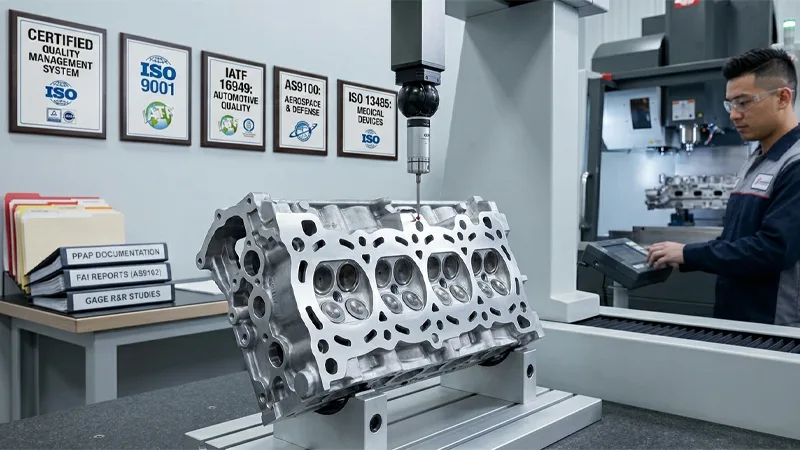
Picking the right manufacturer starts with knowing which certifications matter for your industry. Certifications are not just fancy papers. They show a company that follows strict rules every day. Each certification covers a different part of making things. ISO 9001 is for general quality management. AS9100 is needed for making aerospace parts. IATF 16949 is important for car parts. ISO 13485 is best for medical devices. If you know what each certification does, you can make smart choices.
| Certification | Industry Focus | Importance |
|---|---|---|
| ISO 9001 | General | Makes sure quality stays steady in manufacturing |
| AWS | Welding | Shows skill in welding and making metal parts |
| AS9100 | Aerospace | Sets rules for precision work in aerospace |
Tip: Always pick the certification that fits your project. This helps you get safe and high-quality parts.
Assessing Ongoing Compliance
A certified manufacturer must do more than just get a certificate. They must keep following the rules and prove it every day. You can check if they do this by looking at their quality control steps. Here are some ways to check:
- Visual inspection looks for mistakes.
- Dimensional inspection measures part sizes.
- First Article Inspection (FAI) checks that the first part is correct.
- Production Part Approval Process (PPAP) shows that the supplier can make enough parts.
- Gauge R&R checks if measurements are always the same.
- Corrective and Preventive Action (CAPA) fixes and stops problems.
- Final inspection tests the finished part.
- Validation testing checks if the part works in real life.
- Documentation and traceability keep records for checks.
- Feedback loops and continuous improvement use data to get better.
Note: Regular checks and records prove a manufacturer cares about quality and accuracy.
Building Reliable Partnerships
Working with your manufacturer is more than just buying parts. It means teaming up with people who value trust and clear talk. Certified manufacturers usually have better ways to track, report, and fix problems. They can handle changes fast. This makes your supply chain stronger and safer.
- Pick a manufacturer with the right certifications for your industry.
- Make sure they keep up with audits and updates.
- Build a relationship based on trust and honest feedback.
A good partner helps you meet deadlines, pass checks, and deliver safe products. This is very important in fields like aerospace, where every part must meet tough rules.
A precision metal parts manufacturer needs to have the right certifications. These certifications show the company follows important rules for quality and safety. You should always make sure a supplier’s certifications are up to date. Ask for their papers and look at them closely. Use certifications to help you pick the best supplier. This will help you get good parts and avoid problems.
Pick suppliers with strong certifications
Look at certification papers
Ask questions about the following rules
FAQ
ISO 9001 is the top certification. It proves the company uses good quality management. This helps make sure every part fits what customers want.
Most certifications must be renewed every three years. Some need audits every year. Always check when the certificate expires.
These industries have strict rules for safety and quality. Certifications like AS9100 and ISO 13485 show the manufacturer can meet these tough rules.
What happens if a manufacturer does not have the right certification?
The company might not follow industry rules. This can cause failed checks, rejected parts, or legal trouble.
Yes, they are important. ISO 14001 shows the company cares about the planet. Many customers like suppliers with this certification.
Certifications can promise no mistakes. They help lower errors and make quality better, but regular checks are still needed.
- Certificate copy with the company name
- Dates for when it starts and ends
- Certifying the group’s contact information