
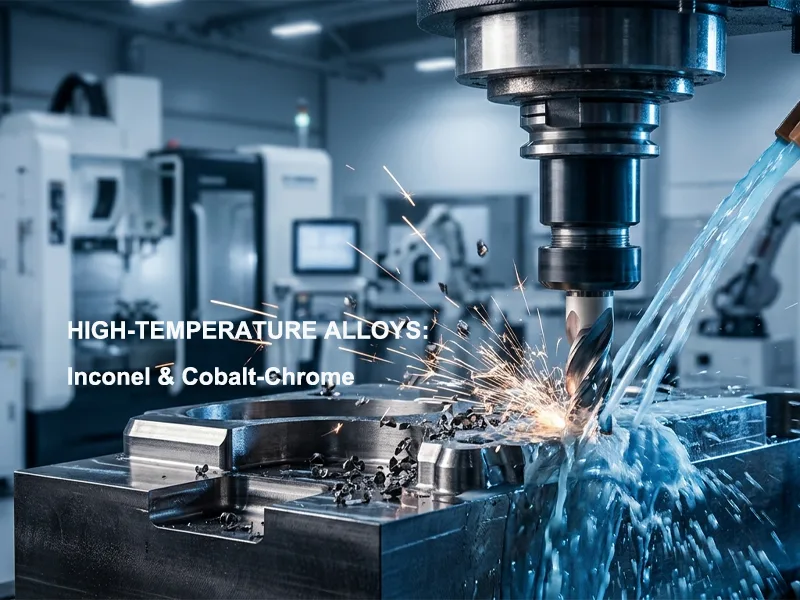
In the highly competitive landscape of custom metal parts manufacturing, high-temperature alloys machining demands meticulous process engineering, state-of-the-art multi-axis equipment, and rigorous pre-production planning. Product design engineers and mechanical engineers recognize superalloys like Inconel and cobalt-chrome for their exceptional mechanical properties, but these exact same properties pose significant manufacturing hurdles. Because these materials possess immense tensile strength and exhibit notoriously poor thermal conductivity, the thermodynamic dynamics at the cutting zone become extreme during the material removal process.
Furthermore, these alloys are highly susceptible to rapid strain hardening (work hardening) during the material removal process. Consequently, CNC operators and process engineers frequently encounter accelerated tool wear, catastrophic tool failure, and compromised surface integrity if the machining parameters are not perfectly optimized.
To successfully machine these superalloys and custom metal parts, a specialized approach to tooling is mandatory. Cutting tools must feature ultra-sharp, honed cutting edges, while advanced Physical Vapor Deposition (PVD) and Chemical Vapor Deposition (CVD) coatings are essential to mitigate the formation of built-up edges (BUE) and thermal degradation.
Furthermore, the entire machining envelope—from the foundation of the machine tool to the spindle and toolholders—must be exceptionally rigid to eliminate harmonic vibrations and enhance the dimensional quality of the final workpiece. This uncompromising approach to precision and quality control is absolutely critical for our clients in the aerospace, defense, and medical device industries, where component failure is not an option and part-to-part repeatability is strictly mandated by standards such as AS9100 and ISO 13485.
Key Takeaways
- Strategic Process Engineering: Machining Inconel and cobalt-chrome requires advanced CAM programming, rigid workholding, and the meticulous selection of premium cutting tools.
- Optimized Kinematics: Implementing precise feed rates and utilizing multi-pass trochoidal milling strategies are essential to distribute cutting forces evenly and avoid the rapid tool degradation associated with single, heavy-depth passes.
- Advanced Thermal Management: Utilizing high-pressure, through-spindle coolant delivery systems is non-negotiable for evacuating chips efficiently and managing the extreme localized heat generated at the shear zone.
- Proactive Tool Maintenance: Implementing rigid tool life management protocols and inspecting cutting edges via digital microscopes ensures dimensional accuracy and prevents surface anomalies.
- Material-Specific Substrates: Selecting the optimal carbide, ceramic, or Polycrystalline Cubic Boron Nitride (PCBN) substrates, paired with advanced TiAlN or AlCrN coatings, drastically extends tool longevity in high-temperature environments.
- Dynamic Parameter Adjustments: Continuously monitoring and fine-tuning cutting parameters (speeds, feeds, and depth of cut) guarantees process stability and repeatable tight tolerances.
- Real-Time Process Monitoring: Integrating acoustic emission sensors and spindle load monitoring allows for the early detection of tool wear, preventing catastrophic failures during unmanned runs.
- Adaptive Control Technology: Employing adaptive machining systems that automatically dynamically adjust feed rates based on real-time spindle load feedback ensures optimal cutting conditions regardless of material inconsistencies.
Table of Contents
Core Best Practices for High-Temperature Alloys Machining
Direct Approach to Machining
Successfully machining nickel-based superalloys (like Inconel 718 and 625) and cobalt-chromium-molybdenum (CoCrMo) alloys requires a deliberate, highly engineered methodology. These high-temperature, corrosion-resistant alloys present severe metallurgical challenges even to the most veteran CNC machinists and manufacturing engineers. Achieving elite custom metal parts manufacturing standards requires a profound understanding of the material’s microstructure and the implementation of intelligent, data-driven CNC programming techniques.
Operators and process engineers must collaborate to select the exact micro-grain carbide substrates, calculate the precise surface footage (SFM) and chip loads, and architect a robust thermal management strategy. The fundamental physics of cutting these metals means that brute force will always fail; instead, a calculated approach that respects the alloy’s shear strength and thermal characteristics is required.
The following technical table outlines foundational techniques that systematically reduce tool wear and guarantee superior surface finishes (Ra/Rz) when processing custom metal parts:
| Machining Technique | Engineering Description & Application |
|---|---|
| Optimized Feed Rates (fz) | Strictly controlled chip loads are essential to manage cutting forces and thermal shock. Slower, highly consistent feed rates prevent rapid flank wear when milling or turning hard alloys like Inconel and cobalt-chrome. |
| Dynamic Multi-Pass Milling | Utilizing high-efficiency milling (HEM) or trochoidal toolpaths with shallow radial step-overs spreads the mechanical load across the tool’s flute length, vastly improving tool life and generating a superior surface finish. |
| High-Pressure Coolant (HPC) | Utilizing through-spindle coolant at pressures exceeding 1000 PSI (70 Bar) shatters the vapor barrier at the cutting zone, rapidly evacuating chips and quenching the tool to preserve metallurgical surface integrity. |
| Staggered Tooth Thread Mills | Utilizing asymmetrical or staggered tooth geometries during thread milling drastically reduces cutting pressures and harmonic chatter, leading to prolonged tool life and superior thread profiles (Class 3B tolerances) . |
Machinists must absolutely prioritize spindle rigidity, rigid workholding, and the use of pristine, sharp cutting edges. Multi-pass cutting strategies effectively distribute the immense mechanical stresses, preventing sudden tool fractures. High-pressure coolant delivery is the ultimate defense against thermal damage and chip recutting. Furthermore, specialized tools like staggered tooth thread mills are vital for mitigating the harmonic chatter that typically ruins surface finishes in deep bores. Adhering to these foundational engineering principles forms the bedrock of successful high-temperature alloy machining.
Actionable Strategies Overview
To elevate your machining operations from acceptable to exceptional, a comprehensive and forward-thinking engineering plan is required. Implementing advanced 5-axis CNC strategies and sophisticated thermodynamics management is paramount when dealing with the uncompromising nature of Inconel and cobalt-chrome. CNC operators and quality assurance teams must vigilantly monitor thermal gradients, rapid tool degradation, and chip evacuation efficiency to ensure dimensional stability and pass rigorous CMM (Coordinate Measuring Machine) inspections.
| Advanced Cooling Strategy | Effect on Thermal Management & Process Stability |
|---|---|
| Dual-Closed-Loop Chiller Systems | Maintains ambient machine kinematics and keeps the workpiece temperature incredibly stable, typically within a strict tolerance of ±2°C, preventing thermal expansion errors. |
| Through-Tool Internal Coolant | Forces high-pressure cutting fluid directly through the core of the drill or endmill, extracting heat directly from the primary shear zone and cutting edge. |
| Real-Time Thermal Compensation | CNC controllers utilize algorithms to adjust for the thermal growth of the spindle and ball screws, ensuring absolute volumetric accuracy and size control during ultra-precision finishing passes. |
Modern multi-axis CNC machining centers leverage dual-closed-loop cooling to stabilize the thermal expansion of the machine casting and the workpiece. Internally cooled tooling acts as a direct heat sink, drawing devastating temperatures away from the delicate cutting edges. Furthermore, real-time thermal regulation within the CNC control ensures the custom metal part remains precisely within tolerance during crucial final finishing operations.
Process engineers can implement the following actionable tactics to exponentially increase tool life and maximize material removal rates (MRR):
- Upgrading to specialized geometries, such as TiAlN-coated micro-grain carbide drills featuring parabolic flutes, dramatically improves chip evacuation and tool longevity in deep-hole drilling applications.
- Elevating through-spindle coolant pressure to a minimum of 80 bar (1160 PSI) aggressively clears hardened chips and provides superior quenching at the deformation zone.
- Conservatively limiting cutting speeds to approximately 35 Surface Feet per Minute (SFM) and feed rates to 0.002 Inches Per Revolution (IPR) substantially mitigates severe cutting forces and localized heat generation during turning operations.
Implementing these precise parameter adjustments can yield a staggering 300% increase in tool life and refine surface roughness parameters from a rough 3.2 µm down to a mirror-like 0.8 µm Ra. Other vital strategies include strategically aiming high-pressure coolant nozzles to dynamically break chips and flood the localized cutting zone. Cryogenic machining, utilizing sub-zero liquid nitrogen, is rapidly becoming a standard procedure in top-tier aerospace metal parts manufacturing facilities to freeze the cutting zone. These aggressive thermal management strategies are essential to halt micro-structural damage to both the cutting tool and the aerospace workpiece.
Engineering Tip: Always utilize a digital microscope or optical comparator to inspect your cutting tools for micro-chipping or flank wear, and proactively adjust your CAM toolpaths if anomalies are detected. Even the most minute, fractional adjustments in spindle RPM, feed per tooth, or coolant concentration can drastically alter your metal machining outcomes when dealing with superalloys. By rigorously adopting these best practices, mechanical engineers and machinists can drastically prolong tool life, optimize production cycle times, and guarantee superior surface metallurgy.
Cutting Challenges of High-Temperature Alloys
Machining Difficulties
Processing high-temperature alloys like Inconel (Ni-Cr-Fe) and cobalt-chrome (Co-Cr-Mo) presents some of the most formidable challenges in the custom metal parts manufacturing industry. These advanced superalloys are specifically formulated and deployed in mission-critical applications—such as gas turbine combustion chambers and orthopedic joint replacements—precisely because they can withstand immense physical stress and extreme, hostile environments.
However, the very metallurgical properties that make them invaluable in the field make them incredibly hostile to cutting tools. Manufacturing engineers and quality inspectors must possess a deep, granular understanding of these core machining obstacles to architect processes that maximize tool life and yield dimensionally flawless components.
Low Thermal Conductivity
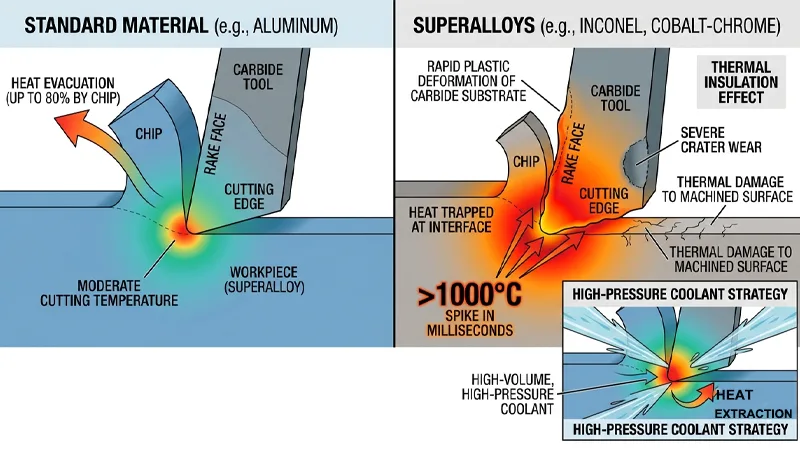
Exceptionally low thermal conductivity is arguably the most severe obstacle encountered when shearing these superalloys. Unlike aluminum or standard carbon steels, where up to 80% of the generated heat is efficiently evacuated by the chip, Inconel and cobalt-chrome act as thermal insulators.
Because the heat cannot dissipate through the material or the chip, it becomes trapped and intensely concentrated directly at the tool-workpiece interface—specifically, the rake face and the cutting edge. This intense thermal loading can cause temperatures to spike over 1000°C in milliseconds, leading to the rapid plastic deformation of the carbide substrate, severe crater wear, and thermal damage to the machined surface. To combat this, machinists must utilize highly optimized, high-volume, high-pressure coolant strategies to artificially extract the heat from the cutting zone before it destroys the tooling.
Work Hardening
Strain hardening, commonly referred to as work hardening, is another critical metallurgical challenge. Due to their face-centered cubic (FCC) crystal structures, these austenitic alloys undergo rapid microscopic structural changes when subjected to the sheer stress of a cutting tool. The very act of cutting plastically deforms the top layer of the metal, causing the atomic lattice to slip and lock, drastically increasing the material’s surface hardness in real-time.
Consequently, if a tool rubs rather than cuts, the subsequent pass will encounter a surface significantly harder than the base material. This forces the machine spindle to overcome massive resistance, causing sudden spikes in cutting forces. To prevent this, CNC programmers must establish aggressive, deliberate cutting parameters, ensuring the tool’s depth of cut (DOC) always penetrates deeply enough to get entirely underneath the previously work-hardened layer.
Extensive metallurgical studies verify that tool wear mechanisms are highly complex and multifaceted when turning or milling nickel-based superalloys. Research indicates that the specific chemical affinities between the iron (Fe), chromium (Cr), and nickel (Ni) in the workpiece and the cobalt binder in the carbide tools play a major role in chemical and abrasive wear. Furthermore, work hardening exacerbates the issue of material adhesion, where the superalloy pressure-welds to the rake face, forming a built-up edge (BUE) that eventually tears away, taking pieces of the tool’s cutting edge with it.
Tool Wear
Severe tool wear is a constant, unavoidable reality when processing these superalloys. The combination of extreme localized heat, inherent material hardness, abrasive carbide precipitates within the alloy matrix, and rapid work hardening creates a perfect storm that obliterates cutting edges. Tools lose their honed micro-geometry rapidly, transitioning from cutting the metal to forcefully plowing it.
When a tool loses its edge, cutting forces skyrocket, leading to severe chatter, torn surface finishes, out-of-tolerance dimensions, and ultimately, catastrophic tool breakage that can scrap an expensive aerospace casting. Establishing a rigid, predictable tool life management system—where inserts and endmills are indexed or replaced based on specific time-in-cut metrics rather than waiting for failure—is critical for process reliability.
| Cutting Challenge | Machining Impact | Engineering Solution |
|---|---|---|
| Low Thermal Conductivity | Extreme heat localizes at the cutting edge, melting tool binders. | Deploy through-spindle, high-pressure coolant (1000+ PSI). |
| Rapid Work Hardening | Successive cuts become exponentially harder; tool rubbing causes failure. | Utilize dynamic multi-pass cutting; ensure DOC exceeds the hardened layer. |
| Abrasive Tool Wear | Tools lose edge geometry rapidly due to built-up edge and notch wear. | Utilize advanced PVD coatings (e.g., AlTiN) and specialized micro-grain substrates. |
Heat Management Issues
Mastering thermodynamics and heat management is the single most important factor when removing metal from these high-temperature superalloys. Excessive thermal accumulation does not merely destroy cutting tools prematurely; it fundamentally alters the metallurgy of the workpiece, inducing residual tensile stresses, micro-cracking, and severe surface distortion.
The machining of Inconel and cobalt-chrome is characterized by chronic thermal problems, most notably thermal shock (caused by intermittent cutting and cooling) and premature strain hardening caused by heat-induced plastic deformation. This thermal volatility is also a massive issue in the initial investment casting phases of these alloys, where traditional, passive cooling methods are entirely inadequate to control the solidification microstructure.
To engineer out these defects during the molding and casting phase, advanced foundries utilize direct flame heating, heated circulating fluids, and precision cartridge heaters. These active thermal systems maintain stringent temperature controls over the mold, preventing the alloy from cooling too rapidly and forming brittle, hardened structures before the machining phase even begins.
Quality Assurance Tip: Process engineers must continuously monitor the thermal dynamics of the cutting envelope. Deploying premium coolant concentrations (typically 10-15% lubricity) and dynamically adjusting surface footage and feed per tooth is essential to suppress heat generation.
Machinists and programmers must have a deep reverence for these obstacles. By thoroughly understanding the physics of low thermal conductivity, rapid work hardening, and abrasive tool wear, engineering teams can specify the optimal carbide grades and program the most efficient toolpaths. Ultimately, mastering heat control is the defining factor that extends tool life, stabilizes the process, and guarantees the delivery of dimensionally perfect custom metal parts.
Tooling for Metal Machining
Tool Materials Selection
The foundation of any successful process for machining Inconel and cobalt-chrome is the meticulous, scientifically driven selection of the appropriate cutting tool substrate. The cutting tool is the physical interface where the immense mechanical forces and extreme thermal loads are realized; therefore, the substrate must possess extraordinary hot hardness and transverse rupture strength.
Furthermore, the tool material must exhibit chemical inertness to resist oxidation, diffusion wear, and chemical breakdown during extended periods of continuous cutting. Possessing these specific metallurgical attributes ensures the cutting tool can endure the punishing environment of superalloy machining without suffering sudden edge fracture or rapid plastic deformation.
| Metallurgical Criteria | Engineering Description |
|---|---|
| Corrosion & Oxidation Resistance | The substrate must resist chemical diffusion and atmospheric oxidation at the extreme temperatures generated at the shear zone. |
| High-Temperature Hot Hardness | Materials must retain their structural integrity, hardness, and yield strength at cutting temperatures frequently exceeding 1000°C. |
| Optimal Machinability Traits | The substrate must allow for the creation of ultra-precise edge preparations (honing) while resisting crater wear and built-up edge (BUE). |
| Fatigue & Mechanical Stress Resistance | The tool must exhibit exceptional transverse rupture strength to withstand the relentless cyclic mechanical pressure of milling and interrupted turning. |
| Impact & Abrasive Wear Resistance | The substrate must resist the abrasive nature of carbide precipitates within the superalloy, preventing flank wear and extending component lifetime. |
Carbide, Ceramic, CBN
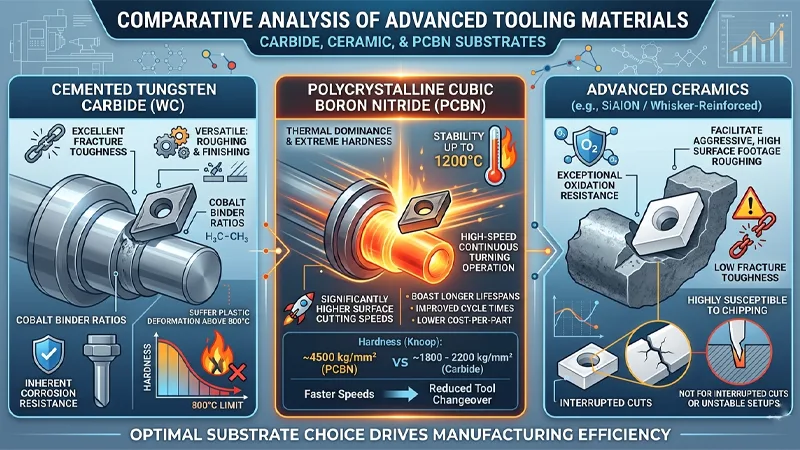
In the realm of custom metal parts manufacturing, sub-micron grain cemented carbide, advanced ceramics (like SiAlON), and Polycrystalline Cubic Boron Nitride (PCBN) are the elite substrate choices for these rigorous applications.
Tungsten carbide tools, formulated with specific cobalt binder ratios, offer excellent fracture toughness, are versatile for both roughing and finishing, and possess inherent corrosion resistance. However, standard carbides begin to suffer plastic deformation and lose their hardness when cutting zone temperatures exceed 800°C.
Conversely, PCBN inserts are engineered for extreme environments, maintaining their extraordinary hardness and chemical stability at temperatures approaching 1200°C, which allows process engineers to program significantly higher surface cutting speeds. This thermal dominance makes PCBN the optimal choice for continuous, high-speed turning of aerospace superalloys that generate immense heat and mechanical stress.
Ceramic inserts (particularly whisker-reinforced ceramics) also offer exceptional oxidation resistance and facilitate aggressive, high-surface-footage roughing operations; however, their low fracture toughness makes them highly susceptible to chipping during interrupted cuts or when machining unstable setups, unlike more forgiving carbide or PCBN substrates.
| Tool Material | Approximate Knoop Hardness (kg/mm²) |
|---|---|
| Polycrystalline Cubic Boron Nitride (PCBN) | ~4500 |
| Cemented Tungsten Carbide | ~1800 – 2200 |
Due to their extreme hardness, PCBN tools can operate at drastically higher cutting velocities and boast significantly longer lifespans than traditional carbide inserts in specific turning applications. This equates to vastly improved cycle times, reduced tool changeover indexing, and a lower overall cost-per-part.
Coatings for Performance
The application of advanced vapor deposition coatings is a critical technology used to shield the vulnerable carbide substrate and drastically enhance tool performance. These micro-thin layers act as a thermal barrier, significantly lower the coefficient of friction, prevent atmospheric oxidation, and ultimately multiply the tool’s productive lifespan.
Selecting the exact correct coating chemistry is a critical engineering decision that dictates success or failure when aggressive material removal rates are applied to nickel-based and cobalt-based superalloys.
PVD, CVD, Heat-Resistant
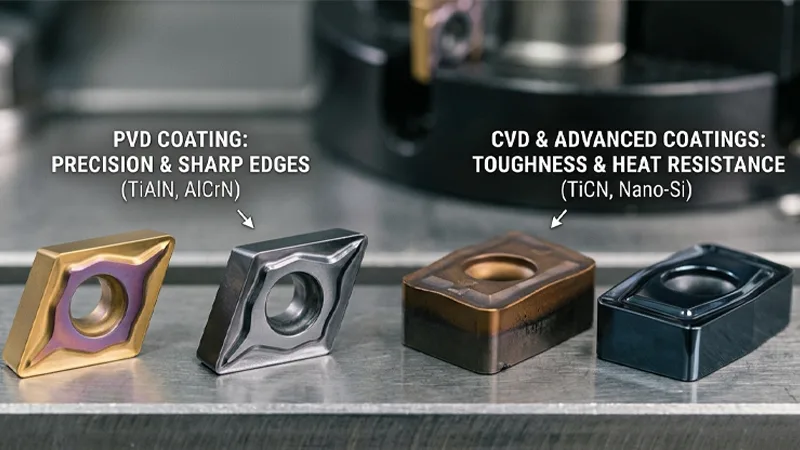
Physical Vapor Deposition (PVD) coatings are applied at lower temperatures, resulting in extremely thin, highly uniform layers that maintain the razor-sharp micro-geometry required for precision finishing tools. Because they do not dull the cutting edge, PVD coatings are ideal for generating the ultra-low surface roughness (Ra) values required for aerospace and medical components.
Chemical Vapor Deposition (CVD) coatings, conversely, are applied at higher temperatures and create significantly thicker, more robust layers that excel in brutal, heavy-roughing applications. CVD coatings provide a superior thermal barrier, drastically improving tool longevity and preventing substrate failure under extreme, sustained heat loads.
For machining nickel and cobalt alloys, Titanium Aluminum Nitride (TiAlN) and Aluminum Chromium Nitride (AlCrN) are the undisputed industry standards. These advanced coatings actually form a protective aluminum oxide layer when exposed to the high heat of the cutting zone, effectively stopping oxidation and shielding the carbide core from thermal shock.
Furthermore, some specialized aerospace tooling utilizes nano-composite silicon-based coatings for unparalleled surface hardness and lubricity. These highly engineered coated tools prevent the notorious built-up edge (BUE) by ensuring chips glide effortlessly off the rake face, preserving the pristine cutting edge even when localized temperatures soar.
Tooling Tip: For optimal process engineering, utilize ultra-sharp PVD-coated inserts for precise finishing passes, and robust CVD-coated inserts to withstand the thermal and mechanical abuse of heavy roughing. This dual-strategy maximizes tool life economics while guaranteeing a flawless final surface topography.
Tool Geometry
The macro and micro-geometry of the cutting tool dictates the fundamental mechanics of how the tool shears the material, evacuates the chip, and dissipates heat and frictional wear.
Engineering the perfect rake angles, clearance angles, and flute topography is critical to controlling chip formation and preventing rapid edge degradation. When processing gummy, strain-hardening alloys like Inconel and CoCrMo, highly positive rake angles combined with strong edge honing are mandatory.
Edge Prep, Chip Breakers
Careful edge preparation, such as executing a controlled web thinning operation on a drill or minimizing the chisel edge width, dramatically reduces the axial thrust force required to initiate a hole, preventing work hardening at the hole’s bottom.
Advanced, laser-ablated chip breaker topographies and variable helix/variable pitch endmill designs are critical for violently altering the chip’s flow path, forcing it to curl and snap, while simultaneously breaking up harmonic chatter to maintain cutting stability.
For aerospace drilling operations, a highly specialized split point or parabolic split geometry—typically ground to an inclusive angle of 135° to 140°—is utilized to ensure the drill self-centers perfectly on contact, massively reducing the initial penetration forces.
Ultimately, it is the synergistic combination of advanced coatings, optimal substrates, and highly engineered edge geometries that allows tools to survive, resist oxidation, and perform profitably in superalloy applications.
| Geometry Modification | Engineering Function & Benefit |
|---|---|
| Advanced Vapor Coatings | Implementing Titanium Aluminum Nitride (TiAlN) or Diamond-Like Carbon (DLC) provides exceptional thermal barriers and drastically reduces the coefficient of friction. |
| Optimized Macro-Geometries | Integrating aggressive chip breakers and variable helix/pitch designs disrupts harmonic frequencies, enhancing absolute cutting stability and guaranteeing rapid chip evacuation. |
By meticulously specifying the exact tool substrate, vapor deposition coating, and micro-geometry, manufacturing engineers can confidently conquer the most demanding superalloy jobs. This level of engineering rigor translates directly into prolonged tool life, superior oxidation resistance, and the reliable production of dimensionally perfect custom metal parts.
Tool Life Optimization
Maximizing tool life is not merely a technical goal; it is a fundamental economic imperative when machining high-temperature aerospace and medical alloys. Because Inconel and cobalt-chrome exhibit extreme baseline hardness, rapid strain-hardening characteristics, and high shear resistance, cutting tools degrade at an accelerated, often unpredictable rate.
Manufacturing engineers must implement highly calculated, data-driven methodologies to stretch tool life, thereby reducing perishable tooling costs and minimizing expensive machine downtime.
The absolute priority is selecting the correct tool for the specific alloy state (e.g., solution annealed vs. aged) and ensuring the cutting edge is impeccably sharp. Using worn or dull tools is catastrophic in superalloys; a dull edge rubs rather than shears, exponentially increasing the localized heat and causing severe depth-of-cut (DOC) notch wear. Rigorous, scheduled visual inspections using digital comparators are mandatory to identify micro-fractures early.
Establishing a strict tool-indexing protocol—changing the cutting edge before it fails based on calculated time-in-cut data—saves countless hours of rework and prevents the scrapping of high-value parts.
Coolant strategy is equally critical to the economics of tool life. High-pressure, high-volume through-spindle coolant systems (delivering fluid precisely to the shear zone) are required to shatter the vapor barrier, extract extreme heat, and prevent thermal micro-cracking of the carbide insert.
For elite aerospace applications, some cutting-edge facilities have adopted cryogenic machining, utilizing liquid nitrogen (LN2) or supercritical CO2 to freeze the cutting zone. This extreme cooling method suppresses thermal degradation entirely, allowing for remarkable increases in tool longevity even in the most obstinate materials.
CNC cutting parameters dictate the mechanical stress applied to the tool. Utilizing lower surface footage (SFM) and conservative feed rates reduces the thermal and mechanical shock loading on the cutting edge. Employing multi-pass, dynamic milling strategies (such as radial chip thinning) distributes cutting forces evenly across the entire flute length rather than concentrating them at the tip. This sophisticated CAM approach drastically reduces the risk of sudden, catastrophic tool failure and consistently yields a superior surface finish.
The following table details proven engineering methodologies to optimize tool life:
| Optimization Method | Engineering Benefit |
|---|---|
| Rigid Tool Life Protocols | Identifies micro-wear early, preventing catastrophic edge fracture and scrapped workpieces. |
| High-Pressure Coolant (HPC) | Quenches the deformation zone, flushes abrasive chips, and significantly extends carbide life. |
| Cryogenic Machining | Plunges, cutting temperatures, halting thermal degradation, and massive flank wear. |
| Dynamic Multi-Pass Milling | Distributes radial stress, prevents tool deflection, and generates exceptional surface topography. |
| Optimizing Speeds & Feeds | Aligns cutting parameters with the material’s shear modulus and the tool’s thermal limits. |
As previously discussed, advanced vapor deposition coatings are paramount for tool survival. Layers of TiAlN and AlCrN act as thermal shields, protecting the vulnerable carbide substrate from the 1000°C+ heat and severe frictional forces. These coatings also drastically lower the coefficient of friction, ensuring the strain-hardened chips slide cleanly away from the rake face without pressure-welding. Integrating heavily coated tooling is the most direct, cost-effective variable a machinist can change to immediately improve tool life.
Engineering Tip: Implement a comprehensive digital log detailing every tool change, the exact wear morphology (flank, crater, notch), and time-in-cut. Analyzing this data allows process engineers to dial in the absolute optimal parameters for every specific part number, driving down cycle times and maximizing machine uptime.
Mastering chip morphology is also essential. Continuous, stringy chips that wrap around the spindle or the toolholder will cause catastrophic damage. Utilizing the correct geometric chip breakers and maintaining high positive rake angles forces the chip to curl tightly and fracture, evacuating it safely from the machining envelope.
Finally, continuous operator education is paramount. Machinists who deeply understand CNC kinematics, rigid setup principles, and the signs of impending tool failure are the frontline defense in extending tool life. Cultivating a culture where setup optimizations and parameter tweaks are shared across the facility elevates the entire manufacturing operation. By systematically implementing these rigorous engineering protocols, machine shops can drastically increase the number of acceptable parts yielded per cutting edge, driving down overhead and ensuring highly profitable, uninterrupted production cycles.
High-Performance Machining Strategies
Feeds and Speeds

Calculating and implementing the precise surface footage (speeds) and chip loads (feeds) is the most critical variable in the entire machining equation. High-temperature superalloys offer zero margin for error; operators and engineers must continuously modulate these parameters to navigate the delicate balance between maximizing material removal rates and preserving tool life.
The objective is to achieve a pristine surface finish and maintain high spindle utilization. However, programming excessive surface speeds will instantaneously melt the tool’s binder matrix, causing immediate edge failure. Conversely, inadequate feed rates lead to the tool rubbing the surface, generating massive friction and accelerating work hardening. Employing sophisticated, CAM-driven dynamic cutting algorithms is essential to control chip thickness and thermal loads. This scientific approach guarantees predictable, repeatable results across production runs.
Inconel 718, 625 Recommendations
Inconel 718 and 625 are austenitic nickel-chromium-based superalloys that demand absolute precision regarding cutting kinematics. If the surface footage is pushed too high, the heat generated at the shear zone will rapidly obliterate the cutting tool. If the feed per revolution is too light, the tool fails to penetrate the previously cut layer, resulting in severe work hardening that destroys the insert on the subsequent pass. Every single tool engagement must be aggressively calculated.
- Cutting Speeds (V_c): Strictly limit surface footage to between 20 and 40 meters per minute (approx. 65–130 SFM) when utilizing carbide.
- Feed Rates (f_n): Maintain robust feed rates between 0.05 and 0.15 mm/rev (approx. 0.002–0.006 IPR) to ensure the tool stays under the work-hardened zone.
- Depth of Cut (a_p): Program conservative depths of cut, ranging from 0.5 to 2.0 mm (approx. 0.02–0.08 in), to manage cutting forces.
It is imperative to blast the cutting zone with high-pressure coolant to rapidly quench the tool and forcibly evacuate the abrasive chips. For shops utilizing advanced turning centers, high-speed machining techniques can be successfully deployed if paired with highly engineered, thick-coated carbide or advanced PCBN substrates. Operators must remain vigilant, utilizing digital wear monitoring systems to pause the cycle and index tools at the first sign of micro-flaking or flank wear. Implementing these disciplined, data-backed cutting methodologies ensures absolute dimensional accuracy while maximizing the operational life of the tooling.
Cobalt-Chrome Recommendations
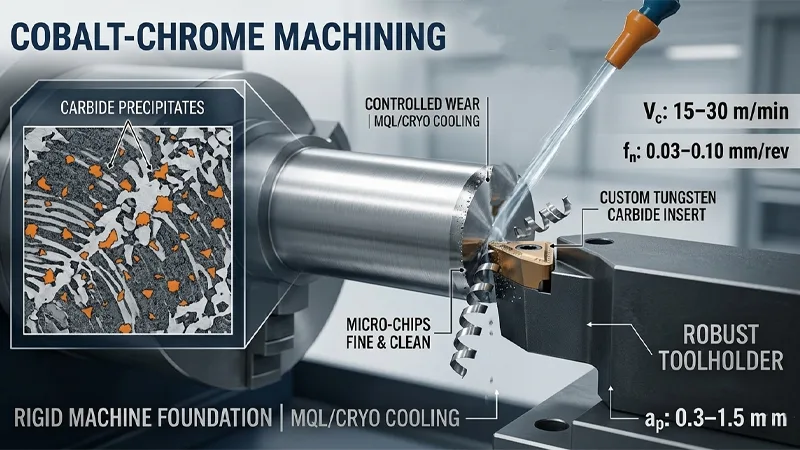
Cobalt-chromium-molybdenum (CoCrMo) alloys possess an abrasive, multi-phase microstructure that renders them even more hostile to cutting tools than standard Inconel grades. They are notoriously abrasive due to hard carbide precipitates. Process engineers must be exceptionally conservative when programming feeds and speeds to prevent catastrophic edge chipping and ensure the biomedical or aerospace component meets strict surface roughness (Ra) standards.
- Cutting Speeds (V_c): Reduce surface footage drastically, aiming for 15 to 30 meters per minute (approx. 50–100 SFM) to manage the intense thermal generation.
- Feed Rates (f_n): Program fine, consistent feed rates from 0.03 to 0.10 mm/rev (approx. 0.001–0.004 IPR).
- Depth of Cut (a_p): Keep radial and axial engagements extremely light, typically between 0.3 and 1.5 mm (approx. 0.01–0.06 in).
The continuous application of high-pressure coolant, or advanced hybrid MQL/cryogenic systems, is absolutely mandatory to flush the abrasive swarf and control the massive heat. Attempting to machine cobalt-chrome at high velocities demands an ultra-rigid machine foundation, massive spindle torque, and robust toolholders (like hydraulic or shrink-fit chucks). Operators must continuously monitor acoustic emissions for harmonic chatter and utilize spindle override controls to instantly modulate RPMs to stabilize the cut.
Depth of Cut Techniques
The programmed depth of cut (DOC)—both radial (ae) and axial (ap)—profoundly influences the thermodynamic loads, tool deflection, and ultimate surface integrity of the machined part. While shallow, conservative cuts minimize mechanical stress and extend tool life, heavy depths of cut increase material removal rates (MRR) but subject the cutting edge to punishing forces that accelerate wear. Calibrating the perfect DOC requires balancing the machine’s horsepower, the tool’s transverse rupture strength, and the part’s geometric tolerances.
When initiating a new process, always default to conservative, shallow cuts for both primary roughing and precise finishing operations. Only increase the radial or axial engagement after empirically verifying that the machine’s rigidity, workholding clamp force, and the tool’s core strength can withstand the amplified cutting pressures without inducing chatter.
Instead of full-width slotting, employ high-efficiency, multi-pass dynamic milling techniques to spread the thermal and mechanical load safely across the entire flute length. High-speed, low-radial-engagement milling (trochoidal milling) is the most scientifically sound method for controlling depth, as it meticulously manages the average chip thickness, keeping the tool strong and the aerospace component dimensionally stable.
Engineering Tip: Always engineer your depth of cut based on the specific elastic modulus of the alloy, the dynamic stiffness of your CNC spindle, and the diameter/reach ratio of your cutting tool. Micro-adjustments to the axial depth can drastically alter the harmonic frequencies, shifting the process from severe chatter to silent, smooth cutting, thereby extending tool life and yielding flawless surface finishes.
Cooling and Lubrication
Advanced tribology and fluid dynamics—specifically cooling and lubrication—are non-negotiable requirements when shearing nickel and cobalt-based superalloys. The plastic deformation of these metals generates extreme, localized kinetic energy that converts instantly into heat. High-performance cooling suppresses thermal damage to the workpiece’s microstructure and prevents the tool’s binder from melting. Simultaneously, the lubricity of the fluid drastically reduces the coefficient of friction at the rake face, preventing built-up edge (BUE) and facilitating rapid chip evacuation.
High-Pressure Coolant

High-pressure coolant (HPC) systems are engineered to blast a concentrated stream of fluid directly at the primary shear zone and the tool’s cutting edge. This massive kinetic force completely shatters the thermal vapor barrier that forms around the tool during heavy cuts, instantaneously quenching the tool, preventing micro-cracking, and violently blasting away abrasive chips before they can be recut.
For aerospace and medical applications, coolant pumps delivering pressures up to 80 bar (1160 PSI) are standard for achieving optimal material removal rates and extending insert life. Operators must precisely articulate the high-pressure nozzles so the fluid impacts the exact point where the tool shears the metal. Utilizing internally cooled, PVD-coated tooling in conjunction with HPC represents the gold standard for high-temperature alloy machining.
MQL, Cryogenic
Minimum Quantity Lubrication (MQL) utilizes a highly pressurized, atomized mist of specialized oil. It provides exceptional lubricity, drastically reduces friction at the rake face, and is an environmentally sustainable alternative to flood coolant.
Cryogenic machining, conversely, utilizes liquid nitrogen (LN2) or supercritical carbon dioxide (CO₂) to plunge the cutting zone to sub-zero temperatures. This extreme thermodynamic intervention essentially freezes the material, making it brittle and easier to shear, while eliminating heat-induced tool wear. Both advanced methodologies offer distinct engineering advantages depending on the specific operation.
| Cooling/Lubrication Method | Cutting Force Reduction | Chip Temperature Reduction | Surface Roughness Improvement |
|---|---|---|---|
| Minimum Quantity Lubrication (MQL) | Baseline Standard | Baseline Standard | Baseline Standard |
| Cryogenic Cooling (LN2) | Up to 37.10% | Up to 56.68% | Up to 36.95% |
Empirical data proves that cryogenic cooling provides a massive reduction in cutting forces and thermal generation compared to standard MQL. By eliminating the heat, the surface topography improves by over 36%. MQL is highly eco-conscious and provides superior lubricity, but it lacks the sheer thermal extraction capabilities of cryogenic systems.
| Method | Engineering Advantages | Limitations & Disadvantages |
|---|---|---|
| Minimum Quantity Lubrication (MQL) | Lowers friction, good for the environment, uses drastically reduces the coefficient of friction, utilizes biodegradable lubricants, and eliminates coolant disposal costs. | Inadequate thermal extraction for heavy roughing of superalloys compared to cryogenic. |
| Cryogenic Cooling (LN2/CO₂) | Lowers friction, good for the environment, drastically reduces the coefficient of friction, utilizes biodegradable lubricants, and eliminates coolant disposal costs. | Requires significant capital expenditure for specialized tanks, delivery systems, and machine modifications. |
The frontier of thermal management involves Hybrid Cooling systems, which simultaneously inject advanced nanofluids alongside cryogenic CO₂. This sophisticated setup provides the ultimate solution for aggressive material removal in tough metals. While MQL and Nano-MQL provide exceptional hydrodynamic lubrication to prevent tool-chip adhesion, they cannot extract heat rapidly. Because cryogenic cooling provides immense heat extraction but zero lubricity, combining them in a hybrid system yields the perfect thermodynamic and tribological environment.
Recent metallurgical studies demonstrate that a hybrid MQL + CO₂ system is highly effective when machining Monel 400 and other demanding nickel alloys. Utilizing cryogenic cooling can autonomously reduce the sheer force required to cut the metal by up to 37%. Furthermore, the temperature of the evacuated chips plummets by over 56%, and the surface finish quality (Ra) improves by nearly 37%.
Process Engineering Note: For absolute maximum performance and lowest cost-per-part in superalloy machining, implement hybrid cooling systems that fuse the extreme lubricity of Nano-MQL with the intense thermal extraction of cryogenic CO₂. This dual-action approach allows for unprecedented cutting velocities, guarantees dimensional accuracy, and multiplies tool life exponentially.
Chip Control
Mastering chip morphology and evacuation is paramount when executing operations on gummy, high-temperature alloys like Inconel and cobalt-chrome. These austenitic metals have high elongation properties, meaning they naturally form long, continuous, razor-sharp, stringy chips that can severely damage the tool holder, score the workpiece, and entangle the machine spindle.
Implementing robust chip control strategies is critical for maintaining process stability, ensuring operator safety, and enabling “lights-out,” unmanned machining operations. Proper chip fracture also protects the pristine surface finish of the machined component and prevents sudden tool breakage caused by recutting hardened chips.
If the programmed parameters fail to force the chip to break, it will rapidly wrap around the endmill or turning insert, creating a massive, hardened nest. This scenario will violently halt the CNC spindle, likely destroying the tool, the toolholder, and the expensive workpiece. CNC programmers and operators must utilize a combination of geometry, speeds, and coolant dynamics to force the chips to curl and fracture safely.
The following engineering strategies outline advanced chip control methodologies to eliminate production bottlenecks:
| Chip Control Strategy | Engineering Implementation |
|---|---|
| Optimize Cutting Velocity (Vc) | Marginally increasing surface footage can alter the shear plane angle, forcing chips to thin and break. Operators must monitor chip color (oxidation) to ensure the heat remains acceptable. |
| Maximize Coolant Kinematics | Direct high-pressure coolant (1000+ PSI) precisely at the rake face. The extreme hydrostatic pressure acts as a physical wedge, forcing the continuous chip to snap and flushing it from the zone. |
| Deploy Ultra-Rigid Tooling | Utilize hydraulic or shrink-fit toolholders to eliminate micro-vibrations (runout). Absolute rigidity ensures the chip curls consistently across the tool’s designed breaker geometry. |
| Analyze Chip Morphology | Operators must meticulously inspect the swarf during the initial first-article prove-out. The physical shape of the chip dictates exactly what parameter needs adjustment in the CNC control. |
Seasoned machinists constantly read the swarf (chips) as a real-time indicator of process health. When turning steel, blue or dark purple chips indicate optimal heat partitioning (the heat is leaving in the chip, not the part). However, when machining Inconel, long, unbroken, stringy chips indicate a critical failure in feed rate or chip breaker selection; the feed must usually be increased to force a thicker chip that will snap. Short, tight, “C” or “6” shaped chips are the ultimate goal, signaling a highly stable, safe, and efficient cutting process.
Manufacturing Tip: If operators observe chips beginning to nest or tangle around the tool shank, they must immediately trigger a feed-hold and re-evaluate the CAM program. Often, a minute increase in the feed per revolution (IPR), a slight adjustment to the spindle override, or re-aiming the high-pressure coolant nozzle will entirely resolve the chip control failure.
Selecting inserts with highly engineered, 3D-molded chip breakers is the most effective mechanical solution. These complex geometries create extreme stress concentrations in the chip, forcing it to curl back onto itself and fracture into manageable fragments. Fractured chips are easily flushed out of deep bores or pockets by the coolant, keeping the machining envelope clear and safe. Uncompromising chip control results in superior surface finishes, drastically reduced tool wear, and the elimination of machine downtime caused by chip entanglement. By rigorously applying these methodologies, manufacturing engineers can protect their capital equipment, safeguard the workpiece, and maintain high-velocity production.
Improving Machinability and Process Monitoring
Real-Time Wear Monitoring
In modern, Industry 4.0-compliant facilities, real-time tool wear monitoring systems are essential for maintaining strict quality control and maximizing tooling economics. Advanced CNC machines are equipped with acoustic emission sensors, piezo-electric force dynamometers, and highly sensitive spindle load monitors that continuously analyze the physical dynamics of the tool as it shears the metal.
This high-frequency data is fed into the machine’s PLC/CNC control unit. By utilizing complex algorithms, the system can detect minute anomalies in harmonic vibration, localized temperature spikes, or sudden increases in axial thrust, alerting the operator the exact moment the tool begins to suffer flank or crater wear. This proactive intelligence allows the system to trigger a macro-program to automatically swap to a redundant tool before catastrophic edge failure occurs. This technology eliminates the risk of scrapping high-value aerospace forgings and protects the machine’s spindle bearings from violent impact forces.
Contemporary 5-axis machining centers utilize intuitive Human-Machine Interfaces (HMIs) to display this telemetry. Operators monitor real-time graphs showing load percentages, allowing them to accurately predict remaining tool life. This data-driven approach eliminates the guesswork of tool changes, reduces unnecessary machine stoppages, and facilitates highly efficient lights-out manufacturing.
Quality Tip: Fully integrate real-time spindle load monitoring macros into your CAM programs to automatically trigger feed-holds or redundant tool changes, entirely preventing sudden tool fracture. This safeguards the dimensional integrity of the custom metal part and eliminates massive costs associated with rework and scrapped material.
Adaptive Machining
Adaptive control machining represents the pinnacle of automated CNC optimization. These sophisticated systems utilize closed-loop feedback to dynamically alter the programmed cutting parameters (spindle RPM and feed rate) in milliseconds based on real-time sensor telemetry. If the tool encounters a sudden hard spot or an excessive depth of cut, the adaptive system instantly throttles back the feed rate to maintain a constant, safe cutting force, ensuring exceptional process stability and part quality.
The engineering advantages of adaptive control include:
- Real-time optimization of material removal rates, accelerating cycle times while simultaneously protecting the workpiece.
- Dynamic parameter modulation drastically reduces thermal shock and mechanical stress, multiplying tool life.
Utilizing eco-friendly, nanoparticle-infused oils—such as Hexagonal Boron Nitride/Graphene (hBN/Gr)—provides extreme pressure lubricity. Specific studies demonstrate that deploying hBN/Gr nanofluids reduces cutting forces by 4.17% and improves surface topography by a staggering 21.05%. Consequently, catastrophic tool wear drops by 19.25%, guaranteeing the dimensional stability of critical features.
Adaptive machining empowers manufacturers to confidently tackle the most hostile, variable materials in the industry. Because the machine physically adapts to the changing metallurgical conditions of the workpiece, the probability of human error or scrap is virtually eliminated. Manufacturing engineers can entirely trust the CNC architecture to make split-second, optimal kinematic adjustments during unmanned, high-value production runs.
Quality Assurance
Rigorous Quality Assurance (QA) and metrology protocols are absolute mandates for verifying that every single component meets the stringent Geometric Dimensioning and Tolerancing (GD&T) specifications. Highly trained inspectors utilize multi-axis Coordinate Measuring Machines (CMM), optical comparators, laser scanners, and tactile surface profilometers to meticulously analyze the part’s topography. These sophisticated metrology instruments verify that complex geometric features, diametrical tolerances, and surface roughness parameters strictly adhere to the engineering blueprints.
If any dimensional anomaly is detected, statistical process control (SPC) software flags the component, and a root-cause analysis is immediately initiated to adjust the CNC offsets.
A fundamental QA checklist for high-temperature superalloy machining includes:
| Inspection Step | Engineering Objective | Why It Is Critical |
|---|---|---|
| Microscopic Tool Inspection | Analyze cutting edges via digital microscopy for micro-fractures, BUE, or flank wear. | Prevents the generation of torn surface finishes and out-of-tolerance dimensions. |
| Surface Profilometry | Utilize a stylus profilometer to accurately quantify the Ra, Rz, and Rq roughness values. | Ensures the surface metallurgy meets strict aerospace/medical fatigue life requirements. |
| CMM Dimensional Verification | Probe critical GD&T features (true position, cylindricity, flatness) using high-precision ruby styli. | Guarantees the part conforms perfectly to the 3D CAD model and tight tolerances. |
| AS9100/ISO Documentation | Generate comprehensive First Article Inspection (FAI) reports and SPC run charts. | Establishes full material and process traceability, an absolute requirement for critical industries. |
QA Note: Implementing high-frequency, in-process probing (using spindle-mounted strain-gauge probes) and maintaining immaculate digital inspection records allows engineering teams to identify thermal drift and tool wear trends before a part falls out of tolerance. This proactive approach guarantees zero-defect manufacturing and supreme client satisfaction. By combining real-time spindle telemetry, adaptive control algorithms, and uncompromising metrology, modern machine shops can process exotic superalloys with ultimate confidence. These integrated systems drastically improve part quality, slash perishable tooling costs, and ensure highly profitable, uninterrupted manufacturing workflows.
Advanced Technologies in Nickel-Based Alloys Machining
Electron Beam Machining (EBM)
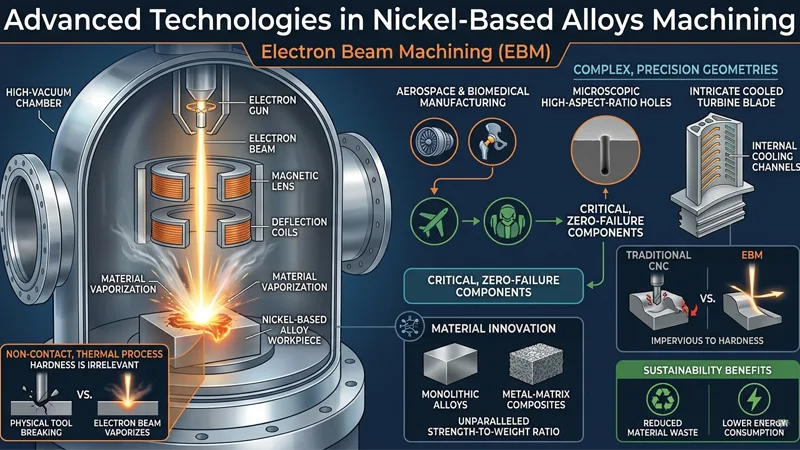
Electron Beam Machining (EBM) is a highly specialized, non-traditional machining technology that is revolutionizing the processing of refractory metals and nickel-based superalloys. Operating entirely within a high-vacuum chamber, EBM utilizes a precisely focused, high-velocity stream of electrons to instantly vaporize the target material through intense, localized kinetic heat generation.
Because it is a thermal, non-contact process, EBM is completely impervious to the extreme hardness and work-hardening characteristics that plague traditional CNC milling and turning operations. It is uniquely suited for generating microscopic, high-aspect-ratio holes and incredibly intricate geometries that are physically impossible to create with mechanical cutting tools.
Furthermore, EBM technology has advanced to process not only monolithic alloys but also complex new generations of nickel alloys and advanced metal-matrix composites. These advanced, highly engineered composites offer unparalleled strength-to-weight ratios and thermal resistance, making them highly desirable for next-generation engineering applications.
Tier-one aerospace and biomedical manufacturers utilize EBM to fabricate critical, zero-failure components, such as intricate cooling channels in high-pressure turbine blades and highly complex, patient-specific orthopedic implants. These life-critical components demand absolute metallurgical integrity and perfect geometric fidelity. The aerospace sector continuously demands lighter, structurally superior components to maximize fuel efficiency and payload capacity. EBM facilitates this by allowing engineers to design highly optimized, lightweight topologies that can be manufactured rapidly with minimal material waste. The extreme precision of the electron beam affords manufacturing engineers unprecedented control over the final micro-structure of the component. Ultimately, EBM significantly reduces raw material consumption and overall energy expenditure compared to massive subtractive machining operations.
Automation and Smart Systems
The integration of Industry 4.0 automation, robotics, and smart machine systems has profoundly transformed the machining landscape, making operations significantly safer, highly efficient, and less reliant on manual intervention. Modern 5-axis CNC platforms act as advanced edge-computing nodes; they are saturated with IoT sensors and high-speed processors that continuously aggregate process data and execute autonomous, microsecond adjustments. This closed-loop cyber-physical architecture guarantees absolute dimensional consistency and essentially eliminates scrap caused by human error.
| Advanced Feature | Engineering Impact & Capability |
|---|---|
| Artificial Intelligence (AI) Algorithms | AI in CNC machines guesses when tools will wear out and changes sAI and machine learning models embedded in CNC controls analyze historical telemetry to predict the exact moment of tool failure, autonomously adjusting feed parameters to maintain pristine surface topography. |
| High-Frequency Real-time Monitoring | Spindle and axis-drive sensors analyze torque and vibration frequencies in real-time. Thermal drift and harmonic chatter are mitigated instantly, ensuring maximum material yield. |
| Adaptive Kinematic Control | The CNC dynamically modulates cutting forces and chip loads based on instantaneous sensor feedback. This technology is absolutely vital for post-processing near-net-shape 3D-printed metal components that have variable densities. |
By deploying smart manufacturing systems, engineers and machinists are freed from mundane monitoring tasks and can focus their intellect on process engineering, fixture design, and complex programming to produce elite custom metal parts. Furthermore, these highly optimized systems drastically reduce tool consumption, minimize spindle wear, and significantly lower the facility’s overall carbon and energy footprint.
Digital Twin and Simulation
The adoption of Digital Twin technology and advanced finite element analysis (FEA) simulation software is rapidly becoming the gold standard in elite manufacturing facilities. A digital twin is a highly precise, physics-based virtual replica of the exact CNC machine tool, the cutting tool, the fixturing, and the raw material. Process engineers utilize this virtual environment to comprehensively simulate, analyze, and violently stress-test their CAM toolpaths long before a single piece of expensive Inconel is physically cut.
| Engineering Aspect | Technical Details & Execution |
|---|---|
| Kinematic & Force Prediction | Advanced physics engines accurately simulate torque loads, chip thickness, and thermal generation at the shear zone, allowing engineers to design flawless toolpaths and highly rigid fixturing. |
| Validation Methodology | Facilities utilize massive computational models, validated against historical empirical data, to verify the physics of complex 5-axis simultaneous milling and deep-hole drilling operations. |
| Integrated Software Stack | Engineers leverage CAD/CAM, VoluMill, Vericut 3D simulation, and virtual CMM metrology software to achieve a holistic, zero-risk view of the entire manufacturing lifecycle. |
| Empirical Correlation | High-fidelity simulated force predictions routinely match physical dynamometer measurements with extreme accuracy. This data integrity means manufacturing engineers can completely trust the virtual environment. |
| Strategic Applications | Digital twins are instrumental in optimizing high-speed drilling cycles and designing custom cutting tool micro-geometries specifically for hostile nickel-based superalloys. |
By leveraging digital twin technology, CNC programmers can virtually execute and verify highly complex, multi-axis toolpaths, optimizing cycle times and ensuring zero-collision machining. This completely eradicates the archaic, high-risk practice of “proving out” programs blindly on the physical machine. Furthermore, the implementation of new, complex multi-tasking machine tools can be virtually commissioned, tested, and optimized in a matter of hours, utilizing high-fidelity digital twin technology.
Process Note: Fully integrating digital twins and FEA simulation into your engineering workflow transforms machining from a reactive art into a highly predictable, ultra-safe, and incredibly reliable science. Elite machinists and programmers can push the absolute boundaries of material removal rates while guaranteeing zero scrap and maximizing raw material yield.
Applications and Actionable Tips
Aerospace and Medical Examples
The aerospace and biomedical industries are completely dependent on the unique metallurgical properties of high-temperature superalloys for their most critical components. In the aerospace sector, propulsion engineers specify Inconel 718, 625, and various cobalt-chrome alloys for the hot sections of jet turbine engines because these materials possess unparalleled creep resistance, exceptional tensile strength, and virtually zero oxidation at extreme operating temperatures.
Maintaining structural integrity in these hostile environments is what keeps modern aircraft safely in the sky and allows engines to run at higher, more fuel-efficient temperatures. Components such as high-pressure turbine blades, exhaust nozzles, afterburner components, and high-strength aerospace fasteners are exclusively machined from these formidable metals.
Similarly, the biomedical engineering field relies heavily on cobalt-chromium-molybdenum (CoCrMo) alloys for the manufacturing of complex orthopedic implants and highly specialized surgical instrumentation. This specific alloy is chosen for its supreme biocompatibility, exceptional wear resistance against bone cement, and absolute immunity to corrosion within the aggressive saline environment of the human body.
Because they do not degrade or release toxic ions, these precision-machined implants boast incredible longevity, safeguarding patient health and mobility. Orthopedic surgeons rely on these advanced alloys for critical load-bearing applications, such as total hip arthroplasty (femoral heads and stems) and complex total knee replacements. By utilizing these advanced superalloys, healthcare providers reduce revision surgery rates, ultimately lowering healthcare costs and drastically improving patient recovery trajectories.
Engineering Tip: Manufacturing facilities must continuously monitor and rigorously implement the latest revisions of aerospace standards (e.g., AS9100 Rev D) and medical device regulations (e.g., ISO 13485, FDA 21 CFR Part 820). Strict adherence to these quality management systems guarantees absolute material traceability, process validation, and the flawless performance of these life-critical components.
Common Mistakes
Even experienced machine shops frequently commit critical engineering errors when attempting to process high-temperature superalloys. These metallurgical and procedural mistakes severely compromise tool life, destroy surface integrity, and ultimately lead to non-conforming, scrapped parts.
To ensure precision and profitability, engineering teams must aggressively avoid these common pitfalls:
- Selecting Sub-Optimal Carbide Substrates: Utilizing standard, general-purpose carbide instead of specific micro-grain or PCBN substrates results in immediate plastic deformation, rapid thermal breakdown, and a complete loss of oxidation resistance.
- Inadequate Thermal Management: Relying on standard flood coolant rather than high-pressure (1000+ PSI) systems allows extreme localized heat to destroy the tool’s binder matrix and induce thermal stress cracking in the workpiece.
- Neglecting Edge Micro-Geometry Inspection: Failing to utilize digital microscopes to inspect cutting edges before the cycle starts is a critical error. Running micro-chipped or worn tools instantly induces severe work hardening, tearing the surface and drastically lowering the component’s fatigue life.
- Excessive Surface Footage (SFM): Programming cutting velocities that are too high generates exponential heat that the superalloy cannot dissipate, immediately destroying the cutting edge and potentially altering the metallurgy of the part.
- Ignoring Chip Morphology: Failing to optimize feeds and chip breaker geometry to force chips to fracture. Long, stringy chips will nest, causing catastrophic breaking of tools, damaging the spindle, and destroying the expensive raw material.
- Dismissing the Importance of Advanced Coatings: Using uncoated or improperly coated inserts subjects the carbide substrate to severe chemical diffusion and oxidation, leading to rapid crater wear and unacceptable dimensional drift.
- Incorrect Feed Rates & Depth of Cut: Failing to program an aggressive enough feed rate or depth of cut causes the tool to rub against the strain-hardened layer from the previous pass, causing massive friction and instantaneous tool failure.
- Lack of SPC and Data Documentation: Failing to log tool life data, thermal offsets, and CMM inspection results makes it mathematically impossible to calculate process capability (Cpk) or implement continuous improvement methodologies.
Engineering Note: By systematically identifying and engineering out these common failure modes, manufacturing facilities can drastically stabilize their processes, eliminate scrap, and maintain the absolute highest standards of quality and efficiency.
Machining Checklist
A rigorous, standardized pre-flight checklist is an essential tool for process engineers and CNC operators to guarantee process stability and ensure that every complex component passes CMM inspection.
Implement this strict operational checklist before executing any cycle on high-temperature superalloys:
| Machining Protocol | Engineering Rationale |
|---|---|
| Verify Substrate & Edge Geometry | Guarantees the tool possesses the hot hardness and transverse rupture strength required for the specific alloy state. |
| Validate PVD/CVD Coatings | Confirms the presence of thermal barriers (e.g., TiAlN) to prevent oxidation and drastically lower the coefficient of friction. |
| Calculate & Lock Feeds/Speeds | Ensures the programmed SFM and chip loads are perfectly calibrated to prevent thermal shock and severe work hardening. |
| Activate & Aim High-Pressure Coolant | Vital for shattering the thermal vapor barrier, quenching the tool, and flushing abrasive swarf from deep cavities. |
| Microscopic Pre-Inspection of Edges | Prevents the use of micro-fractured tools, guaranteeing pristine surface topography and dimensional stability. |
| Monitor Swarf/Chip Morphology | Observing chip fracture prevents catastrophic spindle entanglement and acts as a real-time indicator of optimal cutting parameters. |
| Log CNC Telemetry & SPC Data | Establishes statistical process control, allowing engineers to track tool wear trends and accurately predict maintenance intervals. |
| Post-Process Visual Inspection | Ensures the component is free from thermal micro-cracking, burrs, or any signs of metallurgical degradation. |
Process Tip: Mandating that operators systematically verify this checklist prior to pressing cycle start enforces a culture of discipline and precision. This fundamental procedural step drastically reduces scrap rates, optimizes spindle uptime, and guarantees the delivery of flawless aerospace and medical components.
By deeply understanding these metallurgical principles and strictly applying these advanced CNC strategies, manufacturing engineers and machinists can master the art of cutting superalloys, eliminate process instability, and produce elite components for the world’s most demanding industries. Successfully machining high-temperature alloys like Inconel and cobalt-chrome requires a holistic, systems-level engineering approach, integrating software, advanced tooling, and robust machine kinematics.
Deploying state-of-the-art CAM methodologies and advanced cutting tools allows facilities to aggressively scale their material removal rates (MRR) and throughput. It also drastically extends the lifecycle of highly expensive carbide tooling and guarantees that every component meets rigorous GD&T surface requirements. Integrating cutting-edge Industry 4.0 technology, such as closed-loop adaptive monitoring and high-fidelity digital twins, empowers manufacturing facilities to execute complex, high-value projects with absolute confidence and dominate their market sector.
Engineering teams must foster a culture of relentless curiosity and continuous improvement. Aggressively test new vapor deposition coatings, experiment with dynamic milling algorithms, and constantly refine your data models. By embracing this rigorous, scientific approach to precision CNC machining, AFI Parts and its engineers will continue to lead and excel in this uncompromising, highly technical manufacturing sector.
FAQ
Machining austenitic nickel-based alloys like Inconel is exceptionally difficult because they exhibit extraordinary hot hardness and massive shear strength, while simultaneously acting as severe thermal insulators. Instead of the heat evacuating via the chip, the extreme kinetic energy localizes directly at the cutting edge, destroying the carbide binder. Furthermore, their face-centered cubic structure causes rapid strain hardening; the metal literally gets harder the moment the cutting tool shears it. This rapid hardening induces immense mechanical stress on the cutting edge, leading to rapid notch wear, massive friction, and a high probability of sudden tool fracture.
Improving the machinability of superalloys requires a highly engineered, multi-faceted approach. First, utilize sub-micron grain carbide or PCBN inserts fortified with advanced PVD/CVD coatings (like TiAlN or AlCrN) to create a robust thermal barrier. Implement dynamic, multi-pass CAM toolpaths (trochoidal milling) to reduce radial engagement and distribute cutting forces. It is absolutely critical to deploy high-pressure, through-spindle coolant (1000+ PSI) to shatter the vapor barrier, extract localized heat, and forcefully evacuate chips. Finally, enforce strict tool-life management protocols by utilizing digital microscopes to check for micro-flaking, and dynamically adjust feeds and speeds to maintain process stability and prevent thermal shock.
The inherent resistance of nickel superalloys—specifically their exceptional resistance to thermal degradation, creep, and atmospheric oxidation—is exactly why aerospace and energy sectors demand them for hostile environments. However, this same metallurgical resistance is what makes them so punishing to machine. Because the material refuses to yield easily to shear forces or thermal softening, the cutting tool absorbs the entirety of the mechanical and thermal abuse. Understanding this allows engineers to select specialized substrates and coatings that can withstand these extreme opposing forces, ensuring consistent dimensional accuracy and preventing catastrophic tool failure.
Cobalt-chromium-molybdenum (CoCrMo) alloys are highly abrasive due to hard carbide precipitates within their matrix. The absolute best practice is utilizing premium sub-micron cemented carbide or ultra-hard PCBN inserts specifically designed to combat abrasive wear. Process engineers must program conservative, highly controlled surface footage (SFM) while maintaining aggressive, consistent chip loads to ensure the tool penetrates beneath the work-hardened zone. Copious amounts of high-pressure coolant are mandatory to suppress the massive thermal generation and flush the abrasive swarf. Operators must continuously monitor chip morphology and acoustic emissions, adjusting override controls instantly to suppress harmonic chatter and protect the pristine surface finish required for medical implants.
High-speed machining (HSM) strategies—characterized by high surface footage and very light radial depth of cut—can drastically reduce cycle times and increase overall throughput. However, when applied to superalloys, excessive velocity exponentially increases temperatures at the shear zone, rapidly melting the carbide binder and causing premature, catastrophic edge failure if the thermodynamics are not perfectly managed. To successfully deploy HSM, engineers must utilize heavily coated (CVD) advanced substrates, perfectly balanced shrink-fit toolholders, and massive volumes of high-pressure coolant or cryogenic CO2 to extract the heat. Real-time spindle load monitoring is essential to dynamically adjust parameters and safeguard the tool’s lifespan during high-velocity cuts.
Because nickel alloys trap heat at the cutting edge, advanced, active thermal management is required. High-pressure flood coolant (up to 80 Bar / 1160 PSI) directed precisely at the shear zone is the industry standard for shattering the vapor barrier and evacuating heat. For ultimate performance, cryogenic machining utilizing liquid nitrogen (LN2) or supercritical CO2 is highly effective. Cryogenics plunges the cutting zone to sub-zero temperatures, completely halting the thermal degradation of the tool and suppressing rapid strain hardening. When maximum lubricity and extreme heat extraction are simultaneously required, hybrid systems combining advanced nano-fluids (MQL) with cryogenic CO2 provide the absolute optimal tribological environment for these hostile metals.
In modern CNC environments, machinability is monitored continuously using sophisticated, closed-loop sensor telemetry. Operators and engineers utilize integrated acoustic emission sensors, piezo-electric force dynamometers, and high-frequency spindle load monitors to track the exact mechanical stress, thermal generation, and vibration at the cutting edge. This real-time data is processed by the CNC control, allowing for immediate, autonomous adjustments to feed rates to stabilize the cut. If the sensors detect a sudden spike in torque—indicating rapid tool wear or an impending fracture—the system can automatically trigger a feed-hold or initiate a redundant tool change, entirely protecting the expensive aerospace component and the machine tool.
The aerospace, medical device, and energy sectors are completely reliant on the precision machining of nickel and cobalt-based superalloys. These demanding industries require components that possess extreme tensile strength, exceptional creep resistance, and absolute immunity to corrosion and oxidation in incredibly hostile environments. Typical applications include high-pressure turbine blades, afterburner components, and rocket engine nozzles for aerospace, as well as highly complex, biocompatible orthopedic implants (like total hip and knee replacements) for the medical sector. The ability to precisely machine these formidable alloys is what allows engineers to push the boundaries of modern flight and significantly improve human healthcare outcomes.