
services
Gear Hobbing
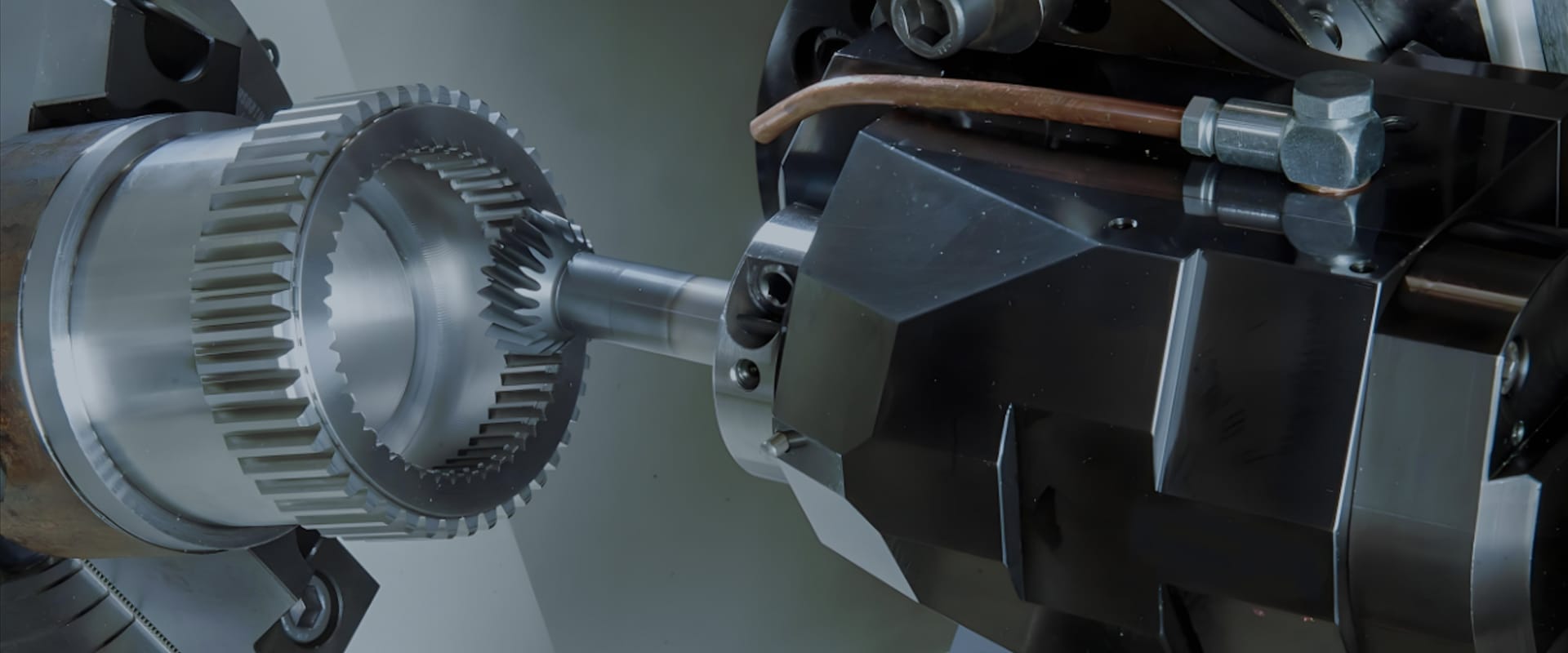
We offer hobbing manufacturing services for a wide range of industries, so contact us if you need to get precise custom gear manufacturing. High precision gear hobbing processing, for your mechanical transmission system to provide reliable protection!
Get A Quick Reply
The Gear Hobbing Process
Gear hobbing is a specialized machining process used to manufacture gears, splines, and other cylindrical toothed components through a cutting action. It encompasses various technical adjustments, such as radial and axial feeding, as well as differential compensation for producing different tooth profiles, like helical or spur gears. Depending on the complexity and precision requirements of the part, hobbing can be employed as a final shaping process or as a pre-machining step before heat treatment.
During the hobbing process, a dedicated cutting tool called a “hob” and the workpiece rotate simultaneously in a synchronized motion. The hob, which resembles a worm-shaped milling cutter with helical cutting edges, progressively generates the desired tooth profile into the metal blank through this generating motion.
Gear hobbing is an ideal method for the mass production of a wide variety of transmission components. This ranges from large-scale reduction gears and planetary carriers used in heavy machinery to miniature gears found in precision instruments, pumps, and timepieces.
The hobbing process is extensively utilized across sectors such as automotive manufacturing, aerospace, wind power, robotics, and general industrial machinery.
AFI Gear Hobbing Capabilities
AFI Industrial Co., Ltd. specializes in customized gear production, equipped with imported CNC gear grinding machines (with processing accuracy reaching DIN grade 4) and three-coordinate measuring instruments, capable of manufacturing various precision gears with modules ranging from 0.5 to 20mm.
We have a team of engineers with over 15 years of experience and adopt advanced carburizing and quenching processes (surface hardness HRC58-62, core hardness HRC30-35) to ensure the wear resistance and fatigue resistance of our products. We support minimum orders of 1 piece or mass production, providing cost-effective gear customization solutions for industries such as automobiles, machinery, and automation equipment.
Our project managers and experts will personally review and manually quote for each metal gear hobbing project to ensure your unique needs are met, while providing a fast and convenient manufacturing experience. Please explore the sections below to learn more about our process and capabilities, or get started by requesting a quote today.
Advantages of Gear Hobbing
Gear Hobbing is the most widely used manufacturing process for creating cylindrical gears. Its primary advantage lies in the generating principle, where the continuous rotation of both the cutter (hob) and the workpiece ensures high precision and speed. Here are the key advantages of gear hobbing:
- High Productivity and Efficiency
- Exceptional Versatility
- Superior Accuracy and Surface Finish
- Cost-Effectiveness for Scale
- Automated Flexibility
Disadvantages of Gear Hobbing
While Gear Hobbing is a powerhouse for production, it does have specific technical and physical limitations that make other methods (like shaping or milling) necessary in certain scenarios. Here are the primary disadvantages of gear hobbing:
- Inability to Machine Internal Gears
- Clearance Issues (Shoulder Interference)
- High Initial Tooling Cost
- Setup Complexity for Manual Machines
- Restricted to Specific Profiles
Gear Hobbing Materials
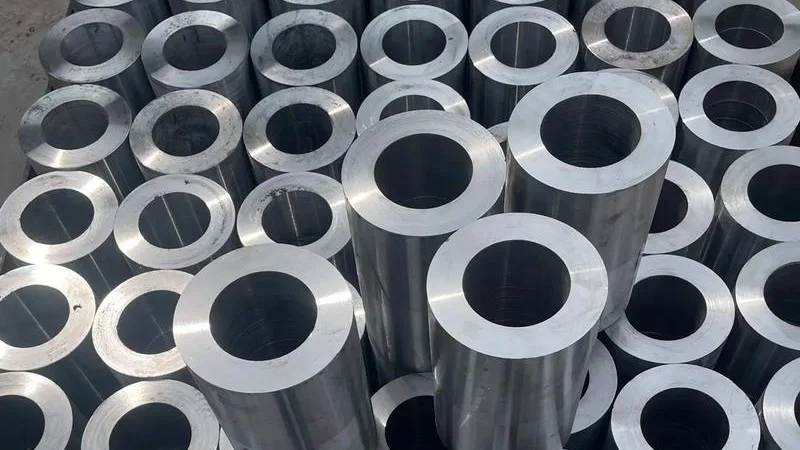
AFI Industrial Co., Ltd. offers clients a wide range of materials suitable for gear hobbing operations, including:
- Steels — The Most Commonly Used Materials
Steel is the mainstay of gear hobbing operations and is categorized into several sub-classes based on its intended end use; Quenched and Tempered Steels: e.g., 40Cr, 42CrMo (AISI 4140). These materials possess excellent overall mechanical properties and are frequently used for transmission gears subject to moderate loads. Carburizing Steels (Hardened Surfaces): e.g., 20CrMnTi, 12L14 (Free-Machining Steel), 8620. Following gear hobbing, these materials typically undergo carburizing and quenching treatments; this process renders the surface extremely hard (wear-resistant) while maintaining the toughness of the core (impact-resistant). Stainless Steels: e.g., 303, 304, 316L. Used in food processing machinery, medical equipment, or chemical environments, these materials offer exceptional corrosion resistance. However, materials such as 304 tend to cause significant wear on hob cutters due to their work-hardening characteristics. - Cast Iron
Gray Cast Iron (HT250/HT300): Characterized by excellent vibration-damping and self-lubricating properties, as well as superior machinability. It is frequently used for machine tool transmission gears that require smooth operation under relatively low loads. Ductile Iron (QT400/500): Possesses mechanical strength comparable to steel while retaining the vibration-damping qualities inherent to cast iron. - Non-Ferrous Metals
Copper Alloys (Bronze/Brass): Specifically, Tin Bronze (QSn6.5-0.1) or Aluminum Bronze. These are the preferred materials for manufacturing worm wheels, as they exhibit an extremely low coefficient of friction and high resistance to galling when paired with steel worm shafts. Aluminum Alloys: e.g., 6061-T6 or 7075-T6. Used in aerospace applications or precision instrumentation where weight reduction is a critical requirement. - Engineering Plastics. For applications involving low loads, high rotational speeds, low noise requirements, or situations where lubrication is not required, hobbing is frequently used to process plastic materials; POM (Polyoxymethylene / Acetal): Offers excellent dimensional stability and wear resistance. Nylon (PA66): Possesses good toughness and exhibits a degree of self-lubricating capability; PEEK: Used in specialized operating environments requiring high performance and high-temperature resistance.
AFI can machine gear-hobbing materials upon request, so feel free to contact our experts about the materials you need.
Our stamped materials can undergo post-processing treatments, such as carburizing and quenching, electroplating, nitriding, anodizing, shot peening, and more.
Ready to start your metal stamping project?
Get Your QuoteTypes of Gear Hobbing
Based on the principles of gear hobbing, the direction of tool feed, and the specific type of gear being processed, the design team at AFI Part offers clients the following categories of machining methods:
1. Classified by the Direction of Machining Motion: Axial Hobbing:
This is the most common hobbing method. While rotating, the hob moves vertically along the axial direction of the workpiece. This method is primarily used for machining standard cylindrical spur gears and helical gears.
Radial Hobbing: The hob feeds inward toward the center of the workpiece (in the radial direction) until it reaches the predetermined cutting depth. This method is typically used for machining worm gears, as the tooth profile of a worm gear requires complete engagement with the hob.
Tangential Hobbing: The hob feeds along a tangential direction relative to the workpiece. This method is commonly used for machining worm gears with large lead angles; it yields higher tooth profile precision compared to radial hobbing, though its machining efficiency is relatively lower.
2. Classified by Cutting Method:
Conventional Hobbing (Up-milling): The cutting direction of the hob is opposite to the direction of feed. This is the traditional machining method; the cutting force increases gradually, resulting in superior surface finish quality, and the requirements for machine tool rigidity are relatively low.
Climb Hobbing (Down-milling): The cutting direction of the hob is the same as the direction of feed. Climb hobbing can extend tool life and achieve extremely high production efficiency. Most modern CNC gear hobbing machines (such as those commonly used in manufacturing hubs like Dongguan) support climb hobbing, as it helps minimize work hardening.
3. Classified by the Geometry of the Workpiece:
Spur Gear Machining: The axis of the hob is tilted at a specific angle (the hob lead angle) relative to the axis of the workpiece.
Motor gears, general transmission components.
Helical Gear Machining: In addition to axial feed, the hob must remain synchronized with the rotation of the workpiece via a differential mechanism.
Automotive transmissions, heavy-duty speed reducers. Worm Gear Machining: Utilizes specialized worm gear hobs, typically employing radial or tangential feed methods.
Worm gear reducers. Sprocket/Spline Machining: Utilizes hobs with specific tooth profiles to machine non-standard involute tooth shapes. Industrial drive chains, power transmission shafts. Crowned gear machining involves controlling the feed path to create a convex profile along the tooth flank, thereby compensating for mounting errors. This technique is integral to high-end, precision transmission systems.
4. Modern High-Efficiency Machining Technologies:
Dry Hobbing: This method operates without the use of cutting fluids, relying instead on high-speed cutting to dissipate heat. This approach is not only environmentally friendly but also eliminates the oil fumes typically generated by cutting oils.
Hard Hobbing: This technique involves directly hobbing gears that have undergone quenching (possessing a hardness of HRC 55 or higher). It serves as a substitute for certain gear grinding processes, thereby enhancing efficiency and reducing costs.
Metal Stamping Production Volumes
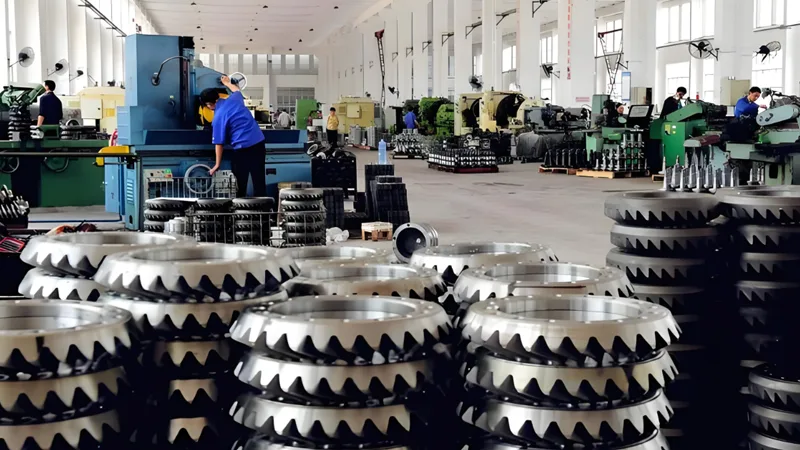
AFI Industrial Co., Ltd. has a complete vertical/horizontal gear hobbing processing system and adopts a unique process control system, which can achieve stable output with DIN grade 6 precision within the diameter range of Φ10-800mm. Especially in the module range of 0.5-12mm, our innovatively developed rapid change-over system can shorten the delivery cycle of small-batch orders (minimum 1 piece) by 60%, while maintaining a tolerance control of ±0.01mm, providing you with reliable and stable gear matching solutions!
Tight Tolerances
To ensure the quality of hobbing machining, AFI Industrial Co., Ltd. needs to strictly control product tolerances in the machining process, including gear size tolerances, tooth shape tolerances, tooth direction tolerances, radial runout tolerances, tooth spacing deviations, etc. We will choose the appropriate tolerances according to different gear uses and accuracy requirements, combined with customer drawings, to meet customer product needs.
Metal Stamping by Industry
AFI Industrial Co., LTD., relying on advanced mechanical equipment and a professional technical team, specializes in various precision gear hobbing processes. The size and shape accuracy of the gears we produce for our customers has reached an industry-leading level. Their surfaces are smooth, which can reduce wear and extend service life. Under the guarantee of high precision and high quality, gear transmission has high efficiency and smooth operation. They are widely used in aerospace, the electronics industry, and other fields, and are deeply trusted by customers.
Metal Stamping Video

Ready to Get a Metal Stamping Quote?
Free shipping available for domestic metal stamping orders!
Get Your Instant QuoteWhy Use AFI’s Metal Stamping Services?

Endless Options
AFI possesses high-precision multi-axis CNC gear hobbing equipment, enabling us to provide clients with a comprehensive suite of high-standard, customized gear solutions through material selection, heat treatment, and precision gear grinding.

Easy to Use
Get started with our easy-to-use platform and let our experts take care of managing the project from locating the right manufacturing partner to delivery logistics.

Vetted Network
We are ISO 9001:2015, ISO 13485, and AS9100D certified. Only the top shops that apply to become suppliers make it through our qualification process.