
services
Brushed Service
Delicate as silk, shiny as a mirror – drawing surface treatment, for your products to give extraordinary texture and lasting charm! AFI Industries Co., Ltd. offers a wide range of customized surface drawing services!
Get A Quick ReplyBrushed Metal Finishing with AFI
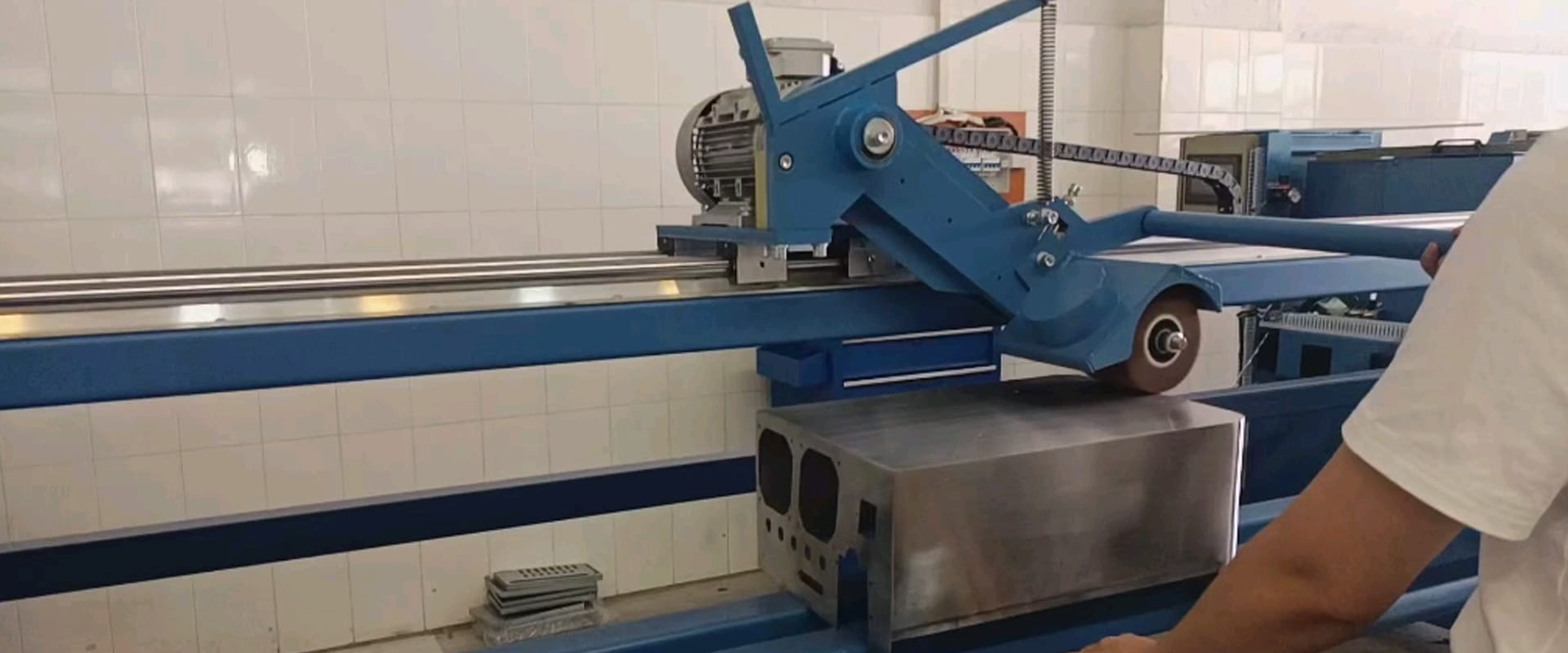
Brushed finishing is a mechanical surface treatment.
It creates a uniform, unidirectional grain pattern on metal substrates.
This process removes surface defects and prepares components for high-end industrial applications.
Engineers specify brushed textures for chassis, faceplates, and medical-grade enclosures.
AFI provides standardized brushing for aluminum, stainless steel, and specialty alloys.
Our facility supports grit requirements from #120 to #400.
We ensure grain consistency across complex geometries and welded assemblies.
Every part undergoes edge deburring and surface passivation.
We work directly from 3D CAD files to maintain tight geometric tolerances.
AFI manages the transition from prototype to mass production. Our workflow integrates secondary operations:
- PEM insert installation
- Precision welding
- Final assembly
We offer DFM (Design for Manufacturing) feedback to reduce unit costs. B2B pricing includes all applicable tariffs and international shipping. Reliable logistics for global procurement cycles.
AFI Brushed Metal Finishing Capabilities
| Feature | Description |
|---|---|
| Substrate Compatibility | Stainless steel (300/400 series), Aluminum (6061, 5052), and Copper alloys. |
| Abrasive Grit Range | Standard #120 to #400 grit. Custom Ra values available upon technical review. |
| Max Workpiece Size | 5′ x 10′ (1.52 m x 3.05 m). Accommodating larger surface areas upon request. |
| Material Gauge | 0.024″ – 0.250″ typical. Specialized handling for ultra-thin or heavy plates. |
| Grain Directional Control | Unidirectional linear brushing. Circular or multi-directional patterns available. |
| Surface Consistency | Automated feed systems ensure uniform Ra (Roughness Average) across batches. |
| Edge Management | Integrated deburring and corner rounding prior to surface finishing. |
| Secondary Processing | Passivation, laser marking, and protective film (PE) application. |
What is Brushed Metal Finishing?
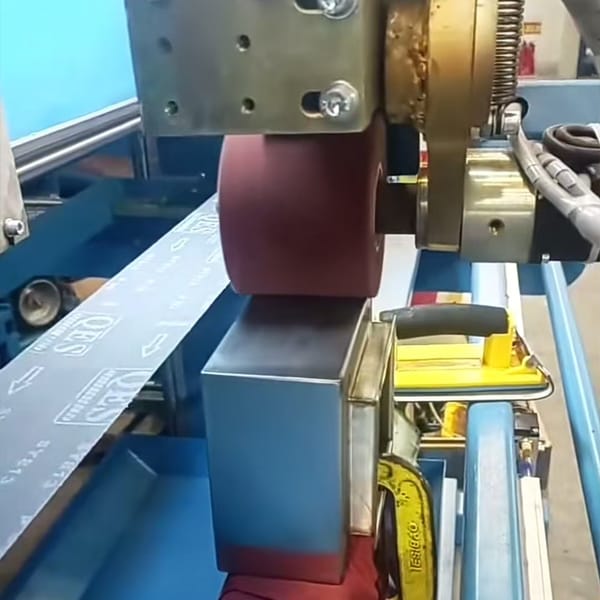
The brushing process begins after the primary substrate—typically stainless steel, aluminum, or brass—is cut and formed.
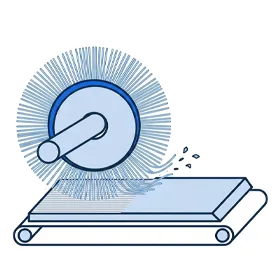
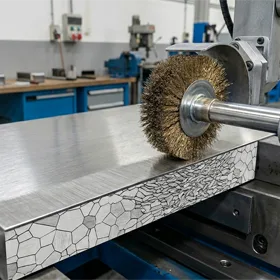
Mechanical abrasive belts or wire brushes are applied to the surface.
This creates a controlled, unidirectional grain pattern.
It effectively masks surface imperfections, welding marks, and handling scratches.
The result is a non-reflective, satin finish.
Engineers specify brushed textures for high-touch industrial components.
It is a standard requirement for aerospace panels, medical enclosures, and precision hardware.
Brushed surfaces provide enhanced durability and consistent aesthetic performance across production batches.
How AFI Brushed Finishing Workflow Works
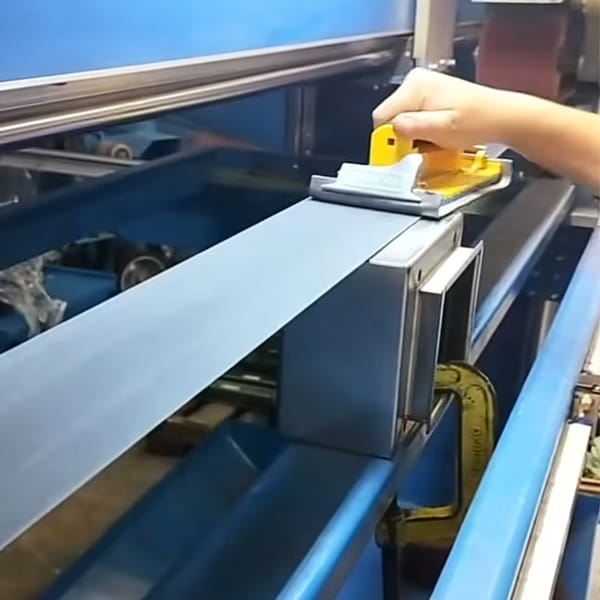
AFI streamlines the transition from raw fabrication to professional surface treatment.
Upload your technical drawings and specify your required grit (e.g., #180, #240, or #320).
We analyze grain direction requirements to ensure uniformity across multi-part assemblies.
Our systems calculate DFM-based pricing and lead times for high-tolerance components.
Once the order is confirmed, we utilize our specialized finishing capacity.
We maintain tight surface quality controls for complex geometries.
Custom parts are inspected for Ra (Roughness Average) consistency.
Your finished components are delivered with protective PE film to prevent transit damage.
Industry Applications
Our mechanical finishing serves critical sectors:
- Aerospace & Defense: Low-glare cockpit and instrumentation panels.
- Medical & Dental: Sterilizable, corrosion-resistant surgical equipment.
- Industrial & Energy: Durable enclosures for harsh operating environments.
- Automotive: High-precision decorative and functional trim.
Substrates for Brushed Metal Finishing at AFI
Aluminum 1100-H14
Aluminum 5052-H32
Aluminum 6061-T6
Copper 101/C110
Copper 260 (Cartridge Brass)
Finishing Note
Bronze 220
Bronze 510
Stainless steel 301
Stainless steel 304
Stainless Steel 304 #4 brushed
Stainless Steel 304, #8 mirror polish
Stainless steel 316/316L
Stainless Steel 316, #4 brushed
Steel 1018 (Low Carbon)
Steel 1045 (Hot Rolled)
Steel A569/ASTM A1011 (Hot Rolled)
AZ55 Galvalume
A653 Galvanized
1095 Spring Steel
Steel A36
Steel A36, pickled and oiled
Steel A366/1008
Inconel 625
Nickel Alloy 200
Nickel Alloy 400
Titanium (Grade 2)
Titanium 6AI-4V (Grade 5)
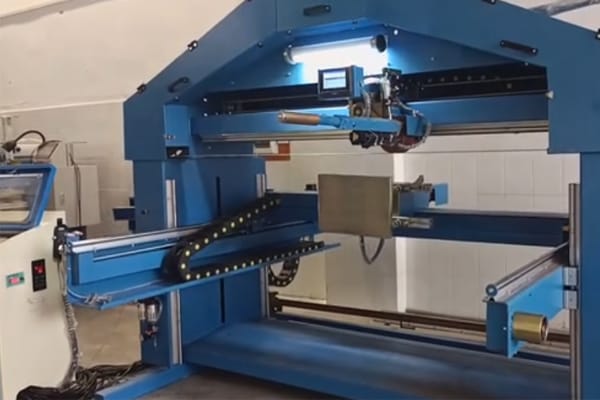
Technical Brushed Surface Specifications
We provide high-uniformity brushed finishes across various substrates. Achieve specific surface roughness and aesthetic consistency for your industrial enclosures or decorative panels.
Technical Specifications & Workflow:
- Standard Grains: Available in #120, #180, and #240 grit linear brushing.
- Substrate Compatibility: Optimized for Stainless Steel (304/316) and Aluminum (6061/5052).
- Precision Deburring: Secondary edge processing to ensure zero-burr assembly.
- Surface Protection: All brushed parts include PVC laser film coating to prevent transit abrasions.
Custom Requirements?
If your project requires specific Ra values or non-linear orbital sanding:
- Our engineering team will conduct a DFM review for your custom RFQ.
- Select “Other” in the finish dropdown.
- Upload your technical drawing with tolerance callouts.
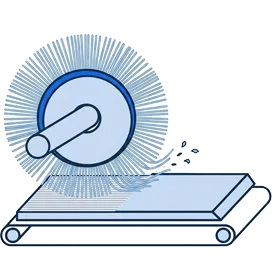
Get In-Depth Tips With Our Design Guide
Get GuideBrushed Design Guidelines
| Feature | Description |
|---|---|
| Grit Selection | Defines the coarseness of the texture. Common specs include #180–#240 for a standard architectural look, or #320–#400 for a finer, smoother “Satin” finish. |
| Grain Direction | Must be clearly defined on technical drawings (e.g., Longitudinal vs. Transverse). The grain should ideally run parallel to the longest dimension for visual continuity. |
| Surface Roughness ($R_a$) | Brushing typically results in an $R_a$ value ranging from 0.4 to 1.5 μm. This should be specified if the part has strict friction or hygienic requirements. |
| Edge Treatment | Sharp edges should be broken or radiused before brushing. Brushing over sharp 90-degree corners can lead to uneven “burning” or inconsistent grain patterns. |
| Post-Processing | For Stainless Steel, Passivation is recommended after brushing to restore the chrome-oxide layer. For Aluminum, Anodizing is often used to protect the texture from oxidation. |
| Feature Limitations | Deep recesses or tight internal corners are difficult to reach with standard brushing belts/wheels. Design for open geometries to ensure a uniform finish. |
| Touch Sensitivity | Brushed surfaces are prone to showing fingerprints. Specifying an Anti-Fingerprint (AFP) Coating or a clear nano-coating is highly recommended for consumer electronics. |
Advantages of Brushed Fabrication
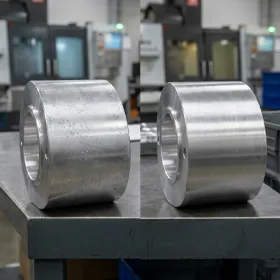
Masking Defects
Reduces scrap rates by hiding minor material inconsistencies.
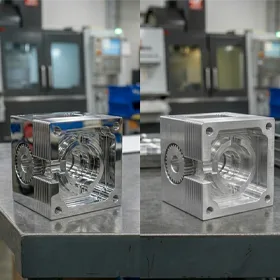
Light Diffusion
Improves ergonomics by eliminating high-intensity reflections.
Surface Hardness
The mechanical brushing process can slightly work-harden the surface layer.

Ready to Get a Brushed Fabrication Quote?
Free shipping available for domestic sheet metal orders!
Get Your Instant QuoteWhy Choose AFI Parts for Custom Brushed?
Endless Options
Choose from thousands of sheet metals and brushed finishes. From precise tolerances to full certifications, we refine every detail to define your quality.

Easy to Use
Get your parts delivered right to your door without the hassle of sourcing, project management, logistics, or shipping.

Vetted Network
We are ISO 9001:2015, ISO 13485, and AS9100D certified. Only the top shops that apply to become Suppliers make it through our qualification process.