
services
Metal Cutting
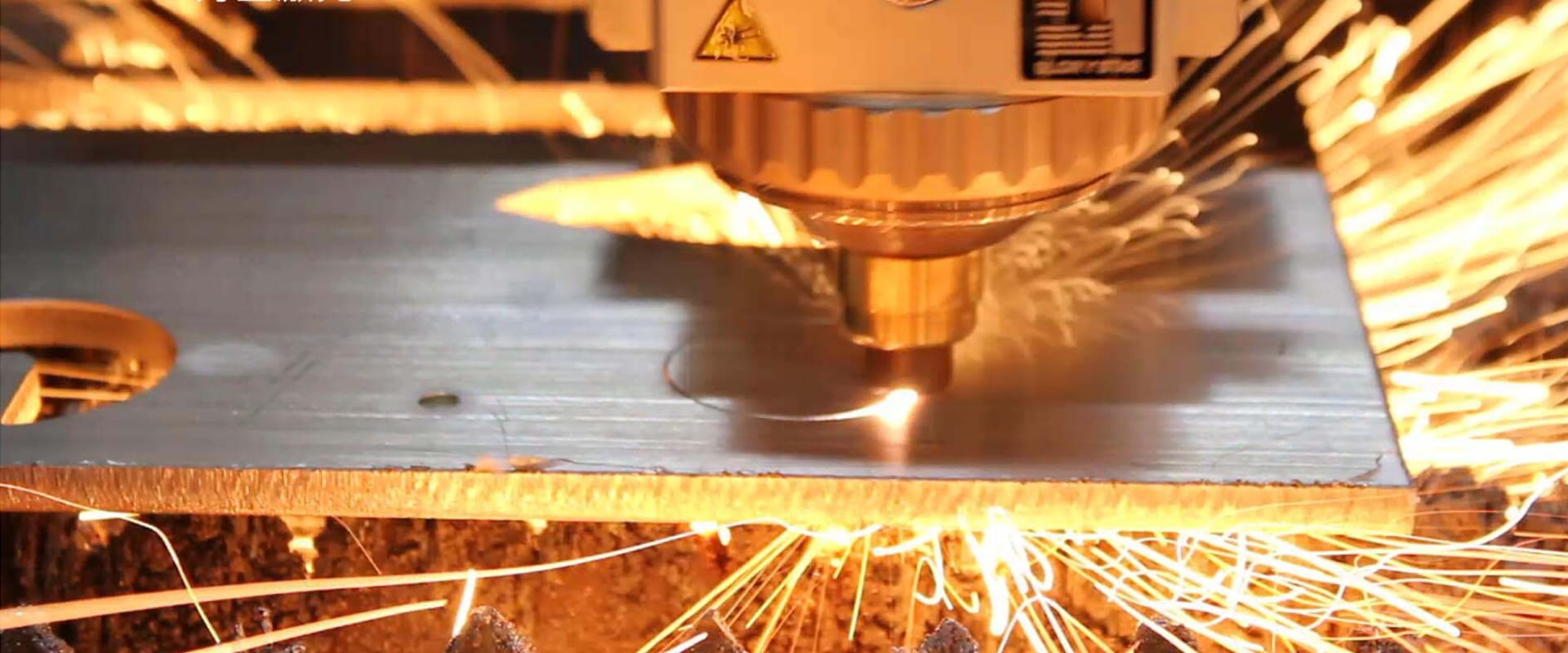
AFI Industrial Co., Ltd. provides customers with full-process metal cutting solutions, covering a wide range of materials, advanced processes and high-precision processing, to meet the customized demands of industrial manufacturing, construction, automotive, energy and other fields.
Get A Quick Reply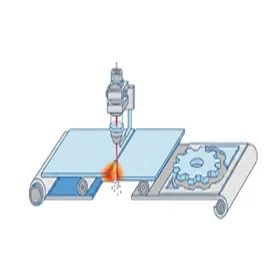
Metal Cutting Process
Metal cutting involves separating metal materials through physical, chemical, or thermal means to obtain the desired shape, dimensions, or properties.
AFI Industrial Co., Ltd. possesses multiple metal cutting systems, including laser cutting machines (capable of handling plate thicknesses ranging from 0.5 to 50mm), plasma cutting equipment, and high-pressure water jet cutting devices (with a cutting tolerance of ±0.1mm), which can meet the precise cutting requirements of highly reflective materials (such as copper alloys), composite plates, and irregular structural components.
AFI Metal Cutting Capabilities
AFI Industrial Co., Ltd. specializes in providing metal cutting services, equipped with advanced equipment such as laser cutting and water jet cutting. It optimizes process parameters based on the characteristics of different materials to ensure smooth cuts and precise dimensions (±0.05mm), meeting the processing requirements of complex parts and offering customers efficient and reliable cutting solutions。
We match the cutting process based on the material properties to achieve an excellent cutting surface roughness Ra<3.2μm. We provide professional cutting solutions for the aerospace, new energy, and other fields, meeting the processing requirements of customers in different industries.
Advantages & Disadvantages
Metal cutting is a fundamental process in manufacturing, and its pros and cons depend heavily on the specific technology used. Here is a breakdown of the advantages and disadvantages of the most common metal cutting methods:
- Laser Cutting
Utilizes a high-power-density laser beam to scan the material surface, causing it to melt or vaporize.
Advantages:
Extremely High Precision: Produces a very narrow kerf (cut width), making it ideal for processing complex geometric shapes.
Small Heat-Affected Zone (HAZ): Minimizes material deformation.
Non-Contact Process: Eliminates tool wear and offers extremely high efficiency when processing thin sheets.
Disadvantages:
Thickness Limitations: Although the technology is constantly advancing, its performance when cutting exceptionally thick plates (e.g., over 30 mm) is inferior to that of plasma or oxy-fuel cutting.
High Equipment Cost: Requires significant upfront investment and incurs high maintenance costs.
- Plasma Cutting
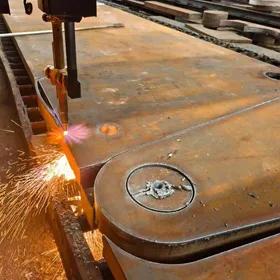
Utilizes the heat generated by a high-temperature plasma arc to locally melt the metal at the workpiece’s cut line.
Advantages:
High Speed: When cutting medium-thickness carbon steel, stainless steel, and aluminum, its cutting speed surpasses that of laser cutting.
Versatility: Capable of cutting any electrically conductive metal.
Disadvantages:
Cut Angle/Bevel: The edges typically exhibit a certain degree of bevel (a V-shaped cut), resulting in slightly lower precision compared to laser cutting.
Environmental Impact: Generates significant amounts of smoke, dust, and noise; typically requires the use of a water table for mitigation.
- Waterjet Cutting
Employs a high-pressure stream of water mixed with an abrasive material (typically garnet) to perform an erosive cutting action.
Advantages:
No Thermal Effects: A “cold cutting” process that creates absolutely no heat-affected zone (HAZ), thereby preserving the metal’s physical properties.
Master of Thickness: Capable of cutting metals of virtually any thickness (even exceeding 200 mm).
High Edge Quality: Produces a smooth cut surface that typically requires no secondary finishing.
Disadvantages:
Slower Speed: Compared to laser and plasma cutting, the processing cycle is significantly longer.
Operating Costs: Incurs high costs related to abrasive consumption and the maintenance of the high-pressure pump.
- Oxy-Fuel Cutting
Utilizes the heat generated by the combustion of fuel gas and oxygen to perform an oxidative cutting reaction.
Advantages:
Extremely Low Cost: Features simple, portable equipment and offers the lowest operating costs.
Preferred for Thick Plates: Capable of cutting thicknesses reaching several hundred millimeters, making it a cornerstone of heavy industry. Disadvantages:
Limited to Carbon Steel: Cannot cut stainless steel or aluminum (as they do not undergo an exothermic oxidation reaction).
Severe Thermal Distortion: The heat-affected zone is extensive, resulting in the lowest level of precision.
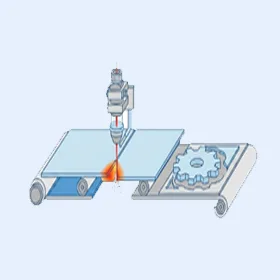
Uses a high-power laser beam to melt or vaporize the material.
Metal Cutting Materials
Almost all industrial metals can be cut. However, the choice of cutting method depends heavily on the material’s hardness, melting point, thermal conductivity, and reflectivity.
| Cutting Method | Key Advantages | Main Limitations |
|---|---|---|
| Laser Cutting | High precision, complex shapes | High cost for thick plates |
| Plasma Cutting | High efficiency for thick plates | Tapered cut edges |
| Waterjet Cutting | No heat-affected zone, versatile material usage | Slow speed, high abrasive consumption |
| Wire EDM | Suitable for ultra-hard materials | Low processing efficiency |
| Mechanical Sawing | Simple and easy to operate | Limited shapes (mostly linear) |
Ready to start your metal stamping project?
Get Your QuoteTypes of Metal Cutting
Metal cutting is a fundamental process in the manufacturing industry. Based on differences in underlying principles, precision levels, and applicable materials, it can be broadly categorized into the following major groups:
- Thermal Cutting: These methods utilize thermal energy to locally melt, burn, or vaporize the metal, thereby achieving the cut.
Laser Cutting: Uses a high-energy-density laser beam directed at the metal surface to rapidly melt or vaporize the material. Characteristics: Extremely high precision, smooth cut edges, and suitability for complex shapes and a wide variety of metal materials.
Plasma Cutting: Utilizes a high-temperature plasma arc to melt the metal, while a high-velocity gas stream blows away the molten material. Characteristics: Fast cutting speeds; particularly suitable for cutting medium-to-thick carbon steel and stainless steel plates; relatively low cost.
Oxy-fuel Cutting: Cuts metal using a high-temperature flame generated by the reaction between oxygen and a fuel gas (such as acetylene or propane). Characteristics: Suitable for cutting extremely thick carbon steel; requires simple equipment; however, it is prone to causing deformation when cutting thinner metals.
Wire EDM (Wire Cutting): Uses a thin metal wire as an electrode to erode the metal through the heat generated by electrical discharges. Characteristics: Suitable for processing ultra-hard materials (such as cemented carbide and hardened steel) and capable of machining extremely complex shapes. - Mechanical Cutting: Separates metal using physical shearing forces or mechanical abrasive forces.
Shearing: Cuts metal sheets using the shearing force generated by opposing upper and lower blades. Characteristics: Fast operation; suitable for high-volume cutting of thin metal sheets.
Sawing: Performs mechanical cutting using a band saw or circular saw. Characteristics: Suitable for cutting off bars, tubes, and structural profiles; simple to operate.
Waterjet Cutting: Uses an ultra-high-pressure stream of water mixed with abrasive particles to perform impact cutting. Characteristics: A “cold cutting” process that does not create a heat-affected zone (preventing thermal deformation); suitable for cutting various heat-sensitive materials as well as thick materials. - Other Specialized Cutting Methods—Punching/Blanking: Uses a die to cut through metal sheets. Characteristics: Suitable for the mass production of parts with standard shapes. Technical Summary and Comparison
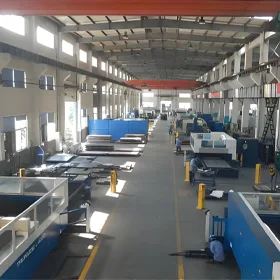
Metal Cutting Production Volumes
Based on our clients’ scheduling requirements, we can fulfill orders ranging from a single unit to millions.
AFI Industrial Co., Ltd. specializes in metal cutting processing services, integrating three advanced technological processes: laser cutting (±0.03mm), water jet cutting (600MPa), and plasma cutting (30000℃).
We have an experienced team of engineers who can provide customized processing solutions for the characteristics of different metal materials. My metal cutting process keeps the key dimensional tolerances within ±0.01mm and the surface roughness below Ra1.6μm. It is applied to the precision processing requirements in fields such as aerospace precision structural components, automotive core parts, and high-end medical devices.
Tight Tolerances
AFI Industrial Co., Ltd. specializes in metal cutting processing. According to the technical requirements of the customer’s drawings, we ensure smooth and flat cuts and precise dimensions through laser cutting, water jet cutting, and other processes.
| Cutting Method | Typical Tolerance | Kerf Width (Waste) | Edge Quality |
|---|---|---|---|
| Laser Cutting | ±0.1 mm | 0.1 – 0.3 mm | Smooth, high precision |
| Waterjet | ±0.1 – 0.2 mm | 0.5 – 1.0 mm | Excellent, no heat damage |
| Plasma Cutting | ±0.5 – 1.5 mm | 1.5 – 3.0 mm | Rougher, some dross |
| Flame/Oxy-Fuel | ±2.0 – 4.0 mm | 3.0 – 6.0 mm | Rough, for thick plates |
| Wire EDM | ±0.005 – 0.02 mm | 0.1 – 0.2 mm | Mirror-like, ultra-precise |
The company adopts a scientific process parameter optimization system to control the heat-affected zone during processing effectively, retain the mechanical properties of the material, and is equipped with three-coordinate measuring machines, surface roughness testers, and other testing equipment to implement full-process quality monitoring, ensuring that the product tolerance (±0.1mm) and surface quality (Ra≤3.2μm) comply with technical specifications.
Metal Cutting Video
FAQ
What is the metal cutting definition?
Metal Cutting refers to the use of knives and other sharp tools to cut an object, or the use of tools such as machine tools, flames, etc., under the action of pressure or high temperature to disconnect the object. Cutting is a kind of physical action. In a narrow sense, it means using a knife and other sharp tools to cut an object (other objects with low hardness, such as food, or wood); In a broad sense, it refers to the use of tools such as machine tools, flames, etc. to disconnect objects under pressure or high temperature.
What is laser cutting?
Laser cutting is the use of high power density laser beam to irradiate the material to be cut, so that the material is quickly heated to the vaporization temperature, and evaporates to form holes. As the beam of the material moves, the hole continuously forms a very narrow-width slit, to complete the cutting of the material.
What is gas metal cutting?
Gas cutting, also known as oxygen cutting or flame cutting, is a method that uses the high-temperature flame generated by the combustion of oxygen and flammable gas to cut metal materials. We can provide customized cutting solutions based on the characteristics of your products to help you improve cutting efficiency and reduce gas consumption.
Can your company customize V-shaped metal cutting?
Yes! Our company provides customers with high-precision V-shaped cutting technical services. The V-shaped cutting service applies to materials such as metal, plastic, and wood.
Our engineers can provide cutting solutions based on your product requirements, helping you reduce processing procedures, improve production efficiency, and meet your special processing needs!
Are you a cutting plant or a trading company?
We are a cutting plant, with advanced equipment and professional business personnel to provide you with high-quality products without middlemen to earn profits

Ready to Get a Metal Stamping Quote?
Free shipping available for domestic metal stamping orders!
Get Your Instant QuoteWhy Use AFI’s Metal Stamping Services?
Endless Options
Choose from millions of possible combinations of materials, finishes, tolerances, markings, and certifications for your order.

Easy to Use
Get started with our easy-to-use platform and let our experts take care of managing the project from locating the right manufacturing partner to delivery logistics.

Vetted Network
We are ISO 9001:2015, ISO 13485, and AS9100D certified. Only the top shops that apply to become suppliers make it through our qualification process.