
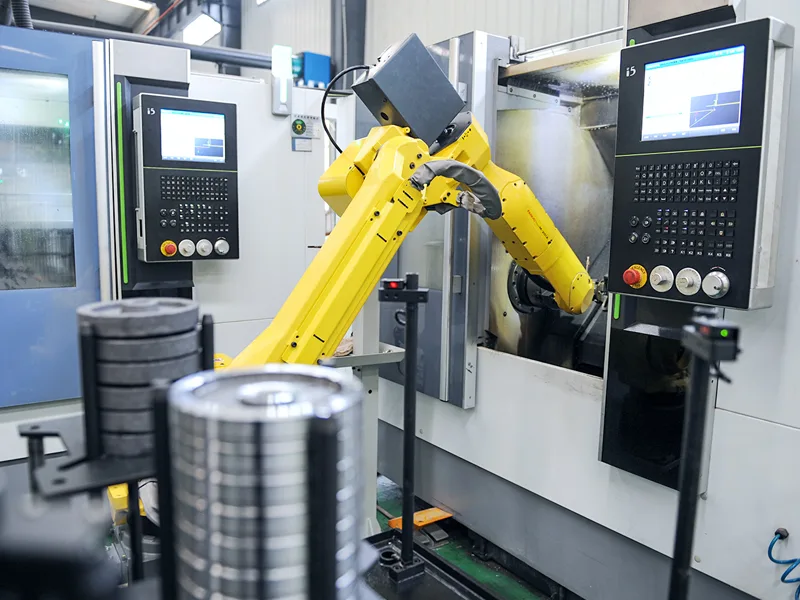
The landscape of precision metal parts manufacturing is undergoing a paradigm shift. Smart manufacturing is changing how CNC machine shops work. In an era where tight tolerances, rapid prototyping, and high-volume aerospace CNC machining dictate market leadership, relying on post-mortem production reports is no longer viable. Operators use real-time monitoring to keep up with others. Smart manufacturing utilizes advanced sensors, robust industrial communication protocols, and edge computing devices to give quick information.
At AFI Parts, our commitment to custom CNC milling services and uncompromising quality control has driven us to transition from reactive maintenance to proactive, data-driven operations. Shop managers can spot problems right away and fix them fast. Data extracted from smart manufacturing architectures helps teams plan repairs and stop delays, while also helping make products better. By integrating state-of-the-art Industrial Internet of Things (IIoT) frameworks, smart manufacturing uses AI and IoT to help make choices faster. Ultimately, smart manufacturing lets CNC shops use data to act and get better results.
Key Takeaways
- Rapid Problem Resolution: Real-time monitoring lets CNC shops find problems fast, which lowers downtime and makes work better.
- Seamless Data Flow: IoT devices link machines and sensors together, letting data move quickly to help people make good choices.
- Downtime Mitigation: Predictive maintenance can lower downtime by half, allowing teams to fix problems before they get worse.
- Operational Visibility: Dashboards show live updates about how machines are working, so operators can act quickly and keep things running.
- Workforce Adaptation: Training operators on new systems is very important for automation. Hands-on practice helps them feel sure of themselves.
- Strategic Software Selection: Picking the right software and IoT platform is key for smooth setup and future growth.
- Cultural Shift: Open talk and support from leaders help the team feel good and work better.
- Yield Enhancement: Real-time monitoring can help shops get much more work done, with some shops doing up to 50% more work this way.
Table of Contents
Real-Time Monitoring in Smart Manufacturing
Why Monitoring Matters
In the high-stakes environment of 5-axis CNC machining, idle spindles equate to hemorrhaging capital. Smart factories need real-time monitoring to work well. In 2026, CNC machine shops watch their machines all the time. Traditional manufacturing often suffers from localized “data silos,” where the performance of a VMC (Vertical Machining Center) or a Swiss-type lathe remains a mystery until a part fails a CMM (Coordinate Measuring Machine) inspection. To counter this, smart tool holders and tool management systems are very important. These sophisticated systems help teams know when tools need fixing and help them use each tool in the best way.
Consider the vulnerabilities present during operational handoffs. Real-time monitoring checks for downtime at shift changes, meaning managers can see how operator actions affect work. In an industry baseline report analyzing traditional floor management, a report showed operators leaving early or starting late caused 5.5 hours of downtime in one week. It cost Rs. 5000. By democratizing this information, showing performance data on a monitor helps everyone see how they are doing. It makes people more responsible and helps the shop work better. Smart factory teams use machine monitoring to find problems early, which stops big failures and keeps production on track.
AFI Parts Engineering Pilot Review: > Scope: Implementation of real-time spindle load monitoring across six Fanuc-controlled high-speed milling centers.
Initial State: Average OEE (Overall Equipment Effectiveness) was baseline at 52%, heavily impacted by undocumented micro-stops during titanium roughing cycles.
Finding: We discovered that 18% of spindle downtime was caused by chip-conveyor jams that were never formally logged. Continuous monitoring allowed us to adjust coolant flow parameters and chip evacuation timing, reclaiming over 40 hours of machining time monthly.
Impact on CNC Operations
Real-time monitoring changes how CNC shops do their jobs. The transition from analog whiteboards to digital twins creates a responsive ecosystem. Operators and managers get live updates about machines, tools, and parts, which helps them fix problems quickly. One of the most profound impacts is the implementation of condition-based maintenance. Predictive maintenance uses IoT sensors to cut downtime by up to 45%. Aggregated industry studies show IoT-based predictive maintenance can lower downtime by 30–50%.
Beyond maintenance, real-time data shows when operators do not follow their schedules. Teams can fix these issues right away. For example, when cutting exotic alloys like Inconel or Hastelloy, optimal feed and speed rates are paramount. Operators sometimes manually override these rates to compensate for perceived chatter. The system controls feed rate overrides, which are critical because this stops tool damage and bad part quality. By enforcing programmed parameters, these changes help automation and make smart factories work better.
Core Impacts Checklist:
- Downtime management: Instantaneous alerts for servo motor overload or coolant pressure drops.
- Feed rate override control: Locking out unauthorized deviations from CAM-programmed cutting parameters.
- Predictive maintenance: Utilizing vibration analysis to predict spindle bearing failure.
- Tool usage optimization: Tracking exact engagement time via macro variables to maximize carbide insert life.
Data Streaming and Decision-Making
Smart factory CNC shops use IoT devices and data streaming to decide faster. The architecture of this data stream is the backbone of modern precision machining. Real-time data from sensors gives managers quick updates, which helps reduce mistakes and improve efficiency. Crucially, it works for any number of machines.
However, a major hurdle in scaling operations is legacy infrastructure. Old machine interfaces use special protocols that are hard to connect to. Proprietary communication standards previously locked data within the machine tool builder’s ecosystem. Today, open standards have revolutionized data aggregation. MTConnect gives easy and fast access to machine data, which makes automation simpler. MTConnect acts as a universal translator, reading raw hex data from a PLC and outputting structured XML.
Smart systems do more than show data; they learn from the data. These systems read real-time information and suggest what to do next. For instance, if data streaming indicates a thermal expansion trend in the Z-axis ball screw, the system can autonomously recommend a thermal compensation offset. Smart factory teams use IoT and real-time data to stay ahead. Continuous monitoring and data streaming help them make good choices and keep production going.
Key Technologies for Monitoring
IoT Integration
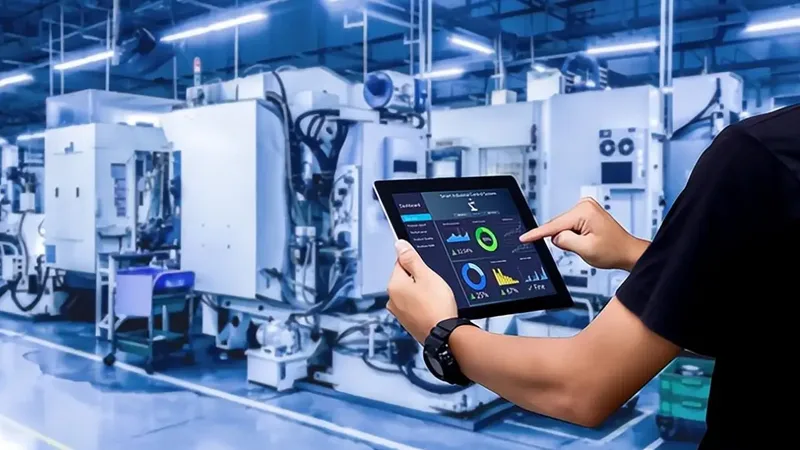
IoT integration is very important in CNC machining. The IIoT architecture functions as the central nervous system of the manufacturing floor. IoT links machines, sensors, and software together, and this network shares data right away. Consequently, managers can see what happens on the shop floor. IoT helps teams check how machines work. It also tracks energy use and tool status.
To handle this massive influx of time-series data, many companies have platforms for machine monitoring. These platforms help shops collect and study data from CNC machines. The selection of the right integration partner dictates the fidelity of the data harvested.
The table below lists the top IoT devices and platforms used for monitoring in 2026:
| Company Name | Specialization | Integration Capability Profile |
|---|---|---|
| CGTech | Software for manufacturing processes, simulation, and optimization | VERICUT integration for digital twin kinematics. |
| MachineMetrics | Cloud-based monitoring with analytics and user-friendly interfaces | Plug-and-play edge devices with high-frequency data sampling. |
| FreePoint Technologies | Energy monitoring with growth potential | Ideal for legacy non-networked machines via I/O signals. |
| Scytec | Comprehensive monitoring solution with global reach | Robust API for seamless ERP/MES data nesting. |
| eNETDNC | DNC and data management systems | Secure direct numerical control for revision management. |
| MGC BV | Customizable solutions | Tailored edge analytics for unique proprietary setups. |
| JITbase Technology Inc | Lean manufacturing environments | Optimal path planning and operator sequencing. |
| Refresh Your Memory | Innovative data collection tools | Focus on bridging analog signals to digital streams. |
| Predator Software | Established platform for machine monitoring | Deep integration with legacy Fanuc and Haas controls. |
| Memex | Data-driven performance solutions utilizing IoT | Real-time OEE engine with deep financial metrics. |
| Seiki Systems Ltd | Integration with ERP solutions | Closing the loop between order scheduling and floor execution. |
| UTTec | Real-time data analysis technology | Advanced signal processing for structural machine health. |
Ultimately, IoT integration helps automation and makes manufacturing better. Shops can use these platforms to link old machines and new CNC systems. Because IoT makes sharing information between machines and software easier, selecting the right ecosystem is paramount.
- Tip: Pick an IoT platform that fits your shop’s needs, and make sure it works well with your current equipment.
AI-Powered Monitoring
AI-powered monitoring uses smart programs to watch CNC machines. Unlike traditional threshold-based alarms (e.g., “Alert if Spindle Load > 110%”), AI employs dynamic algorithms. These systems learn how machines should work by looking at sensor data. Through unsupervised machine learning, AI can find problems before they get worse.
Here are the primary ways AI systems spot issues:
- Machine learning programs study normal machine actions. They establish a baseline of acceptable harmonics during a specific G-code execution.
- They notice changes that may mean something is wrong, so teams can fix things early.
- AI checks many things like temperature, pressure, and vibration to find small problems.
When analyzing massive datasets, models can find point anomalies, contextual anomalies, and collective anomalies. A collective anomaly in CNC machining might be a scenario where axis servo current is within normal range, and coolant flow is normal, but the combination of slightly elevated current and slightly reduced flow at a specific toolpath vector indicates impending tool catastrophic failure. The system tells about changes from normal, like more vibration or heat, which can mean a machine might break soon.
AI keeps watching data streams to find new problems. By leveraging historical failure data, predictive analytics can predict how long a part will last, so teams know when to do repairs. In conclusion, AI-powered monitoring helps teams stop breakdowns and plan repairs, making machine monitoring better and helping teams make good choices.
Machine Sensors and Connectivity
Sensors are important for collecting real-time data in CNC shops. The fidelity of any smart manufacturing initiative is strictly gated by the quality of the physical sensors installed. Cheap current sensors track power use and total current. These split-core CTs (Current Transformers) are non-invasive and work well with CNC and older machines.
Beyond electrical characteristics, mechanical feedback is vital. Auditory sensors listen to machine sounds. Using Acoustic Emission (AE) technology, they can detect the exact millisecond a micro-fracture occurs in a solid carbide endmill. They help teams know if something is wrong. Furthermore, visual sensors take pictures to show how machines work. High-speed machine vision can verify part seating in hydraulic fixtures before the cycle initiates.
Data collection is useless without rapid transmission. Good connectivity lets sensors send data to software fast, which helps managers see problems and act quickly. Robust architectures utilize IO-Link standard protocols for sensor-level communication. Machine sensors and strong connections help with monitoring and automation, helping teams keep machines working and make products better.
Note: Using the right sensors and keeping them connected gives good data for monitoring and making choices.
Implementation Steps
Assessing Readiness
To start automation in CNC machining, shops must check if they are ready. Implementing IoT without a foundational lean manufacturing structure leads to digitized chaos. Leaders need to set clear goals for machine monitoring. These goals can be less downtime and better OEE (Overall Equipment Effectiveness).
A critical aspect of readiness is the communication loop. Operators should get instant alerts about shop floor events. Teams need to see what is happening in production. A transparent culture helps everyone use the monitoring system. Top-down alignment is mandatory; the CEO should be involved and support the team. This executive sponsorship builds trust and keeps people motivated.
From a hardware standpoint, shops must look at their CNC machining equipment and network. Most new CNC machines have Ethernet ports for easy data collection. However, IT departments must map out static IPs and ensure the network switch backbone can handle continuous packet loads. Teams should see if old machines need upgrades to connect. This step helps automation in CNC machining work well.
- Key readiness factors:
- Clear goals for machine monitoring
- Open and honest culture
- CEO support and involvement
- Check CNC machining equipment and network
- Plan upgrades for old machines
Tip: Shops with strong leadership and clear goals do better with automation in CNC machining.
Connecting Machines
The next step is to connect all machines for automation in CNC machining. Creating a unified data lake means teams must link old and new CNC systems to the monitoring network. Good connections let data flow in real time. This seamless integration helps automation in CNC machining work smoothly.
Retrofitting Legacy Equipment
Legacy iron often lacks modern RJ45 ports. Older CNC machines use RS-232 serial cables to send data. To bypass the limitations of analog drip-feeding, teams can use serial-to-Wi-Fi converters to connect these machines. This lets old machines join modern networks. Additionally, USB adapters help connect old and new systems. Through strategic edge computing devices that tap into low-voltage relay logic, retrofitting keeps manufacturing running well.
Integrating New CNC Systems
New CNC systems have Ethernet and Wi-Fi features. These natively embedded MTConnect or OPC UA agents make connecting easier and help automation in CNC machining. Hardwired Ethernet is fast and reliable, ensuring zero packet loss during high-frequency data sampling. Alternatively, Wi-Fi lets teams transfer files and watch machines from far away.
The table below shows ways to connect CNC machining equipment:
| Connection Method | Type | Description | Engineering Application Context |
|---|---|---|---|
| RS-232 serial cable | Wired | Used in older CNC machines for serial data transfer. | Best for DNC drip-feeding simple 2D toolpaths to older Fanuc O-M controls. |
| Ethernet connection | Wired | Fast and reliable, integrates machines into the shop’s LAN. | Essential for streaming heavy 5-axis simultaneous CAM data safely. |
| USB connection | Wired | Simple data transfer often needs adapters for legacy equipment. | Useful for manual macro variable extractions during maintenance. |
| Serial to Wifi converters | Wireless | Connects old CNC machines to wireless networks via RS-232 port. | Bridges the gap between analog controllers and modern IoT gateways. |
| Wifi | Wireless | Available in new CNC machines, supports file transfer and remote access. | Enables AGV (Automated Guided Vehicle) synchronization with CNC cells. |
Note: Connecting every machine, old or new, is needed for good automation in cnc machining.
Software and Platform Selection
Picking the right software is important for automation in CNC machining. A beautifully networked shop floor is useless if the middleware cannot interpret the proprietary data structures. The software must work with the CNC brands and protocols in the shop. It should show OEE and other data without extra coding.
Because manufacturing floors are rarely homogeneous, teams need software that works on both new and old machines. To prevent isolated data islands, APIs and connectors help link ERP and MES systems, allowing automatic triggering of raw material purchasing when scrap rates exceed nominal thresholds.
The IT infrastructure dictates deployment. The software can be cloud, on-premise, or hybrid. The choice should fit IT and compliance needs (for example, handling defense components under strict ITAR regulations strictly necessitates on-premise servers). Furthermore, the platform should grow with future needs like AI and predictive analytics.
- Features to look for:
- Works with CNC brands and protocols
- Shows OEE and other data
- Easy to use on all CNC machines
- APIs for ERP and MES links
- Fits IT and compliance rules
- Can grow for future automation in CNC machining
- Connects with many protocols (MTConnect, OPC UA, Fanuc FOCAS, serial)
- Real-time dashboards for spindle status and cycle time
- Built-in OEE tracking
- Automatic alerts for downtime and tool wear
- Stores data for long-term study
- Easy links to MES, ERP, and quality systems
“Deployment models matter when picking software:
- Cloud: Easy to grow, good for remote access and reports.
- On-Premise: Best for strict rules or sensitive data.
- Hybrid: Mixes control and growth for balance.
Choosing the right software helps automation in CNC machining work well. Teams should pick platforms that fit their goals and plans.
Operator Involvement and Training
Operator involvement is very important for CNC machining automation. Operators need to know how dashboards and IoT systems work. Training helps operators learn new monitoring tools. These programs use hands-on practice and site simulations. Operators train in safe places that look like real shops. This helps them feel confident and make good choices.
Operator involvement is very important for CNC machining automation. The most sophisticated IIoT deployment will fail if the machinists view it as an adversarial surveillance tool rather than a productivity enhancer. Operators need to know how dashboards and IoT systems work. Comprehensive training helps operators learn new monitoring tools.
Modern training paradigms leverage advanced pedagogical tools. These programs use hands-on practice and site simulations. Operators train in safe places that look like real shops. This helps them feel confident and make good choices. A good training plan teaches basic and advanced CNC skills, ensuring that operators understand why the spindle load data is being collected, not just how to clear an alert on an iPad. It also covers safety and solving problems.
The table below lists important parts of operator training for CNC machining:
| Training Aspect | Description | Practical Implementation |
|---|---|---|
| Site Simulations | Make safe places for real job practice. This helps operators learn to make good choices. | Using digital twins to simulate axis collision recovery procedures. |
| Problem-Solving Skills | Teach how to check shop conditions and plan work for surprises. | Root cause analysis (5 Whys) training for persistent alarm codes. |
| Addressing Learning Styles | Use different teaching methods for visual, listening, and hands-on learners. | Blending classroom theory with interactive HMI screen navigation. |
| Structured Progression | Start with easy ideas and move to harder ones. This helps operators remember what they learn. | Moving from basic alarm acknowledgment to editing macro variables. |
| Technical Skills Emphasis | Teach special machine skills and general skills, like safety checks. | Training on the specific kinematics of trunnion vs swivel-head 5-axis machines. |
| Safety-First Mentality | Show how to check for dangers and stay safe at work. | Understanding automated interlock bypass risks during setup. |
Through this, operators learn to use IoT devices and dashboards for CNC machining. Training shows how to read alerts, use monitoring data, and follow safety rules. Because programs use many teaching styles, so all operators can do well, the workforce becomes digitally fluent. Safety is always important. This keeps the shop safe and working well. Tip: Get operators involved early when switching to smart manufacturing; their ideas help make training and systems better.
Dashboards and Alerts
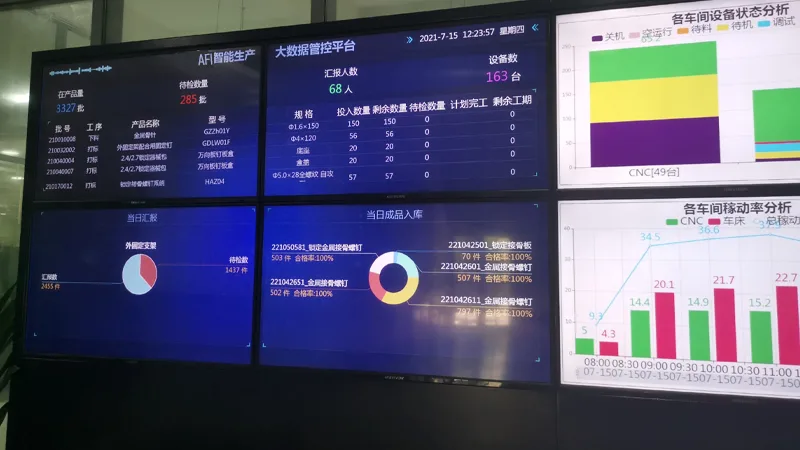
Dashboards and alert systems are key in CNC machining today. These are the visual manifestations of the data lake. These tools give quick updates about machines, tool wear, and production. Through contextualized HMI (Human-Machine Interface) screens, operators and managers see live data from IoT sensors. This situational awareness helps them act fast when something goes wrong.
Effective dashboards abstract complex data into actionable insights. Dashboards show important numbers like spindle speed and downtime. Advanced Andon systems utilize threshold algorithms; alerts tell staff about problems before they get worse. To ensure rapid response, notifications reach people quickly by email, SMS, or apps. If problems are not fixed, they go to supervisors. This hierarchical escalation protocol keeps work moving and stops big delays.
The table below shows how dashboards and alerts help CNC machining:
| Feature | Key Benefits |
|---|---|
| Real-Time Monitoring | See updates fast, Less downtime, Quick action |
| Alerts & Notifications | Right alerts, Less extra info, Faster help |
| Multi-Channel Notifications | Many ways to send alerts, Easy to use, Fast delivery |
| Escalation Management | Fix problems, keep track, Automate steps |
Dashboards help staff see patterns and find problems early. Automated monitoring collects data and sends alerts right away. For example, MachineMetrics uses IoT to give updates and alert the right team. This helps teams decide faster and get better results. Dashboards and alerts help staff fix problems before they get worse. Because automated data collection gives quick info for fast choices, production becomes agile.
Note: Use dashboards that are simple and easy to change. This helps operators see the most important things for their CNC machining work.
Monitoring Benefits for CNC Shops
Productivity and Efficiency
The ROI of smart manufacturing is most visible in throughput. CNC machining shops get much better at work with real-time monitoring. Teams watch machines to see how much they are used. By mapping the time stamps of M-codes (like M30 end of program), they also find slow spots in the process.
Centralized visibility eliminates scheduling guesswork. Managers can see what every machine is doing. This helps them change plans and share work better, dynamically re-routing jobs if a machine goes offline.
The table below shows how CNC shops improved:
| Productivity Gains | Description |
|---|---|
| 10–50% | Many CNC shops got 10–50% more work done after using real-time monitoring. |
| Case Study | One shop finished jobs faster, going from 3 weeks to just 2 days by making their work better. |
| Expected OEE Improvement | Automation projects usually make OEE go up by 10–25% in a few months. |
When OEE data is democratized, operators see how their choices change machine use and results. Dashboards show updates right away, so people know how they are doing. Shops use this to cut down on waiting and use machines more. Ultimately, better planning and fewer slowdowns help teams finish orders quickly. These changes help shops do more work and get better results.
Tip: Show machine use on dashboards to help teams work harder and reach new goals.
Predictive Maintenance
The transition from run-to-failure to predictive models is a paradigm shift. Predictive maintenance is a big plus of real-time monitoring in CNC machining. By analyzing the P-F (Potential to Functional failure) curve, IoT sensors gather data from machines and look for patterns. This helps teams find problems before machines stop working.
The mathematical basis often relies on calculating the Taylor Tool Life expectation against real-time vibration data. The table below explains how monitoring helps with predictive maintenance:
| Contribution to Predictive Maintenance | Description |
|---|---|
| Detecting Trends and Anomalies | Real-time monitoring looks at data and finds odd things that could mean trouble. This stops defects and downtime. |
| Scheduling Maintenance at Optimal Times | Teams can fix or check machines at the best time, so work is not stopped. |
| Storage of Key Historical Data | Saving old data helps teams find out why something broke and fix it for next time. |
| Detecting Interplays Across Systems | The system links data from many machines and jobs, so teams can solve problems faster. |
Teams use smart tools to plan repairs when needed. This means less surprise downtime and longer machine life. Shops can see how healthy their machines are. This helps them make better choices. Predictive maintenance also keeps machines working well for longer.
Quality and Traceability
In aerospace and medical manufacturing, documenting how a part was made is as critical as the part itself. Quality and traceability are very important in CNC manufacturing today. Automated monitoring checks the quality all the time by watching how machines work.
Sensors keep track of spindle load and tool wear. If the spindle load spikes during a critical finishing pass, it indicates potential surface finish degradation. If something changes, teams can fix it right away. This stops small problems from turning into big ones.
Statistical Process Control (SPC) is a strong tool in CNC machining. When integrating SPC with IoT, SPC uses real-time monitoring to find changes and keep parts the right size. We calculate indices using formulas like Cpk = min {(USL – μ) /3σ} / {(μ – LSL) / 3σ} directly inside the edge devices. Teams write down how good their process is, which is needed for customer checks and audits.
To satisfy AS9100 Rev D requirements, full traceability means every part’s story is saved, from start to finish. This helps customers trust the shop and makes sure rules are followed.
Note: Seeing data in real time and tracking parts helps shops make good products and follow tough rules. CNC shops that use IoT and automation get better quality, stronger traceability, and happier customers. Machine monitoring makes sure every part is right, and all data is ready to check.
Challenges & Solutions in Implementation
System Integration
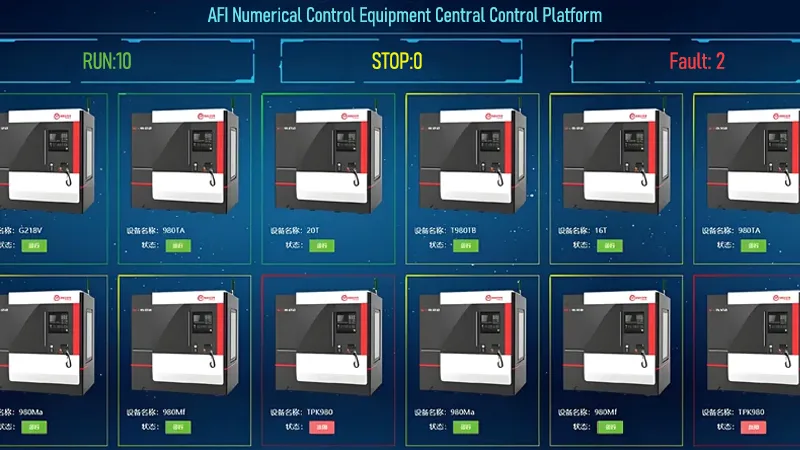
Heterogeneous shop floors are the norm, not the exception. System integration is a big problem for CNC machining shops. Many shops have machines from different brands. A shop might run a mix of Heidenhain, Mazatrol, Fanuc, and Haas controllers. Each brand uses its own way to talk to other machines. This makes it hard to connect all machines to one system.
Because machine data comes in many formats, data normalization is required. Teams must make the data the same before they can use it. Physical connections can also be tricky. Old CNC equipment may need new wires or better networks for IoT devices. These steps can slow down automation.
The industry consensus is moving towards standardization. Shops can fix these problems by using open standards like MTConnect. This helps connect machines that use different ways to talk. For analog units, teams can use adapters to link old machines to new networks. From a project management perspective, planning network upgrades early can stop delays. A clear plan helps keep machines working and production moving.
Tip: Try a small pilot project first to test how integration works before using it everywhere.
Cybersecurity
Connecting OT (Operational Technology) to IT networks exposes critical infrastructure. Cybersecurity is very important in CNC machining shops. Real-time monitoring systems connect lots of devices and networks. This makes cyber attacks more likely. Old CNC machines often do not have good security, usually running on outdated, unpatched operating systems like Windows CE.
Badly set up IoT devices can let hackers get into the system. Hackers can steal data or stop machines from working. The risk of ransomware in manufacturing is severe, as malware can spread fast and cause downtime.
To build a defense-in-depth architecture, shops can stay safe by using teams from different areas to set up systems. Utilizing proper network segmentation (VLANs) and air-gapping where necessary is critical. Using strong hardware made for CNC equipment adds safety. Human error remains the highest risk vector, meaning training all workers on safe habits is important. Checking systems often helps find problems early. Furthermore, shops should update software and firmware a lot to close security holes. These steps help stop hackers and keep machine data safe.
Note: Good cybersecurity keeps production safe and helps avoid expensive downtime.
Cost Management
Capital expenditure (CapEx) justifications must be rigorous. Cost is a big worry when adding real-time monitoring to CNC shops. The price includes hardware, software, and network upgrades. However, through precise ROI calculations, smart cost management can make these costs worth it.
The fastest return on investment is found in OEE improvements. Cutting downtime saves money fast. Monitoring helps teams find problems early and fix them before machines stop. Planning maintenance with IoT data also saves money. By moving away from purely calendar-based preventative maintenance, shops can fix machines only when needed, not too soon or too late.
Optimization extends to consumable tooling. Other ways to save money include buying from fewer vendors for better deals. Tracking tool life closely helps avoid waste. Using algorithms to map exact insert wear curves means using tools that can save 10% to 15% of the tooling budget. Additionally, watching energy use with monitoring also cuts costs. Ultimately, using data helps managers spend money on what matters most.
Callout: Careful planning and smart use of monitoring tools can turn cost problems into savings for CNC machining shops.
Training and Change Management
Technological upgrades require psychological buy-in. Training and change management are very important for real-time monitoring projects in CNC machine shops. Workers need to learn new systems and get used to new ways of working. It is well documented that many shops have trouble when they start using automation and digital tools.
A good plan for training and change helps teams feel ready and sure. Shops that do well with real-time monitoring care about people and technology. They give hands-on training to operators, supervisors, and managers. Training uses real dashboards and live data. This helps workers know how to use the system every day. Teams learn to read alerts, check machine status, and fix problems fast.
A strong change management plan has these main steps:
- Use dashboards that work with ERP, MES, and QMS platforms. These systems show a full view of shop performance.
- Workers see the most important data and do not get confused. Focus on the best data. Teams do not look at every piece of information. They learn to find patterns and use the most helpful insights.
- Change the way people think from just following rules to owning their work. Workers feel proud when they are responsible for results.
- Managers help by praising good work and helping people get better.
- Have short meetings at the start or end of each shift. Teams talk for a few minutes about what went well and what needs work. This open talk builds trust and helps everyone learn from mistakes.
Tip: Begin with small changes. Add new tools and steps slowly. This helps workers get used to things and lowers stress. Support does not stop after training. Shops give more training and answer questions as workers learn more. Leaders show how to use dashboards and make choices with data. They prove that real-time monitoring is a smart way to work. A culture of always getting better grows when everyone joins in. Workers share ideas and help each other solve problems. Over time, teams get more confident and skilled with digital tools, which brings better results and makes the shop stronger.
Callout: Real change happens when people take charge. Training, open talk, and daily meetings help teams do well with real-time monitoring.
Future Trends in CNC Monitoring
AI and Machine Learning
The integration of artificial intelligence is moving from diagnostic to generative. Artificial intelligence and machine learning are changing CNC machining. These tools help shops make better choices and work faster. AI is now inside CNC programming platforms like Mastercam and Fusion 360. These platforms use AI to make better toolpaths and find problems before work starts, optimizing trochoidal milling algorithms to maintain constant chip load dynamically.
During execution, machine learning looks at sensor data and finds patterns people might not see. AI helps automate CNC jobs and makes them steadier. Predictive maintenance uses AI to predict tool problems and stop downtime. When connected to quality systems, data analytics with machine learning helps teams make machining better. Consequently, shops have fewer surprise stops and smoother part finishes. Scrap goes down, so there is less waste and more work done. AI and machine learning make CNC machining smarter and help shops do more. Ultimately, AI-driven monitoring lets teams act fast and keep machines working well.
Digital Twins
Digital twins represent the convergence of CAD, CAM, and live machine telemetry. Digital twins are computer copies of real CNC machines. These models let shops test changes and watch how things work without stopping real machines. Through high-fidelity kinematic modeling, digital twins give nonstop monitoring and help make manufacturing better right away.
Software ecosystems like VERICUT or FANUC’s Smart Digital Twin tools let teams check tool paths and find problems before they cause delays or cost more. By analyzing virtual stress loads, digital twins help spot wear and guess problems before they happen. Real-time health checks keep machines running longer. Teams use digital twins to make processes better and cut downtime.
| Evidence Description | Key Findings |
|---|---|
| Digital twin technology in CNC machining | Cuts spindle energy use by 11.96%, cutting energy by 28.24%, and noise by 11.38% compared to old ways. |
The data is conclusive: digital twins help CNC shops work better and save money. Teams can see problems early and fix them before they get worse. Digital twins show shops how healthy machines are and help make quality better.
5G and Edge Computing
Latency in data transmission can render high-speed collision detection useless. 5G and edge computing make CNC machining faster and steadier. 5G networks link machines and sensors with high speed and little delay. Instead of sending terabytes of raw vibration data to a cloud server, edge computing handles data close to CNC machines, so teams do not wait for cloud servers. This setup lets teams act right away when sensors find problems.
The density of connected devices is easily managed; 5G and edge computing help gather data from all things in the shop. Automation gets better because data moves fast and AI tools work well. Sensors can start fixing right away, making the work smoother. Specifically, the URLLC (Ultra-Reliable Low-Latency Communication) part of 5G sends small data packets with very low delay. This helps with self-running jobs and important tasks. Smart sensors on CNC machines check health almost in real time, which keeps machines running and cuts downtime. Together, 5G and edge computing make machine monitoring stronger, and help shops do even better
Evolving Industry Standards
Interoperability dictates the future of manufacturing ecosystems. Industry standards in CNC machining are changing fast. New rules help shops use technology in better ways. These standards make CNC machines smarter and more connected, and they also help shops share data safely with many types of equipment.
A big change is using IoT-enabled software. This software collects data from CNC machines right away. Because of unified data schema definitions, managers and operators can see how machines work at any time. Shops can check performance, maintenance, and quality quickly. This helps teams make better choices and get more work done.
Many standards now say shops need machine monitoring systems for all brands. These systems use open protocols like MTConnect and OPC UA. Open protocols let machines talk to each other, even from different brands. This makes it easy to add new machines or upgrade old ones. Shops do not have to worry about using just one brand.
Note: Open standards help shops grow and change easily. They also make it simple to use new tools and software.
Quality and safety are important in new standards. Real-time monitoring helps teams find problems before they get worse. Shops can track every part made on a CNC machine, meaning they can fix mistakes fast. Customers trust shops that follow these rules because they know the parts will be good.
Cybersecurity is also a big part of new standards. Frameworks like ISA/IEC 62443 acknowledge that more connected machines mean more risk from hackers. New rules tell shops how to keep data and machines safe. Teams must update software often and use strong passwords. They also need to teach workers how to spot security risks.
Some important things about new CNC machining standards are:
- Use IoT-enabled software for real-time monitoring.
- Pick machine monitoring systems that use open protocols.
- Follow rules for quality, safety, and traceability.
- Keep data safe with strong cybersecurity steps.
- Train staff to use new systems and spot risks.
Industry groups and government agencies help make these standards. They work with CNC makers, software companies, and shop owners. This teamwork helps everyone use the best ideas and tools. As CNC machining grows, standards will keep changing. Shops that follow new rules can use automation and stay ahead. They will also build trust with customers and partners.
Tip: Keep up with new CNC machining standards by joining industry groups and talking with other shops to learn about the latest changes.
Implementation Review Checklist
Real-time monitoring helps CNC shops work better and make good choices, while also helping improve quality. When shops link machines to ERP or MES systems, they get more accurate data. Reports come faster, too. To do well, shops should follow these steps:
- Try a pilot with a few machines.
- Get both operations and IT teams involved.
- Use automation to start jobs. This cuts down on manual work and reporting delays.
- Check data often; this helps track KPIs and keeps data correct.
| Benefit | Description |
|---|---|
| Real-Time Machine Monitoring | IoT sensors watch how machines work and send alerts fast. Teams can act quickly. |
| Predictive Maintenance | AI guesses when machines might break. Teams fix problems before downtime happens. |
| Improved Operational Efficiency | Real-time data helps make cycles better and cut idle time. |
| Enhanced Quality Control | IoT sensors monitor how machines operate and send alerts quickly. Teams can act quickly. |
| Remote Management | Cloud tools let managers see machines from anywhere. |
Look at your current systems and think about trying a pilot project. Getting help from experts can make starting easier and help you do well for a long time.
FAQ
Real-time monitoring uses sensors and software to watch CNC machines. It gives live updates about how machines and tools are doing. By tracking micro-events like servo load and feed rate overrides, teams can see problems right away and fix them fast.
IoT links machines, sensors, and software together. Data moves quickly between all the devices. Managers can see what is happening on the shop floor right now. Through structured data visualization, IoT helps teams make better choices and work faster.
Yes. Shops can add adapters or converters to old machines. Utilizing RS-232 to Ethernet gateways or wiring directly to relay logic outputs, these tools let old machines join new networks. Older equipment can send data just like new machines.
The cost depends on how big the shop is and what machines it has. Setting up an edge server and licensing IIoT software requires CapEx. However, many shops start with a small test project. Saving money from less downtime and better planning often pays for the system fast, typically achieving ROI within 6 to 9 months.
Dashboards show live updates about machines, tools, and production. Instead of reading dense M-code streams, operators can spot problems early and act quickly. This keeps machines working and makes results better.
Shops should use strong passwords and update software often. Segmenting the OT network from the IT network using VLANs is critical. Staff need to learn safe habits. Secure networks and regular checks help keep data safe from hackers.
Yes. Operators learn to use new dashboards, sensors, and alerts. Understanding the why behind the data is as important as the how. Training gives hands-on practice and safety tips. Good training helps teams use technology with confidence.