
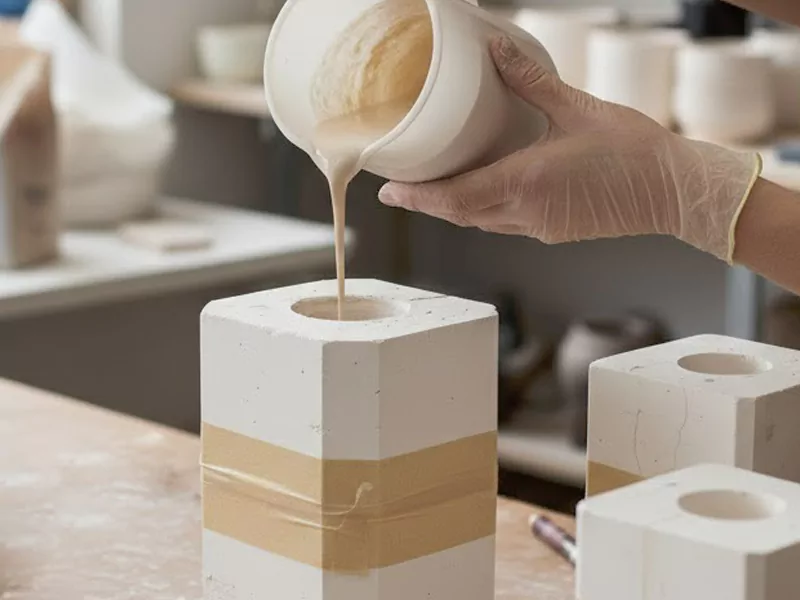
You can achieve finer details in ceramics through slip casting. This method provides clean edges and sharp patterns that are consistent every time. Slip casting enables the creation of items that are challenging to produce using hand-building techniques. Many artists prefer slip casting for its ability to capture fine details. When working with ceramics, attention to detail is crucial for design and production. AFI Industrial Co., Ltd utilizes specialized machines to ensure surfaces are precise, resulting in consistently high-quality outcomes in ceramic forming.
Key Takeaways
- Slip casting gives clear and repeatable details. It works well for designs with lots of small parts.
- Hand building lets you be creative. You can make special shapes and textures in ceramics.
- Good molds help slip casting be more exact and steady.
- Slip casting is good for making many pieces fast. Hand building is better for making special, single pieces.
- Getting moulds ready and keeping them clean is very important for slip casting.
- Using both slip casting and hand building together can make new and cool ceramic designs.
- Knowing what each method needs helps you pick the best one for your project.
- Both ways have good points. Pick the one that fits your design and how much detail you want.
Table of Contents
What is slip casting
Slip casting is a common way to make ceramics. It helps you create shapes and small details easily. You use slip casting by pouring liquid clay, called casting slip, into a mold. This method is special because it lets you make things that are hard to shape by hand. Slip casting works for simple cups and also for fancy sculptures. Many pottery slip casting techniques use this process because it is exact and can be repeated.
Slip casting process
Molds and materials
First, you get your molds ready. Most molds are made from plaster. Plaster soaks up water well. The design of the mold matters a lot. Each mold must have the right shape and texture for your piece. You clean and line up the mold halves. Then you hold them together tightly. The mold’s design helps you remove the piece and keep the details sharp. You need a mold for every item you want to make. Having more molds helps you work faster. Good molds make your ceramics look sharp and clear.
Slip preparation
You mix clay and water to make the casting slip. The slip should be smooth and have no lumps or bubbles. When the slip is ready, you pour it into the mold slowly. The plaster mold pulls water from the slip. This makes a layer of clay stick to the mold walls. You wait until the clay is thick enough. Then you pour out the extra slip. After it dries a bit, you open the mold and take out the piece. You trim and clean the edges. This way, each piece has neat lines and fine details.
Tip: Always check your molds for cracks or dirt before you start. Clean molds help you get the best results.
Slip casting plates
Applications in industry
Slip casting plates are used in art studios and factories. This method lets you make plates with cool shapes and patterns. Many companies use slip casting plates because they are always the same and feel smooth. This method is good for making lots of plates fast. It is great for restaurants, hotels, and homeware brands.
Detail reproduction
Slip casting plates are great at showing small details. The mold lets you add textures, logos, or patterns that are hard to do by hand. The table below shows how slip casting plates and hand-built plates compare:
| Feature | Slip Casting | Hand Building |
|---|---|---|
| Consistency | High consistency in shape and size | Variable consistency depending on skill level |
| Design Possibilities | Can create non-round plates and detailed designs | Limited by hand skills and techniques |
| Surface Characteristics | Smooth surface suitable for further decoration | Surface may vary based on hand techniques |
| Production Efficiency | Efficient for mass production | Slower, more labor-intensive process |
| Complexity of Process | Requires mold making, but is straightforward once molds are made | More direct, but requires skill and experience |
AFI Industrial Co., Ltd and precision machining
Machining for mold making
AFI Industrial Co., Ltd uses special machines to make molds for slip casting. These machines help each mold match the design perfectly. You get molds with sharp edges and smooth surfaces. The mold’s design is important for showing every detail in your ceramics. With good machines, you get molds that last longer and work the same every time.
Enhancing detail with advanced processes
Modern machines let you add tiny features to your molds. AFI Industrial Co., Ltd uses CNC machines and other tools for tight fits. This means your molds can have fine textures, raised patterns, or custom logos. When you use these molds, your slip casting makes ceramics with amazing detail and quality.
Note: Picking the right mold design and machine company can make your ceramics look professional.
Hand-building techniques
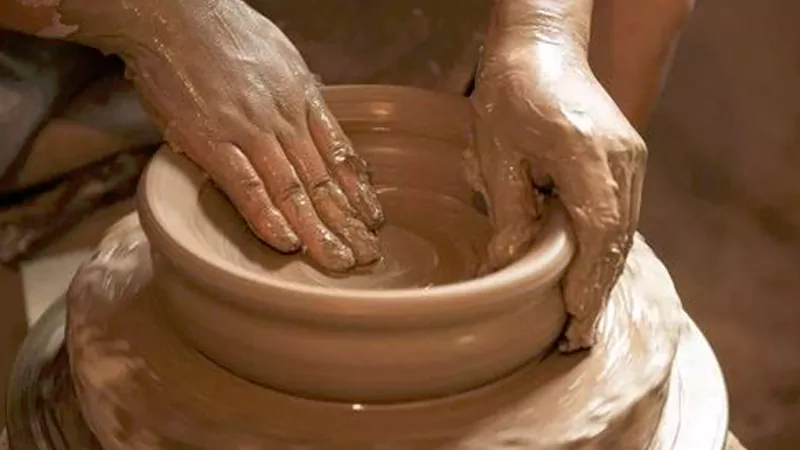
Hand building lets you shape ceramics without a wheel or molds. You use your hands and simple tools to work with clay. This way, you can try different styles and show your creativity in each piece.
Methods overview
Hand building uses three main ways to make ceramics. Each way helps you shape and specially decorate clay.
Pinching
You pinch and shape clay with your fingers. This works well for making small cups or bowls. You can feel the clay and change how thick it is. Pinching helps you add small details because you use your hands.
Coiling
You roll clay into long ropes and stack them up. Coiling helps you make bigger or more complex shapes. You can smooth the ropes together or leave them for texture. Coiling is good for creative shapes, but may not show tiny details like pinching.
Slab building
You roll clay into flat sheets and cut shapes out. You join these slabs to make boxes, tiles, or plates. Slab building is best for straight lines and shapes. It does not work as well for tiny details as other methods.
Tip: Mix these methods to make ceramics with cool shapes and details.
Detail creation
Hand building lets you add textures and custom touches to your ceramics.
Artistic textures
You can use many ways to make the surface interesting. You might press things into clay, carve patterns, or use tools. The table below shows how each way adds texture:
| Technique | Description |
|---|---|
| Coiling | Stack and blend clay ropes for layered or ridged surfaces |
| Pinching | Shape and press clay with fingers for organic, tactile finishes |
| Sculpting | Form artistic or realistic shapes with advanced hand techniques |
| Slab Building | Cut and join flat sheets for clean lines or stamped patterns |
Customization
Hand building lets you change every piece. You can shape, decorate, or try new glazes. This means you can make ceramics that match your style or fit special needs.
Limitations
Hand building gives you control, but it can be hard to get fine details and make pieces look the same.
Consistency
It is tough to make each piece match exactly. Small changes in pressure or clay thickness can change the size or shape. Uneven walls or sagging can affect how your piece turns out.
Skill dependency
Your skill matters a lot for good results. Learning basic steps, like keeping walls even, helps you add details. If you practice and take your time, you will get better. As you learn more, making detailed and matching ceramics gets easier.
Ceramic forming techniques comparison
When you choose between slip casting and hand building, you need to look at how each method performs in terms of quality, production volume, and typical results. Both ceramic forming techniques have unique strengths. Your choice depends on your goals for ceramics, the level of detail you want, and how many pieces you plan to make.
Detail quality
Sharpness
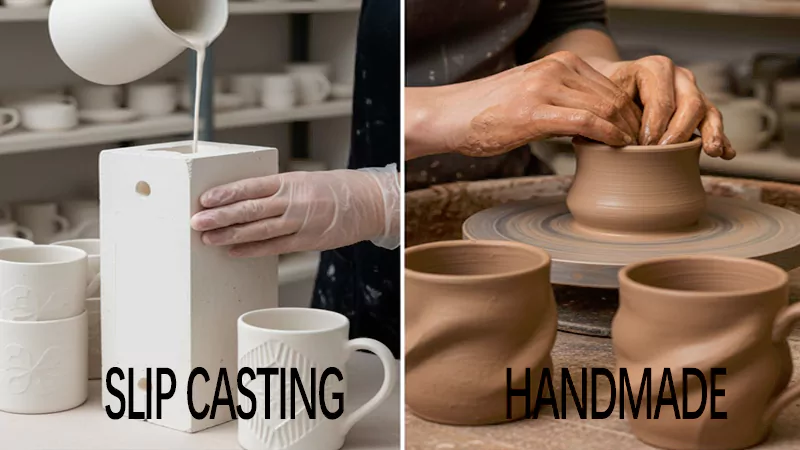
You get sharp details with slip casting. This method uses a mold to shape the clay. The mold gives you clean edges and crisp patterns every time. You can make many identical pieces with fine details. The surface stays smooth, and the thickness remains even. If you want to create exact patterns or repeat the same design, slip casting is the best choice.
Hand building lets you shape clay with your hands. You can make unique pieces, but the details may not be as sharp. The clay can move or change shape as you work. This makes it hard to get the same level of detail as with a mold. If you use porcelain, slip casting works better because the fine-grained clay is hard to shape by hand.
- Slip casting creates many identical forms with sharp details.
- Hand building gives you freedom to create, but the details are softer and less uniform.
- Porcelain works best with slip casting for a beautiful, white surface.
Texture
Slip casting lets you add texture to the mold. You can press patterns, logos, or fine lines into the mold surface. When you pour the slip, the clay picks up every detail. This means you can create ceramics with raised designs, embossed logos, or smooth finishes. The texture stays the same on every piece.
Hand building gives you more control over the surface. You can press, carve, or stamp the clay. Each piece can have a different texture. You can make organic shapes or rough finishes. However, it is hard to repeat the same texture on many pieces. The results depend on your skill and the tools you use.
- Slip casting gives you repeatable, precise textures from the mold.
- Hand building allows for creative, one-of-a-kind textures.
Production volume
Mass production
Slip casting is the top choice for mass production. You can use one mold to make many pieces. Each piece looks the same and is the same size. This method is fast and efficient. Factories use slip casting to make plates, cups, and even technical ceramics for industry. You can make hundreds or thousands of items with the same mold.
AFI Industrial Co., Ltd supports this process with high-precision machining. Their machines create molds with exact shapes and fine details. You get molds that last longer and keep the same quality for every batch.
Custom work
Hand building is best for custom work. You can make one-of-a-kind ceramics that show your style. Each piece can be different. You can change the shape, size, or texture as you work. This method is slower, but it lets you experiment and try new ideas. Artists and hobbyists often use hand building for special projects or unique gifts.
Slip casting vs hand building
Typical results
Slip casting gives you ceramics with sharp edges, smooth surfaces, and repeatable details. You can make complex shapes and fine patterns that are hard to do by hand. The mold controls the final look, so every piece matches.
Hand building gives you ceramics with a personal touch. The shapes may be less perfect, but each piece is unique. You can add your own textures and decorations. The results depend on your skill and creativity.
Use cases
You can see the main uses for each method in the table below:
| Use Case | Description |
|---|---|
| Slip Casting | Uses 3D printing and molds to create complex designs. Great for detailed, repeatable pieces. |
| Industrial Production | Makes consistent, high-quality molds for items like electrical insulators and medical parts. |
| Hand Building | Best for custom, artistic ceramics. Lets you create unique shapes and textures. |
| Artistic Expression | Allows for creative freedom and personal style in every piece. |
Note: When you need high precision and repeatability, slip casting with a well-made mold is the best option. For creative, custom ceramics, hand building gives you more freedom.
AFI Industrial Co., Ltd uses advanced machining to make molds for slip casting. Their expertise ensures that every mold captures fine details and lasts through many production cycles. You can trust their molds to help you achieve the highest quality in your ceramic forming techniques.
Choosing the right method
When you pick between slip casting and hand building, you should think about what you want to make and what you have to work with. Each way has its own good points for making ceramics. You can decide which is better by looking at some key things.
Factors to consider
Design complexity
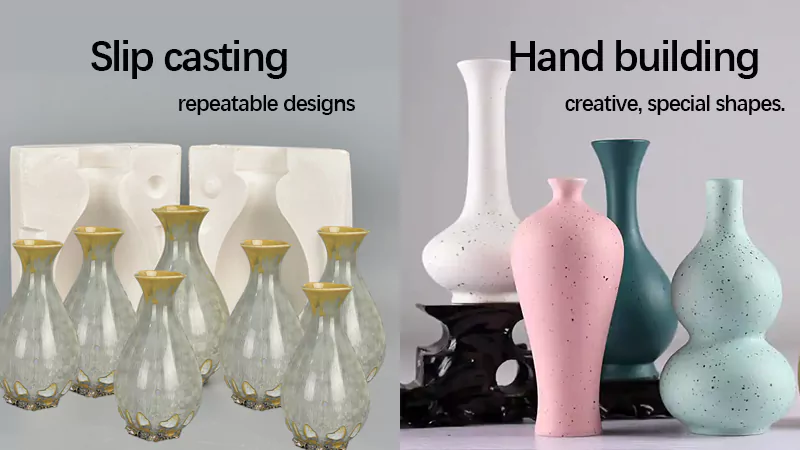
First, think about how hard your design is. Slip casting is great if you want lots of pieces that look the same or need sharp, tiny details. If your design has thin lines, raised shapes, or special logos, slip casting with a good mold gives you the exact look you want. You can make the same design over and over, and every piece will match the mold. Hand building lets you make new shapes. If you want to make special ceramics or try new ideas, hand building is better. You can shape clay with your hands and add your own style that molds cannot copy.
- Slip casting works well for tricky, repeatable designs.
- Hand building is best for creative, special shapes.
Available resources
Check what tools and materials you have before you begin. Slip casting needs special things for making and using a mold. You need plaster, sprays to help the mold release, and stuff for building mold boxes. You also need containers for mixing, scales for measuring, and tools for cleaning and trimming the mold. Hand building uses simple tools like rolling pins, knives, and carving tools. You do not need a mold, so you can start with clay and basic tools.
| Category | Slip Casting Resources |
|---|---|
| Materials | Plaster, mold release sprays, cardboard, acrylic sheets, foam boards for mold boxes |
| Tools | Mixing containers, stirring tools, digital scales, exacto knives, scissors, saws, sculpting tools for mold cleaning and trimming |
Tip: If you want ceramics with tiny details and shapes that match, get a good mold and the right tools.
Slip casting helps you get the finest details in ceramics. The mold copies every line and edge very well. If you want sharp patterns or the same design many times, the mold works best. Sometimes, you might have problems like warping or cracking. It can also be hard to keep every piece the same. AFI Industrial Co., Ltd uses special machines to make molds that fit your needs. The table below shows how their fine grinding helps make ceramics with lots of detail:
| Material Type | Properties | Processing Method |
|---|---|---|
| Alumina Ceramics | High hardness, wear resistance | Fine grinding |
| Zirconia Ceramics | High-temperature resistance | Fine grinding |
You can use new tools like deep digital line and V-Nature to add more detail before using the mold. If you want to be creative, you can try hand-building. But if you need exact shapes, the mold is very important. You can use both ways or mix them. The right mold helps you make ceramics that are special and different.
FAQ
You get sharp, repeatable details with slip casting. The mold captures every line and edge, making it easy to produce ceramics with fine patterns and textures.
A well-made mold ensures your ceramic piece has clean edges and consistent shapes. You can rely on the mold to reproduce the same design many times without losing quality.
Yes, you can use a mold many times. Each time you pour slip into the mold, you get a piece with the same details and size as the original design.
You might choose hand-building if you want unique shapes or textures. Hand building lets you experiment and create one-of-a-kind ceramics that a mold cannot easily duplicate.
You need plaster, water, and a model of your design. You pour the plaster around the model to create the mold. After it sets, you remove the model and use the mold for casting.
You should clean your mold after each use. Store the mold in a dry place. Avoid dropping or hitting the mold, as this can cause cracks or damage.
Yes, you can add logos or patterns to the mold surface. When you use the mold, these details transfer directly to your ceramic piece, giving it a professional finish.
If your mold shows signs of wear, like cracks or loss of detail, you should replace it. Using a damaged mold can affect the quality of your ceramics.