
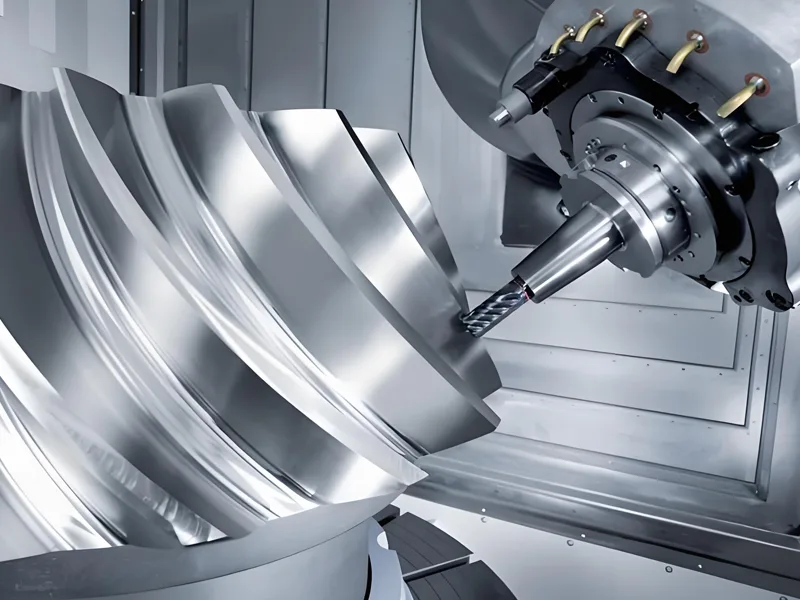
Stable ±0.005mm tolerances can happen in big production runs when teams follow strict steps. However, achieving this level of precision consistently across thousands of custom metal parts requires far more than just standard operating procedures. Skilled machinists are very important, but good results also need advanced machines and careful process control. Precision machining needs careful work on every detail to get steady results.
In the realm of advanced manufacturing, a tolerance of ±0.005mm (5 micrometers, or approximately 0.0002 inches) represents a critical threshold between standard machining and ultra-precision engineering. A tolerance of ±0.005mm is a very small limit. It tells how much a part’s size can change from the plan. The finished part can only be 0.005mm bigger or smaller than needed. This control is important for parts that must fit together well or move smoothly.
This comprehensive guide, developed by the senior engineering team at AFI Parts, explores the physics, metallurgical considerations, kinematics, and statistical methodologies required to maintain micro-level accuracy in high-volume CNC machining.
Table of Contents
The Physics and Metrology of Tight Tolerance Machining
Understanding the sheer scale of a ±0.005mm tolerance is the first step in engineering a process capable of maintaining it. To put this into perspective, a human hair is roughly 70 to 100 micrometers in diameter. Holding a 5-micron tolerance means controlling cutting variables to a fraction of a cellular structure. Getting a stable ±0.005mm tolerance is possible in large production, and many companies have shown this can be done for years. Modern CNC machines can make parts with ±0.005mm tolerance.
When we engage in tight tolerance machining at AFI Parts, we are not merely cutting metal; we are managing thermodynamics, mitigating harmonic vibrations, and calculating tool deflection at the microscopic level. If a shop can keep this tolerance, it shows they have good process control and strong skills. Tight tolerance machining helps make things safe, reliable, and work right.
The True Cost of Precision
Engineers must understand that specifying tight tolerances exponentially impacts manufacturing economics. There are trade-offs when trying for tight tolerance machining. Shops must balance these things with what customers want. Asking for ±0.005mm tolerance can make things cost a lot, take longer, and waste more parts.
Table 1: Economic Impact of Tolerance Specification in CNC Machining
(Conditions: 6061-T6 Aluminum, High-Volume Run >10,000 units, Standard 3-Axis Milling)
| Specified Tolerance Range | Relative Cost Multiplier | Production Time Increase | Primary Engineering Requirement |
| ±0.05 mm | 1.0x (Baseline) | Baseline | Standard CNC Machining |
| ± 0.02 mm | 1.15x – 1.30x | +20% | 15-30% more |
| ± 0.01 mm | 1.40x – 1.60x | +45% | 40-60% more |
| < ± 0.005 mm | 2.00x – 3.00x | +120% | 100-200% more |
Note: Tighter tolerance means higher costs, longer machining time, and more checking. Teams should check if they really need the tightest tolerance for every part.
Material Metallurgy and Thermal Dynamics
Material Selection and Stability
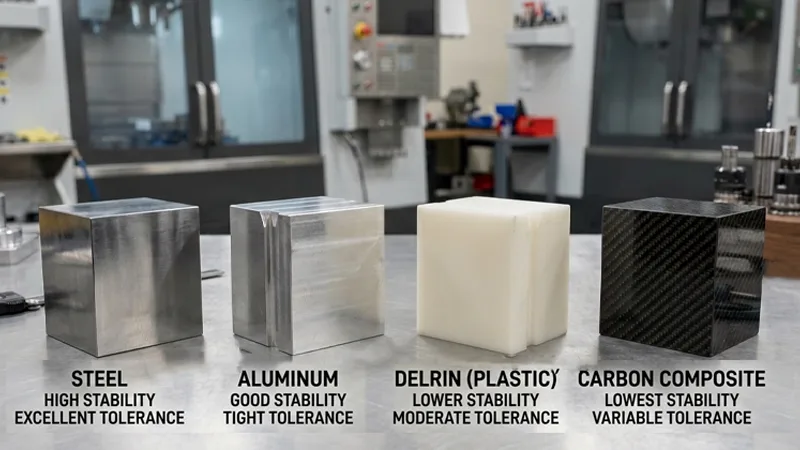
Material selection is critical because each material exhibits unique machinability and stability. Dimensionally stable materials maintain their intended tolerances throughout the production process. Not all materials can hold tight tolerances; metals like steel and aluminum are generally superior to plastics and composites, which have higher coefficients of thermal expansion and lower rigidity, making precision control more challenging.
The Impact of Thermal Expansion
Environmental control is often overlooked in precision machining, yet temperature fluctuations are a primary cause of dimensional deviations. In tight-tolerance applications, even a 1°C change can push a part out of spec. For instance, carbon steel expands by approximately 0.011 mm per meter for each degree Celsius, while aluminum expands by about 23 micrometers per meter per degree Celsius.
To calculate the exact dimensional change of a part during the machining process due to temperature fluctuations, engineers use the linear thermal expansion formula:
ΔL = α • L0 • ΔT
Where:
- ΔL is the change in length (in the same units as L0).
- α is the coefficient of linear thermal expansion.
- L0 is the original length of the part.
- ΔT is the change in temperature in degrees Celsius (°C).
For example, if a 200 mm aluminum part experiences a temperature change of 10°C, its dimension will change by 0.046 mm (23 x 10-6 • 200 • 10). If that same 200 mm aluminum part heats up by 15°C during the machining cycle, it will expand by 0.069 mm. In the context of precision CNC machining, this level of deviation is highly significant and exceeds standard allowable tolerances.
Pre-Machining Metallurgical Treatments
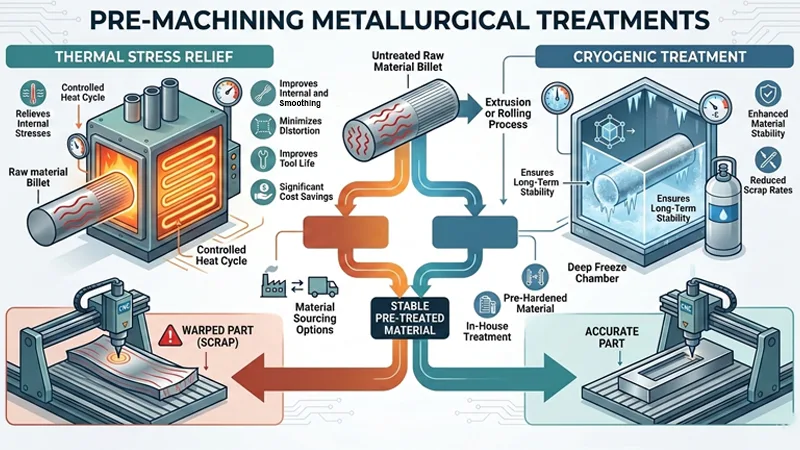
Applying metallurgical treatments before machining enhances material stability. Internal residual stresses introduced during the billet manufacturing process (such as extrusion or rolling) can cause the material to warp once the outer layers are removed via CNC milling or turning.
- Thermal Stress Relief: Heat-treating the raw material before machining relieves these internal stresses, minimizing distortion, reducing scrap rates, and improving tool life. While adding an initial cost, it yields significant time and cost savings during final production.
- Material Sourcing: Depending on the part’s requirements, machine shops typically choose between purchasing pre-hardened/stress-relieved material or performing custom heat treatments in-house.
- Cryogenic Treatments: Sub-zero or cryogenic treatments can also be applied to specific alloys to complete phase transformations and ensure long-term dimensional stability.
Kinematics of Advanced CNC Machine Tools
Precision machining at this level needs more than just good machines. However, choosing the right machine tool is very important. Good CNC machines are needed for fewer mistakes. The machine must be strong and very accurate. Rigidity helps stop shaking and bending when cutting. This keeps the part size the same.
Spindle Dynamics and Runout Mitigation
For a tolerance of ±0.005mm, spindle runout must be kept below 1 micrometer. Advanced CNC machines that are strong and have low spindle runout are required. Machine calibration drift and the degradation of spindle accuracy with use can lead to tolerance issues.
Table 2: Machine Tool Capability for Tight Tolerances
(Standardized per ISO 230 test codes for machine tools)
| Machine Tool Category | Typical Tolerance Capability | Key Engineering Advantage |
| CNC Milling Machines | ±0.005 mm to ±0.01 mm | Use spinning tools to cut shapes and drill holes very precisely. |
| CNC Turning Machines | ±0.002 mm to ±0.005 mm | Spin parts with a single tool for round shapes and high accuracy. |
| Precision Grinding | < ±0.001 mm | Makes the smoothest surfaces and tightest tolerances, measured in micrometers. |
| Electrical Discharge Machining | ± 0.002 mm | Uses sparks for super fine cuts, holding very small tolerances. |
CNC milling and turning machines are used a lot in precision shops. Electrical discharge machining and grinding are for the hardest jobs.
Vibration and Harmonic Control
Vibration can mess up tight-tolerance machining. Machines that shake make parts with mistakes. Even small shakes can leave marks or change sizes. Shops use different ways to stop vibration.
- Put machines on strong, flat floors.
- Use pads under machines to stop shaking.
- Balance spinning tools before each job.
- Keep busy areas and other machines away from precision spots.
- Check machines often for loose bolts or old parts.
- Vibration monitors can find problems early.
Cutting Tool Tribology and Wear Compensation
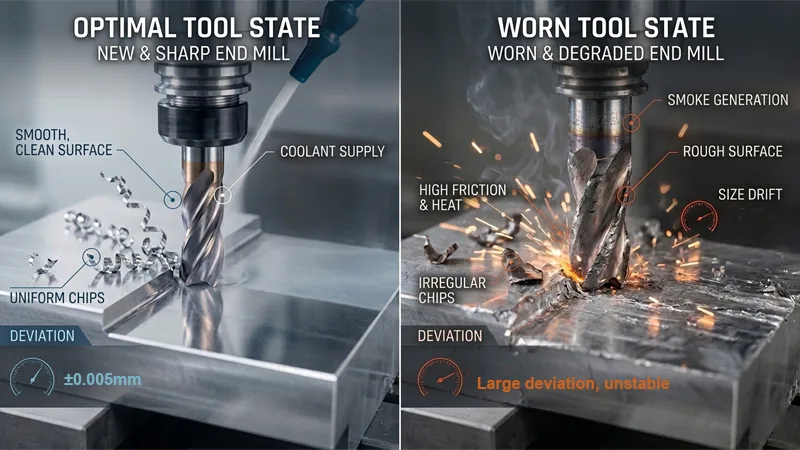
Tool wear is a big problem in making precise parts. When tools cut, their edges slowly get dull. Dull tools need more force and make more heat. This can bend the tool and change the part’s size. Tool life drops by over half in tight tolerance machining, so tools need to be changed often.
In big jobs, tools must stay sharp to keep ±0.005mm tolerance. Sharp tools help keep tolerance steady. Shops need to watch for tool wear and machine calibration drift. They should change or sharpen tools regularly. Check tool wear often to stop size changes.
Automated Tool Compensation
Machines that run by themselves help stop mistakes and keep cutting the same way. Special systems check size during work. If tools start to wear, the system changes tool settings to stay accurate. If the size is off by more than ±0.003mm, the machine fixes the tool setting. Probes in the machine fix changes while cutting.
Environmental Thermodynamics and Facility Control
Precision machining needs a steady environment. Keeping things steady is important; vibration and temperature changes matter. Small changes in temperature or humidity can make parts bigger or smaller. This can cause parts to miss the ±0.005mm tolerance.
Shops must keep the temperature within ±1°C for steady size tolerances. Good climate control equipment keeps the temperature and humidity steady. Many shops use air conditioning to hold the temperature within ±1°C. Humidity control stops rust and keeps materials safe. Keeping the room’s temperature and humidity steady helps parts stay the right size. Controlling the environment, like temperature and humidity, keeps parts accurate.
AFI Parts’ Standard Operating Procedures for Environment:
- Buy good equipment for climate control.
- Keep the shop at the same temperature and check often.
- Keep doors and windows shut to stop quick changes. Leaving doors or windows open changes the air quickly.
- Use rooms with a steady temperature to stop parts from growing or shrinking.
Process Planning, GD&T, and Advanced Metrology
Planning for tight tolerances means knowing how each step changes the part. Geometric Dimensioning and Tolerancing (GD&T) complexity can add layers of complexity to the machining process. Engineers use two main ways to see how tolerances add up in the end. Worst-case tolerance stack analysis looks at the biggest possible changes. Statistical tolerance stack analysis uses math to guess how likely changes are. Splitting steps can cut variation by over half.
Metrology and Inspection
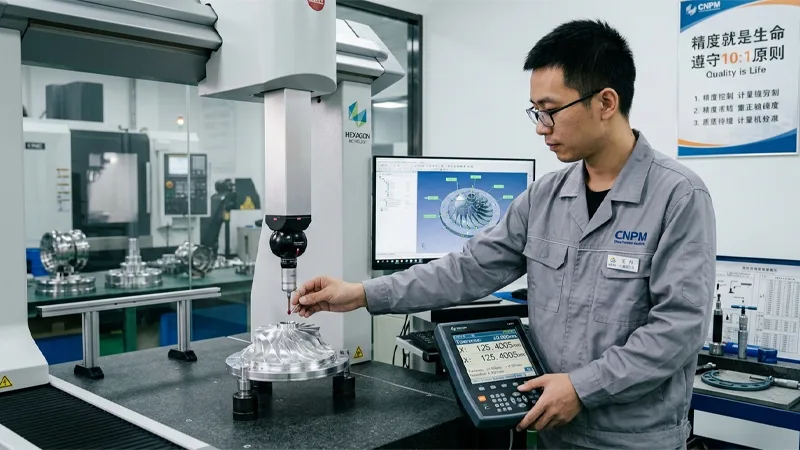
Checking parts is very important in precision machining. Checking during work is needed for tight tolerance machining. Tools that measure during work catch mistakes early. In-line inspection checks parts while they are being made. Offline inspection checks parts after they are finished.
To measure a ±0.005mm tolerance, your measuring equipment must be capable of resolving to at least 0.0005mm (following the 10:1 rule of metrology). Use a coordinate measuring machine (CMM) or high-precision probes. These tools measure parts very closely. CMM and 3D scanning check parts with very fine detail.
- Non-Contact Optical Systems: A company in Colorado used these for turbine casings. They checked the size to ±0.1 mm during work and threw away 20% fewer bad parts.
- Contact-Based Probing: A company in the UK checked bore diameters to ±0.002 mm. This helped them make 15% more good parts.
- Hybrid Systems: A company in Japan used both ways together. They reached ±0.005 mm accuracy for car parts.
Calibration keeps measuring tools working right. Shops must check and fix their tools often. Machines should be calibrated at least every six months. Frequent calibration keeps machines accurate and lowers the chance of bad parts.
Quality Assurance and Statistical Process Control (SPC)
Quality assurance means checking that every part is the right size. Stringent inspection protocols can complicate the production process. However, using statistical process control (SPC) helps watch how things are made. SPC uses data from the line to watch for changes and spot patterns. SPC turns measurement data into helpful information.
To ensure high-volume production remains within the ±0.005mm threshold, we rely on Process Capability Indices (Cp and Cpk). These metrics determine if a process is capable of meeting specifications, with a target value of 1.33 or higher.
1. Process Capability (Cp)
2. Actual Process Capability (Cpk)
| Symbol | Definition |
| USL | Upper Specification Limit: The maximum allowable dimension. |
| LSL | Lower Specification Limit: The minimum allowable dimension. |
| μ | Process Mean: The average of the measurement data. |
| σ | Standard Deviation: The measure of process variation/volatility. |
Key Takeaways
- Proactive Adjustment: By monitoring these data points, operators can intervene before parts fall out of spec.
- Trend Analysis: Control charts visualize these machining numbers, transforming raw data into actionable insights to maintain consistency.
In-Depth Engineering Case Studies
Achieving a stable ±0.005mm tolerance is not a theoretical exercise; it is applied daily across critical industries. Stable tolerances of ±0.005mm are normal in aerospace and medical device work.
Case Study A: Aerospace Turbine Components
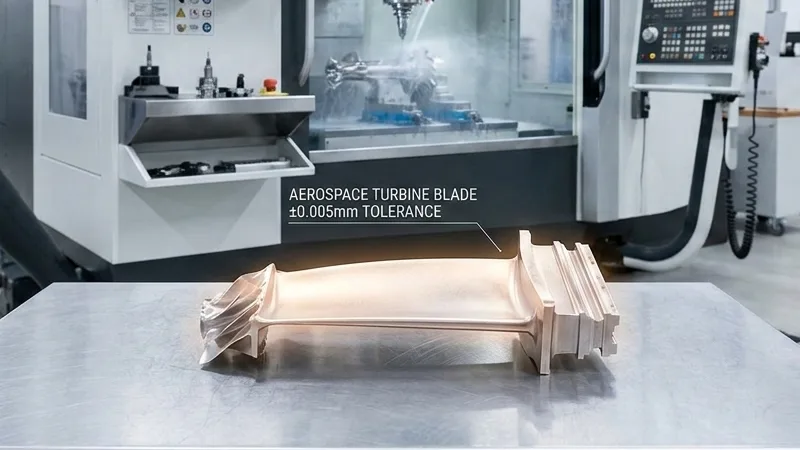
Aerospace companies use CNC machines to make safe parts. Turbine blades and landing gear parts often need ±0.005mm tolerance. This control helps keep flights safe and efficient. The material (often Inconel or Titanium) presents massive tool wear challenges, requiring real-time probe feedback to adjust offsets dynamically.
Case Study B: Thermal Management Mounts for Commercial Cannabis Growth Lights
In the rapidly expanding agricultural technology sector, specifically for commercial cannabis plant growth lights, thermal management is paramount. High-power LED arrays generate significant heat. AFI Parts was tasked with manufacturing custom aluminum (6061-T6) heat sink mounting plates. The mating surface between the LED PCB and the aluminum mount required a flatness and dimensional tolerance of ±0.005mm to ensure zero air gaps, maximizing thermal transfer efficiency.
By applying strict environmental controls and executing a customized multi-stage roughing and finishing strategy (leaving the parts to thermally normalize for 24 hours between passes), we eliminated material warping. This precision directly extended the lifespan of the commercial growth lights by 40% due to superior heat dissipation.
Case Study C: Medical Device Implants
Medical device makers also need tight tolerance machining for tools and implants. Implants and surgical tools need this tolerance to be safe and work right. Precision is important for the body and how the tools work. Utilizing 5-axis CNC machining, we maintain micro-finishes and exact tolerances on Titanium bone screws to ensure perfect biocompatible integration.
Operator Training and Preventive Maintenance
It takes a whole system with skilled workers, strict process control, and a steady environment. Skilled workers and advanced machines can reach ±0.005mm tolerances. Operator skill is very important in precision machining. Even the best CNC machines need trained people to run them.
If the training is not good enough, the whole process can have problems. Not enough training can cause many problems in the shop.
- Operators might make programming mistakes that change part sizes.
- Workers may not know how to fix problems fast.
- Safety problems go up if operators do not know the right steps.
Training operators is very important. Skilled machinists follow careful steps to keep things precise. Standard work instructions help every operator do the same steps. Training helps lower mistakes and keeps production steady.
Preventive Maintenance Protocols
Preventive maintenance and calibration help keep production steady. Regular maintenance is needed to keep ±0.005mm tolerance. Machines in a precision shop work hard every day. Over time, machine parts can wear out or move.
AFI Parts Maintenance Checklist for ±0.005mm Operations:
- Scheduled Lubrication: Oiling machines often cuts down on wear by about 35%.
- Precision Alignment Checks: Checking every month helps keep accuracy within ±0.005 mm.
- Spindle Inspection and Balancing: Looking at spindles twice a year stops shaking and makes them last longer by 25%.
- Routine Checks: Look at machines after every 50-100 parts to keep tolerance.
Continuous improvement means always looking for ways to make the machining process better. Shops that want to keep ±0.005mm tolerances must never stop improving.
Conclusion
Getting a stable ±0.005mm tolerance needs a full plan. Teams have to pay attention to machines, steps, the shop, and workers. Success comes from controlling every detail, from material to measurement. Tight tolerance machining in precision manufacturing needs careful planning, skilled people, and the right machines. By rigorously applying ISO standards, mathematical process controls, and maintaining a temperature-controlled environment, AFI Parts consistently delivers on the most demanding geometrical tolerances in the industry. Always try to get better so teams can hold tight tolerances for every batch.
FAQ
Shops miss tight tolerances mostly because of temperature changes. Tool wear and poor machine care also cause problems. These things can make parts go out of the needed range. Regular checks and keeping the shop steady help stop these issues.
Machines should be calibrated at least every six months. Busy shops may need to check every month. Frequent calibration keeps machines accurate and lowers the chance of bad parts.
Not every material can hold this tolerance. Metals like steel and aluminum work best for tight tolerances. Plastics and composites can change size more, so it is harder for them.
Temperature and humidity changes can make parts bigger or smaller. Even a 1°C change can move a part out of tolerance. Climate control keeps the shop steady and helps parts stay the right size.
Shops use probes, sensors, and SPC software to watch size and quality. These tools give live data. Operators can fix problems before parts get thrown away.
Trained operators set up machines right and find problems early. Training helps lower mistakes and keeps production steady. Shops with good training make better parts.
Yes, automation helps keep results steady. CNC machines with in-process checks and automatic tool changers can hold ±0.005mm tolerances in big batches.
Use a coordinate measuring machine (CMM) or high-precision probes. These tools measure parts very closely. Always check parts during and after machining for the best results.