
Table of Contents
Magnesium Machining Overview: The Pinnacle of Automotive Lightweighting
Magnesium machining has changed how cars are made. In the relentless pursuit of automotive lightweighting, magnesium is very light but also strong, and it also dissipates heat well. Car makers use this metal to make lighter car parts, which helps cars work better and be more eco-friendly. Through advanced CNC (Computer Numerical Control) turning and milling, the process lets companies make many parts at once. By optimizing tool paths and leveraging high-speed machining centers, the parts are always of good quality. Furthermore, when scaled up for OEM automotive contracts, it also saves a lot of money.
This comprehensive technical guide explores the metallurgical behaviors, precise CNC machining parameters, and structural applications of magnesium alloys in the modern automotive supply chain.
Process Basics and Technical Fundamentals
Magnesium machining has fundamentally shifted the paradigm of automotive structural design. As the demand for fuel efficiency and reduced carbon footprints intensifies under stringent global emissions standards (such as EURO 7 and EPA Tier 4), magnesium alloys have emerged as the primary material for achieving significant mass reduction without compromising structural integrity.
The Subtractive Manufacturing Dynamics
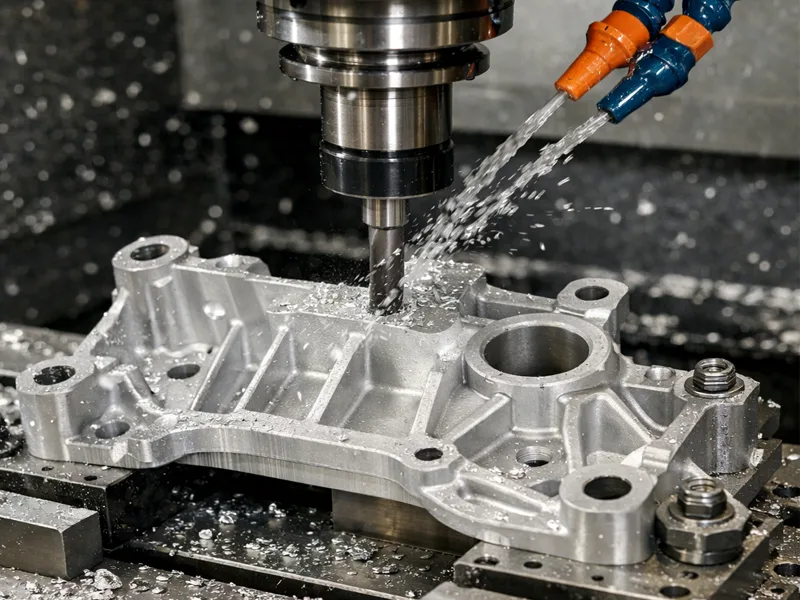
Magnesium machining is a high-precision subtractive manufacturing process that shapes raw magnesium alloys into exact automotive geometries. Unlike traditional ferrous machining, magnesium requires specific considerations for its unique physical properties, such as its hexagonal close-packed (HCP) crystal structure, which influences its shear thinning behavior during high-speed cutting.
The HCP lattice structure has fewer active slip systems at room temperature than face-centered cubic (FCC) metals such as aluminum. Consequently, magnesium forms discontinuous chips (often referred to as segmented or saw-toothed chips) during machining. This phenomenon significantly lowers the required cutting forces but demands precise spindle speed and feed rate calibration to prevent chatter and ensure dimensional accuracy across custom metal parts manufacturing.
Tooling and Substrate Selection
To achieve aerospace-grade tolerances, the selection of cutting tools is paramount. We primarily utilize Uncoated Carbide (K-grade) for general applications and Polished PCD (Polycrystalline Diamond) for high-volume production to minimize the built-up edge (BUE). Carbide tools are chosen for their exceptional hardness and thermal stability, ensuring they remain sharp under the high-frequency vibrations of magnesium cutting.
Optimal Tool Geometries for Magnesium:
- Rake Angle: Highly positive rake angles (typically +15° to +20°) are recommended to slice cleanly through the HCP structure and facilitate rapid chip evacuation.
- Clearance Angle: Large primary clearance angles (10° to 15°) minimize friction between the tool flank and the freshly machined workpiece surface, significantly reducing heat generation.
- Flute Count: For end mills, 2-flute or 3-flute configurations are ideal. The large gullets provide ample space for the voluminous magnesium chips to escape, preventing catastrophic tool packing and breakage.
Thermal Management and Cooling Strategies
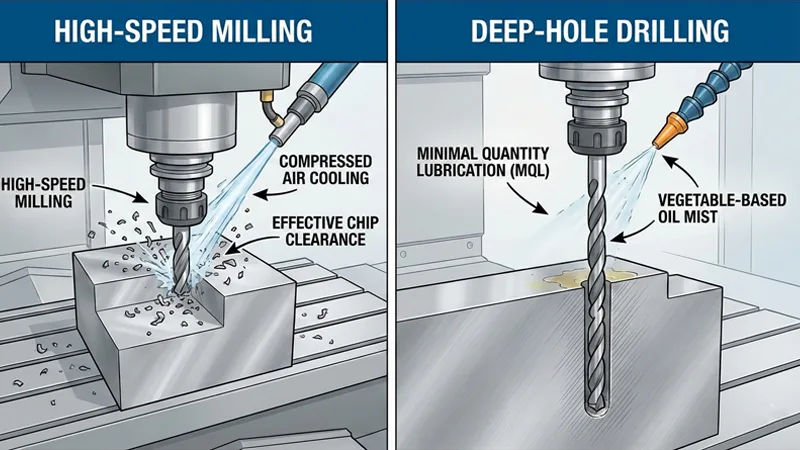
A common misconception in early drafts suggested inconsistent cooling methods. In professional practice, we distinguish between high-speed milling and deep-hole drilling. Strict adherence to thermal management is critical not just for tool life, but for facility safety.
- Compressed Air Cooling: Ideal for milling as it effectively clears chips and prevents the accumulation of heat in the primary shear zone. High-velocity air blasts are sufficient for most roughing and finishing operations due to magnesium’s inherent thermal conductivity.
- Minimal Quantity Lubrication (MQL): Uses a fine mist of vegetable-based oil to reduce friction while avoiding the fire hazards associated with water-based coolants reacting with magnesium to form hydrogen gas. MQL delivers lubricant precisely to the cutting edge, reducing thermal shock to the tool and mitigating the risk of chip ignition without flooding the machining envelope.
Technical Appendix: Precision Machining Parameters for Automotive Grades (AZ91D, AM60B)
Disclaimer: The following machining parameters are empirical baselines established by AFI Parts’ engineering division for standard CNC equipment. Machinists must adjust these variables based on specific machine rigidity, workholding setups, and tool overhang. Always consult NFPA 484 before initiating any magnesium machining operation.
| Operation Type | Cutting Speed (vc, m/min) | Feed Rate (fz, mm/tooth) | Depth of Cut (ap, mm) | Tool Material | Cooling Method |
|---|---|---|---|---|---|
| Rough Milling | 600-900 | 0.08-0.15 | 3.0–8.0 | Uncoated Carbide | High-Pressure Air |
| Finish Milling | 900-1,500 | 0.03-0.08 | 0.5–2.0 | PVD-coated Carbide | Compressed Air |
| Contour Milling | 700-1,100 | 0.05-0.12 | 1.0–4.0 | DLC-coated Carbide | MQL (Synthetic Mist) |
| Rough Turning | 500-700 | 0.15-0.30 | 2.0–5.0 | Polished Carbide | MQL |
| Finish Turning | 700-900 | 0.08-0.15 | 0.5–2.0 | Polished Carbide | MQL |
Critical Safety Protocols and Fire Mitigation
Safety in magnesium machining is dictated by NFPA 484 (Standard for Combustible Metals). The primary hazard is the high reactivity of magnesium fines and chips. Because magnesium has a relatively low ignition temperature in its finely divided state (approximately 473°C for fine dust), CNC machining operations must implement uncompromising safety protocols.
- Chip Management: Chips must be stored in clearly labeled, non-combustible steel drums with tight-fitting lids to prevent oxidation and moisture ingress.
- Fire Suppression: Only Class D fire extinguishers (e.g., Met-L-X) or dry salt-based agents should be used. Water must never be applied to a magnesium fire. The application of $\text{H}_2\text{O}$ triggers an exothermic reaction, rapidly generating highly explosive hydrogen gas.
- Housekeeping: Daily cleaning of CNC machine sumps and internal cabinets is required to prevent the buildup of explosive dust. Dust collection systems must be dedicated solely to magnesium and must utilize wet-type scrubbers compliant with ATEX directives.
Why Magnesium? The Material Science Perspective
Magnesium (Mg) is the lightest structural metal available in the modern engineering catalog. With a density of approximately 1.74g/cm3, it is roughly 33% lighter than aluminum and 75% lighter than steel. For automotive engineers striving to meet stringent EV battery weight constraints, magnesium is an irreplaceable asset.
Exceptional Strength-to-Weight Ratio
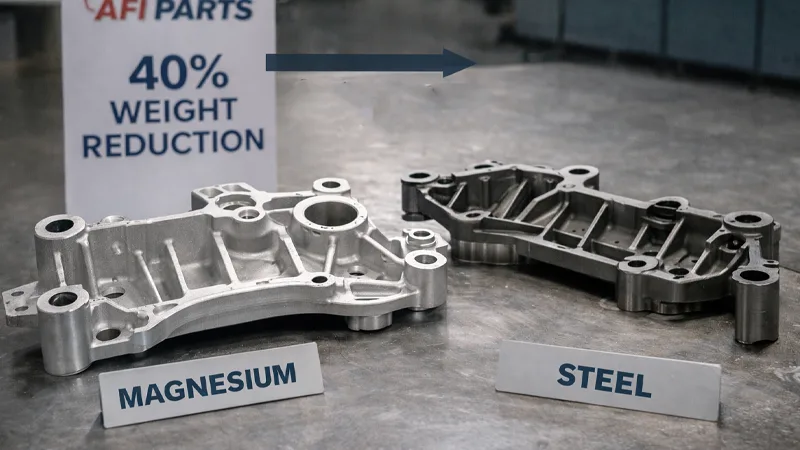
While magnesium has a lower absolute strength compared to high-carbon steel, its Specific Strength (strength/density) is superior. The relationship is mathematically defined as:
where σy is the yield strength, and ρ is the density. This allows engineers at AFI Parts to design thicker-walled sections that provide greater stiffness and buckling resistance than thin-walled steel, while still achieving a 40% net weight reduction. In bending and torsion applications, the increased moment of inertia derived from slightly thicker magnesium profiles vastly outperforms denser metals.
Dimensional Stability and Machinability
Magnesium exhibits excellent dimensional stability under thermal cycling, which is critical for powertrain components. Its low cutting force requirements—approximately 50% lower than aluminum—translate to reduced power consumption during the manufacturing phase and faster cycle times. The low specific cutting energy means machines require less spindle torque, permitting the use of highly agile, high-speed 5-axis CNC machining centers.
Superior Vibration Damping
A unique advantage of magnesium is its high damping capacity. It absorbs mechanical vibrations more effectively than aluminum or steel, making it the material of choice for components where Noise, Vibration, and Harshness (NVH) levels are critical, such as steering columns and seat frames. This high specific damping capacity is largely attributed to the movement of dislocations within its crystal lattice, dissipating acoustic and kinetic energy as micro-level thermal energy.
Comparison with Other Metals: Magnesium vs. Aluminum vs. Steel
In the context of 2026 automotive manufacturing, the selection between magnesium, aluminum, and steel is driven by cost-benefit analysis and lifecycle emissions. Standardized metrics must be consulted to make objective engineering decisions.
| Property | Magnesium Alloys (e.g., AZ91D) | Aluminum Alloys (e.g., 6061) | High-Strength Steel (e.g., DP600) |
|---|---|---|---|
| Density ( g/cm3 ) | 1.8 | 2.7 | 7.8 |
| Machinability Index | 500 (Excellent) | 300 (Good) | 100 (Baseline = B1112) |
| Thermal Conductivity (W/m • K) | ~72 (AZ91D) | ~167 | ~45 |
| Damping Capacity | Very High | Low | Moderate |
| Corrosion Resistance | Moderate (Requires PEO/Anodizing Coating) | High (Natural Oxide Layer) | Variable (Requires Galvanization) |
| Tool Life during Machining | High (with proper cooling) | Moderate | Low (high wear) |
Auto Parts Made with Magnesium Machining: A Deep Dive
The integration of magnesium into the automotive bill of materials (BOM) is most prominent in three key sectors: Powertrain, Chassis, and Interior Structures.
Engine Components: Enhancing Thermal and Mechanical Efficiency
Cylinder Heads and Engine Blocks
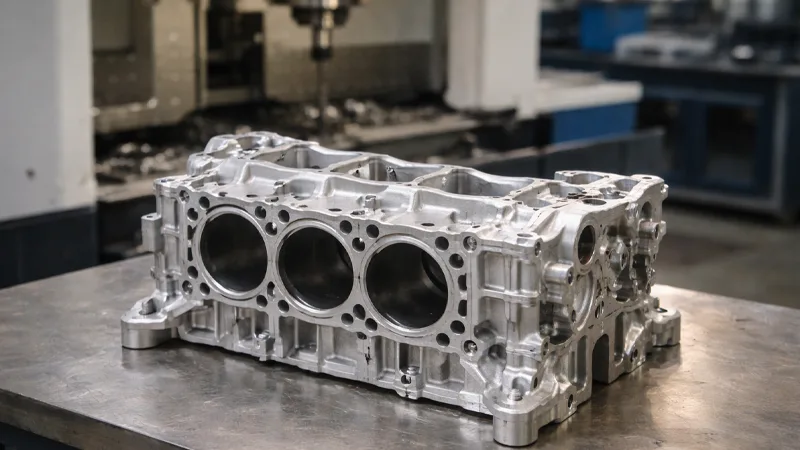
While aluminum dominated this space for decades, new high-temperature magnesium alloys (containing rare earth elements) are now being used for cylinder head covers and even engine blocks in hybrid platforms. The high thermal conductivity of magnesium—approximately 156W/(m·K) for pure magnesium and slightly lower for specific alloys—allows for rapid heat dissipation from the combustion chamber.
Valve Covers and Camshaft Housings
Magnesium machining produces valve covers that are not only 10% lighter than aluminum equivalents but also significantly quieter due to the metal’s inherent damping properties. At AFI Parts, we utilize CNC precision milling to ensure the gasket surfaces are flat within ±0.05mm, preventing oil leaks over the vehicle’s lifespan. Achieving this flatness requires strict control over clamping forces during machining to prevent part distortion.
Transmission Components: Precision and Longevity
Transmission Cases and Gear Housings
The transmission case is one of the largest single magnesium castings in a vehicle. Machining these large-scale parts requires specialized fixtures to prevent vibration-induced chatter. Magnesium’s superior dimensional stability ensures that gear shafts remain perfectly aligned, reducing internal friction and extending gear life.
Wheels and Chassis: Reducing Unsprung Mass
High-Performance Alloy Wheels
In 2026, electric vehicles (EVs) utilize magnesium wheels to offset battery weight. Reducing unsprung mass (the weight of components not supported by the suspension) directly improves handling, braking response, and tire longevity. Forged and subsequently CNC-machined magnesium wheels exhibit exceptional fatigue resistance under dynamic cyclic loading.
Suspension Components and Brackets
Suspension knuckles and control arms made from magnesium alloys like ZK60A offer high fatigue strength. Machining these parts requires careful control of surface roughness (Ra < 0.8 ㎛) to eliminate potential stress risers that could lead to fatigue failure.
Interior and Structure: Safety and Comfort
Dash Frames and Dashboard Supports
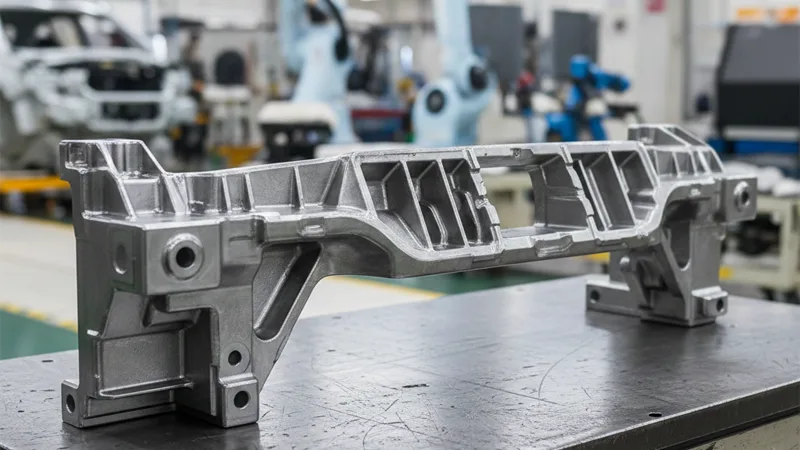
Magnesium dashboard carriers (cross-car beams) replace complex multi-part steel assemblies with a single, lightweight die-cast and machined component. This reduces vehicle assembly time and enhances crashworthiness by providing a rigid structure that absorbs energy during an impact.
Seat Supports and Steering Wheel Frames
The use of AZ91D magnesium in seat adjustment mechanisms allows for intricate, weight-optimized designs that are difficult to achieve with stamped steel.
Benefits of Magnesium Machining: The Value Proposition
Lightweight Strength and Vehicle Dynamics
The primary driver for magnesium adoption remains the 10% weight reduction goal. For every 100 kg saved, a vehicle’s fuel economy improves by approximately 3% to 5%. In the EV sector, this mass reduction directly correlates to increased battery range and enhanced acceleration profiles.
Superior Surface Finish and Precision
Due to the low cutting resistance of magnesium, AFI Parts can achieve mirror-like finishes directly from the CNC machine. This often eliminates the need for secondary grinding or polishing, significantly reducing the total cost of ownership (TCO) for our clients.
Sustainability and the Circular Economy
Due to the low cutting resistance of magnesium, AFI Parts can achieve mirror-like finishes directly from the CNC machine. This often eliminates the need for secondary grinding or polishing, significantly reducing the total cost of ownership (TCO) for our clients.
Challenges in Magnesium Machining: Overcoming Engineering Hurdles
Advanced Tool Wear Mechanisms
Despite its ease of cutting, magnesium can be abrasive to tools if the alloy contains high silicon content. The “built-up edge” (BUE) is a common failure mode where magnesium particles weld themselves to the tool tip due to localized heat. To counter this, we use DLC (Diamond-Like Carbon) coatings, which provide a low-friction surface that prevents adhesion.
Cost Factors and Economic Balancing
The initial raw material cost of magnesium is higher than that of steel. However, when factoring in the faster machining cycles (up to 3x faster than steel), reduced tool replacement frequency (when using PCD), and lower shipping costs of the final parts, the net economic impact is often favorable for high-volume automotive contracts.
Innovations in Magnesium Machining: The 2026 Outlook
Thixomoulding and Integrated Die-Casting
The industry is moving toward “Giga-casting” for magnesium, where entire rear-chassis sections are cast and then precision-machined. This reduces the number of parts in a vehicle and improves structural rigidity.
Self-Extinguishing and Corrosion-Resistant Alloys
New alloys like Elektron® 21 and WE43 incorporate yttrium and neodymium to create a protective oxide layer that makes the material inherently flame-retardant. Furthermore, advanced plasma electrolytic oxidation (PEO) coatings have solved the historical issue of magnesium corrosion, allowing these parts to be used in harsh underbody environments.
Real-world automotive examples
BMW Group: Continues to lead with the magnesium-aluminum composite crankcase in the N52 straight-six engine, achieving a weight of only 161 kg.
Chevrolet Corvette: Utilizes a machined magnesium engine cradle to maintain a 50/50 weight distribution while housing a high-output V8.
Porsche: Employs magnesium for lightweight roof structures and intake manifolds in its 911 GT3 models to lower the center of gravity.
FAQ
Magnesium alloys are strong and light. Car makers use them to make cars lighter. Lighter cars use less gas and work better. These alloys are easy to shape, so making parts is faster.
Magnesium is easy to cut and shape. Workers can cut it quickly and get smooth parts. This saves time and keeps tools from wearing out fast. It is good for making many tricky car parts.
Yes, magnesium alloys are used in other fields. They are found in planes, electronics, and medical tools. Their light weight and easy shaping help many industries that need strong, light parts.
Workers must keep dust and chips under control. This stops fires from starting. Shops use closed boxes and good airflow. Training teaches workers how to stay safe. Cleaning and checking the area keeps everyone safe.
Magnesium alloys can be melted and used again. Recycling old parts helps cut down on trash and helps the planet. But sometimes recycling is harder because of dirt and not enough buyers.
Magnesium is light and strong. It helps make cars weigh less and use less gas. It is easy to shape into dash frames, seat supports, and steering wheel parts.
Magnesium alloys are used in medical devices. These alloys can safely break down inside the body. Implants made from magnesium help people heal and may not need to be taken out.
Magnesium is easier to cut than aluminum. It can be shaped faster and gives smoother parts. Makers pick magnesium for parts that need quick work and nice finishes.
Document History & Errata Mechanism: At AFI Parts, we are committed to engineering excellence and data accuracy. This document (v2.1) has been updated to standardize units ($g/cm^3$, $W/m\cdot K$) and align machining safety recommendations with NFPA 484 (2025 Edition). If you discover any data discrepancies regarding specific alloy behaviors or wish to suggest updates, please contact our Quality Assurance and Engineering Meta-data team directly via our website portal.