
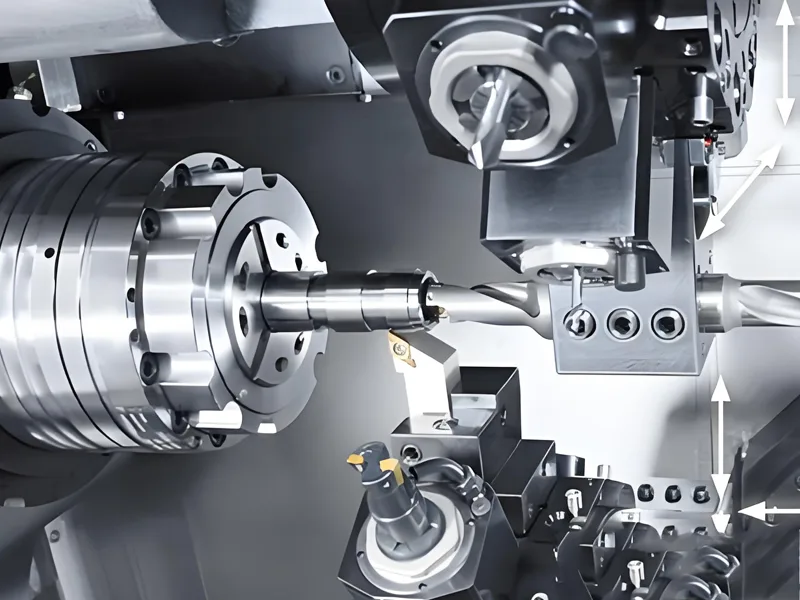
In the realm of high-precision manufacturing, a reference surface is not merely a physical platform; it is the fundamental geometric baseline—the Datum Feature Simulator—upon which the entire dimensional integrity of a part relies. You utilize these surfaces in precision machining to constrain specific degrees of freedom (DOF), ensuring that the workpiece location is deterministic and repeatable. And achieve good machining precision. This surface provides the absolute zero point (coordinate origin) for dimensional metrology. Consequently, you depend on the reference surface not just to “set up” machines, but to establish a Datum Reference Frame (DRF) that aligns the physical part with its digital CAD twin.
For global suppliers of custom CNC machining services, this rigorous alignment ensures that process capability (Cpk) remains stable and results are statistically reproducible across production lots. During geometric verification, you employ these surfaces to validate whether components satisfy strict Geometrical Dimensioning and Tolerancing (GD&T) requirements defined in the engineering drawings. Ultimately, the reference surface in precision machining is the critical control variable that guarantees achievable accuracy and process repeatability.
Key Takeaways
- Metrological Foundation: Reference surfaces provide the kinematic stability required for micron-level measurements in precision machining.
- Surface Integrity: Maintaining the surface topology is critical; even micro-scale wear (local deviations) can introduce significant cosine errors or Abbe errors in measurement.
- Material Selection: Selecting the correct substrate—such as black diabase granite for thermal stability or high-grade cast iron—is essential for damping vibrations and minimizing thermal expansion coefficients.
- Lifecycle Management: Regular calibration using autocollimators or electronic levels prevents drift in measurement uncertainty.
- Adherence to Standards: Following protocols like DIN 876 for flatness grades ensures the machining process remains traceable and reliable.
Table of Contents
What Is a Reference Surface in Precision Machining?
Defining Reference Surfaces
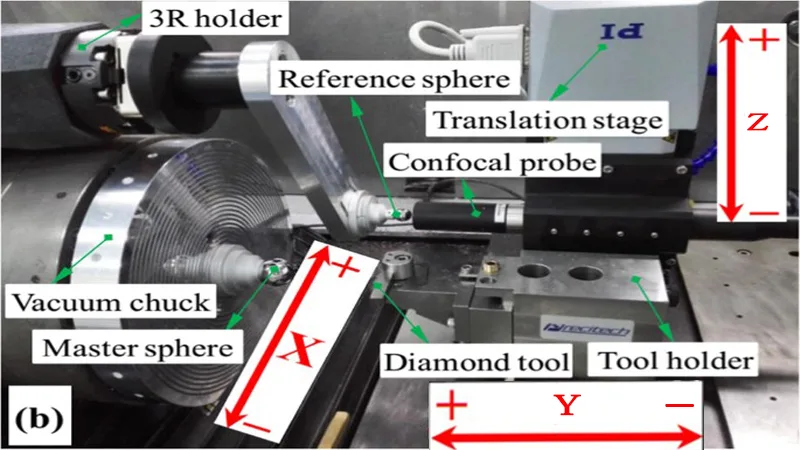
From a GD&T perspective (per ISO 5459), a reference surface serves as the Datum Feature—the actual physical surface on the part—used to establish a theoretical exact datum for measurements and setups. It acts as the primary constraint for establishing the Z-axis alignment and leveling the component. When engaging in custom metal parts manufacturing, understanding the physics behind these constraints is what separates functional parts from scrap.
When utilizing a surface plate, you are engaging with a Datum Simulator, which provides a theoretically flat plane within specific tolerance zones (e.g., Grade 00 for inspection). This plate allows for high-resolution inspection of geometric tolerances such as flatness, parallelism, and perpendicularity. In precision engineering, even sub-micron deviations in the plate’s topography can propagate through the machining chain, compromising the final assembly’s fit.
You rely on this plate to verify that critical dimensions (CDs) fall within the specification limits. Furthermore, the plate aids in the kinematic coupling of fixtures, ensuring that machine coordinate systems (G54-G59) are synchronized with the part geometry. Datums are theoretically exact points, axes, or planes derived from the true geometric counterparts of the reference surface. By rigorously applying datum targets, you ensure that every machined component adheres to the “3-2-1 principle” of location. This methodology guarantees that you achieve consistent spatial orientation every time a part is fixtured. Thus, the reference surface in precision machining is the primary mechanism for achieving dimensional conformity and reproducibility.
Key Characteristics and Types
Evaluating a reference surface requires a deep understanding of surface metrology and tribology. The materials and grades chosen directly impact the measurement uncertainty of tight tolerance turning components and complex milled parts.
The table below details the technical specifications distinguishing a laboratory-grade surface plate from standard workshop tooling:
| Characteristic | Technical Description | Engineering Standard / Implication |
| Surface Quality | The integrity of the surface texture, free from burrs, oxidation, or deep scratches that could affect the sliding friction of height gauges | Measured via visual inspection and tactile testing to ensure no protrusions affect the bearing area curve. |
| Surface Flatness | The geometric tolerance zone wherein all points of the surface must lie, often measured in microns over a diagonal distance. | Defined by DIN 876 or ASME B89.3.7. Grade 00 might require flatness within 2.5 µm over a 1000mm span. |
| Surface Roughness | The micro-geometric irregularities (Ra, Rz values) that influence wear rates and the stick-slip phenomenon. | Typically aimed at Ra 0.2 – 0.4 µm to balance smooth sliding with sufficient air bearing effects. |
| Surface Accuracy | The deviation of the global form from a true mathematical plane, heavily influenced by thermal gradients. | Requires calibration maps showing localized wear spots (isohypses) to compensate during measurement. |
You utilize Grade 0 or Grade 00 surface plates to ensure that the measurement uncertainty ratio (TUR) remains acceptable (typically 4:1). Flatness is the controlling tolerance for referencing; without it, parallelism and perpendicularity checks are mathematically invalid. If the plate exhibits “saddle” or “crown” warping, your height gauge readings will incorporate systematic errors. If the plate fails calibration, you must revise your machining process plan or regrind/lap the plate.
While standards like ISO 2768-m/f dictate general machining tolerances, reference surfaces are governed by stricter standards like ISO 1101 for geometric tolerancing. These standards enable you to maintain interchangeability in mass production. You verify flatness using differential electronic levels or laser interferometry. If the local slope of the plate varies, the contact points of your workpiece will shift, leading to unstable machining forces. Poor flatness leads to stack-up errors, potentially causing the finished assembly to fail functional testing or geometric fit requirements.
Regarding materials, Granite (specifically black or pink) is the industry standard due to its low coefficient of thermal expansion and superior vibration damping. Cast Iron plates, while less stable thermally, offer high strength for heavy-duty magnetic fixturing applications. You select the grade and material based on the required Test Uncertainty Ratio (TUR) of the job. The highest grade plates are reserved for CMM calibration and final acceptance testing. Ultimately, you depend on the reference surface to certify that the manufactured dimensions align with the CAD nominals. It is the cornerstone of the Quality Assurance (QA) loop, ensuring stability and trustworthiness in your Certificate of Conformity (CoC).
Reference Surface Applications for Machining Precision
Measurement and Inspection
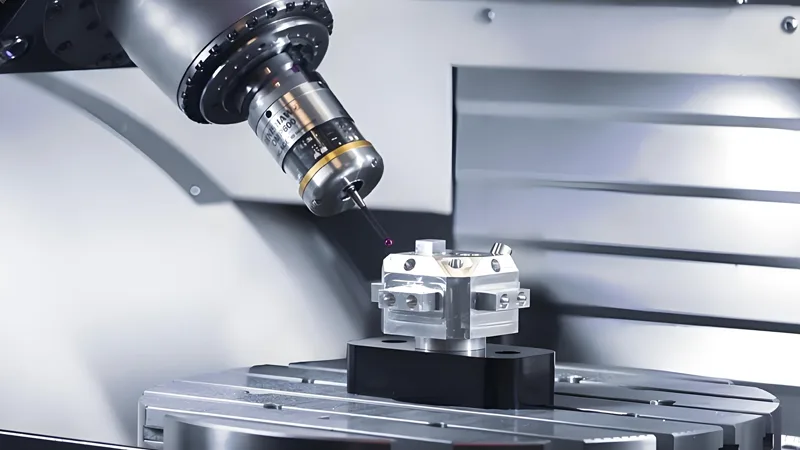
The reference surface is the baseline for Coordinate Metrology. In operations involving precision metal parts manufacturing, any inspection without a verified reference surface is merely an estimation. Surface plates serve as a simulation of Datum A, allowing for the verification of orientation tolerances.
- Flatness Verification: You place a precision block on the plate and traverse a sensitive dial indicator (0.001mm resolution) across it to map surface deviations.
- Perpendicularity Check: You inspect cylindrical components for orthogonality using a granite master square and a test indicator.
You rely on the surface to confirm compliance with strict GD&T control frames.
| Application Type | Technical Description | Industrial Example |
| Precision Measurement | Utilizing the plate as a zero-reference for differential measurements. | Using a comparator stand to measure runout or total thickness variation (TTV). |
| Inspection (QC) | First Article Inspection (FAI) to validate process capability. | Verifying the perpendicularity of a bore relative to the datum face using a cylindrical square. |
| Setup and Layout | Configuring the work offset coordinates (G54) prior to machining. | Using a height gauge to scribe centerlines on a casting for rough machining alignment. |
| Calibration | Verifying the accuracy of handheld metrology tools (Traceability). | Checking the parallelism of micrometer anvils against the reference plate surface. |
| Assembly & Fixturing | Providing a planar datum for sub-assembly alignment. | Aligning linear guide rails on a machine bed using the reference surface as a guide. |
Setup and Alignment in Machining
In CNC machining, reference surfaces are exploited to define the spatial relationship between the machine tool and the workpiece. Fixtures act as the interface, using the 3-2-1 locating principle to arrest the six degrees of freedom. Jigs and fixtures ensure that the Datum Reference Frame is transferable from the drawing to the machine table.
- Jigs: Guide the cutting tool (common in manual drilling) to ensure positional tolerance.
- Fixturing: You utilize hydraulic clamping, magnetic chucks, and zero-point clamping systems to minimize setup time (SMED) while maximizing rigidity.
For instance, automotive piston manufacturing utilizes hydro-expanding mandrels or zero-point systems for micron-level centering. Wind energy components require hydraulic clamping to prevent deformation (spring-back) of large, heavy rings. These methodologies ensure Process Capability (Cpk > 1.33) is maintained.
| Method | Technical Description | Application Example |
|---|---|---|
| Fixturing Techniques | Pins and V-blocks establish the datum axis and lock rotation. | Precision grinding of shafts using centers and driving dogs. |
| Hydraulic Clamping | Applies uniform pressure to minimize part distortion/deformation. | Thin-walled aerospace housing machining. |
| Magnetic Fixtures | High-density flux lines hold ferromagnetic parts without physical clamps. | Surface grinding of mold plates for uniform thickness. |
| Vacuum Setups | Atmospheric pressure clamping for non-magnetic or delicate substrates. | High-speed machining of aluminum aircraft skins. |
| Robotic Systems | Automated loading with vision systems for localized datum detection. | Pick-and-place of semiconductor wafers. |
| Real-time Measurement | In-process probing (Renishaw) to update work offsets dynamically. | Adaptive machining of forged turbine blades. |
Calibration and Quality Control
Reference surfaces are pivotal for metrological traceability. Granite plates provide the high stiffness and thermal inertia required for calibrating sensitive equipment. You verify the planar accuracy of machine ways and linear guides against these masters.
- Dowel Pins: Precision-ground pins (m6 tolerance) create physical datum features for repeatable pallet loading.
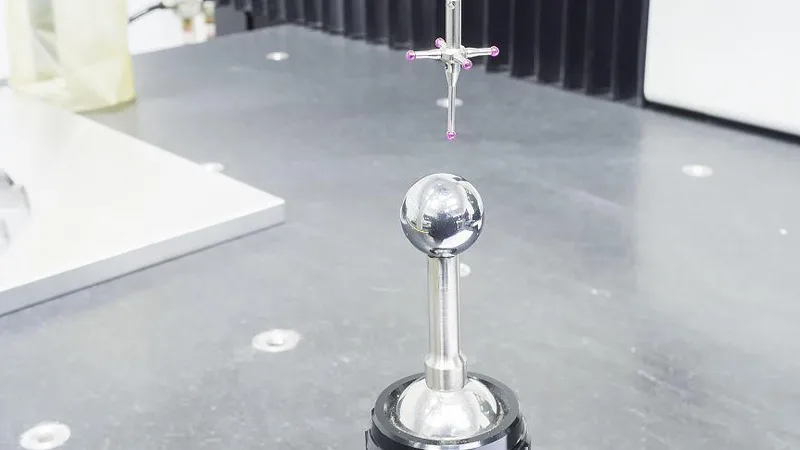
- Datum Systems: In 5-axis machining, the kinematic center of rotation is calibrated relative to a reference sphere or artifact.
Reference surfaces also establish the baseline for Surface Finish (Ra/Rz) assessment. They help identify manufacturing deviations such as chatter or tool wear. By gating incoming raw materials against these surfaces, you prevent non-conforming inputs from entering the value stream.
Tip: Always verify the calibration sticker and local flatness map of your reference surface before critical inspections. Local wear depressions can introduce microns of error.
Reference surfaces set the quality benchmark. They prevent the propagation of defects by ensuring the “Golden Part” standard is maintained. Surface quality specifications (per ISO 1302) allow you to validate material integrity.
Benefits of Precision Surface Grinding
Enhanced Precision and Consistency
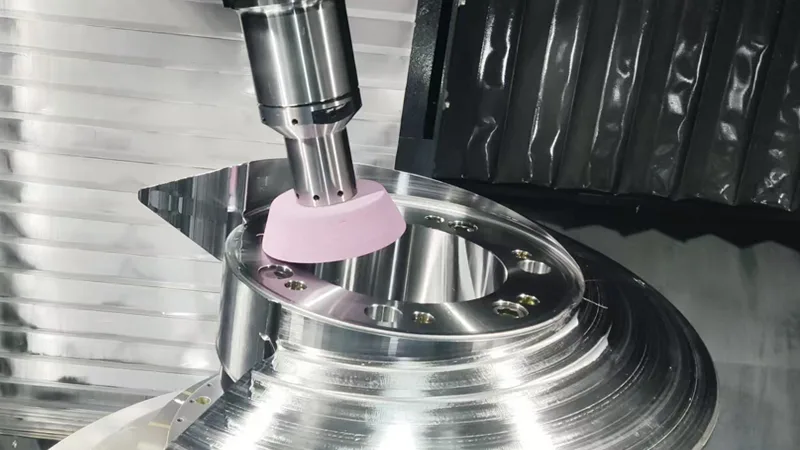
Precision Surface Grinding is the manufacturing process used to generate these reference surfaces, capable of achieving tolerances within IT4-IT6 grades. For high-demand rapid prototyping and custom metal production, grinding is the ultimate finishing step. These machines minimize dimensional dispersion, ensuring standard deviation ɓ remains tight. Surface grinding services are critical for achieving flatness < 0.005mm and Ra < 0.2µm.
Industries such as aerospace and medical device manufacturing rely on this to create vacuum-tight seals and low-friction bearing surfaces. Experts use different wheel compositions (e.g., cubic boron nitride – CBN) to grind hardened tool steels without inducing thermal damage (grinding burn).
| Aspect | Technical Description |
|---|---|
| Tight Tolerances | Achieving dimensional accuracy up to ±0.002mm via spark-out passes. |
| Flawless Surface Finishes | Generating mirror finishes (Ra 0.05µm) to reduce tribological friction. |
| Intricate Shapes | Profile grinding allows for the creation of complex slot geometries and forms. |
Quality Assurance in Machining
Precision surface grinding acts as a final corrective step to ensure Quality Assurance (QA). Modern grinders employ in-process gauging (Marposs systems) to actively monitor part size and auto-compensate for wheel wear. You detect variations in flatness or parallelism immediately. Precision grinding machines provide the deterministic control needed to qualify parts for assembly. These services facilitate 100% inspection of critical mating surfaces, ensuring zero-defect delivery. By reducing size variance significantly, you stabilize the assembly process.
Reducing Errors and Rework
Precision surface grinding inherently reduces the cost of poor quality (COPQ). By achieving the target dimension in the final operation, you eliminate the cumulative errors from previous milling or turning steps. Compared to fly-cutting or face milling, grinding offers superior process reliability. This process minimizes scrap rates by recovering slightly oversized parts. Precision grinding machines ensure form, fit, and function.
| Feature | Precision Surface Grinding | Traditional Milling/Planer |
|---|---|---|
| Tolerance | Extremely Close (±0.002mm) | Moderate (±0.02mm) |
| Surface Finish | Ra 0.2 – 0.8 µm (Ground) | Ra 1.6 – 3.2 µm (Milled) |
| Error Reduction | High Repeatability (Low ɓ) | Higher Variability |
You experience significantly less material waste and lower non-conformance reports (NCRs) with surface grinding. It optimizes the cycle time for finishing operations and is indispensable for meeting critical-to-quality (CTQ) characteristics.
Best Practices and Challenges in Precision Machining
Maintaining Reference Surfaces
To preserve the metrological integrity of reference surfaces, you must adhere to a strict maintenance protocol defined by ISO/IEC 17025 guidelines.
Best Practices for Lifecycle Management:
- Handling Protocol: Always clean the surface and the workpiece with denatured alcohol to remove debris that could cause abrasive wear.
- Load Distribution: Distribute wear evenly by utilizing different quadrants of the surface plate, rather than always measuring in the center (avoiding the “dished” effect).
- Protection: When not in use, cover the plate with a hard cover to prevent impact damage and dust accumulation. Apply a light rust inhibitor if using cast iron.
- Burr Removal: Stone the workpiece with a precision arkansas stone before placing it on the plate to ensure no raised burrs scratch the reference surface.
- Regular Calibration: Schedule professional resurfacing (lapping) based on usage frequency, typically annually or when local wear exceeds the grade tolerance.
- Environmental Control: Maintain the metrology lab at 20°C ±1°C and <50% humidity to mitigate thermal expansion and oxidation.
- Workholding: Ensure clamps do not impart stress that deforms the plate or the part.
Documenting these procedures in your Quality Management System (QMS) ensures audit compliance and long-term accuracy.
Common Challenges and Solutions
Engineers often face environmental and operational challenges that degrade reference integrity.
| Challenge | Technical Solution |
|---|---|
| Corrosion / Oxidation | (For Cast Iron) Application of lanolin-based rust preventatives; Humidity control. |
| Abrasive Wear | Rotating usage zones; Periodic lapping to restore Grade 0 flatness. |
| Thermal Distortion | Soaking parts to reach thermal equilibrium (20°C) before measurement; Using Granite (low CTE). |
| Vibration | Mounting surface plates on passive or active air isolation leveling feet. |
Dust and airborne particulates act as abrasive agents. Controlling air quality (positive pressure) is essential.
Selection and Use Considerations
When designating reference surfaces in your manufacturing plan, apply the Principle of Locating:
- Datum Coincidence: Ensure the Design Datum, Manufacturing Datum, and Inspection Datum are the same feature. This eliminates “Datum Shift” errors.
- 6-Point Rule: Use the 3-2-1 logic: 3 points to define the plane, 2 to define the line, 1 to define the point.
- Process Referencing: Use the most critical finished surface as the locator for subsequent operations.
- Rigidity: Ensure the reference surface does not deflect under clamping forces (compliance errors).
- Tolerance Analysis: Perform a tolerance stack-up analysis to ensure the reference surface quality allows for the accumulation of tolerances in the assembly.
Consider the material science of the workpiece. Soft materials (aluminum, copper) are prone to galling; hard materials require careful handling to avoid scratching the plate. Thermal conductivity also dictates how long a part must “soak” on the plate to normalize temperatures.
Advanced 3D Metrology tools, such as Laser Trackers and Structured Light Scanners, can virtually map reference surfaces for large-scale assemblies, compensating for distortions in software. This digital augmentation enhances reliability in “Smart Machining” environments. Ultimately, the reference surface is the “Source of Truth” in machining. Rigorous adherence to selection and maintenance protocols ensures that this truth remains unquestioned.
FAQ
A reference surface acts as a Datum Feature Simulator. It constrains the degrees of freedom (DOF) of a workpiece, establishing a coordinate system (X, Y, Z) for precise machining and dimensional inspection.
Accuracy is quantified by its Flatness Tolerance (e.g., DIN 876 Grade 00). It is verified using laser interferometers or electronic differential levels to map the topography and identify deviations in microns.
Materials like granite have a low Coefficient of Thermal Expansion (CTE). This stability prevents geometric distortion caused by temperature fluctuations in the shop floor, ensuring that measurements taken at different times are consistent.
Yes, but it depends on the severity. Granite plates can be re-lapped by professionals to restore their flatness grade. Cast iron plates can be scraped or ground. However, using a damaged plate before repair is strictly prohibited as it compromises traceability.