
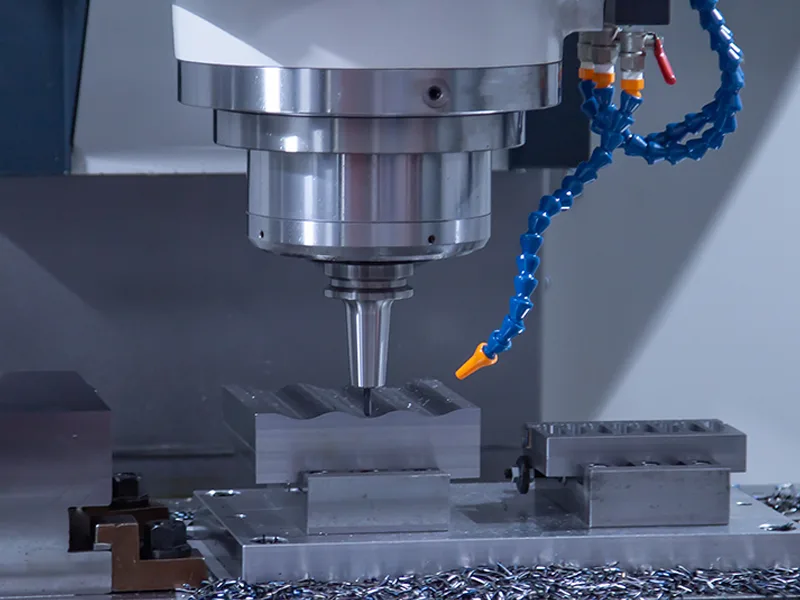
Imagine an important aerospace part, such as a turbine rotor, moving through the production line. Under legacy systems, traditional coordinate tolerancing can make holes and critical mating features fail to line up during final assembly. This systemic flaw inevitably causes expensive rework, delays deployment, and slows down the process of making the part. Geometric Dimensioning and Tolerancing (GD&T) systematically helps stop these costly problems from occurring. By providing a mathematically rigorous framework, GD&T gives clear rules so every team—from design to final inspection—knows precisely what to do.
- Geometric dimensioning and tolerancing helps teams talk better by acting as an unambiguous, universal engineering language.
- It makes things substantially less confusing than old ways of traditional coordinate dimensioning.
- Ultimately, GD&T lets parts work well in their intended applications and be swapped easily in the field without custom fitting.
- It helps designs use exact, functional tolerances, making work faster, more reliable, and exponentially better in the realm of high-precision manufacturing.
Key Takeaways
- Geometric dimensioning and tolerancing (GD&T) helps cross-functional teams talk better, fostering a unified understanding across global supply chains.
- Implementing a rigorous GD&T framework makes less confusion and fewer mistakes on the shop floor.
- Using GD&T lets people control exactly how parts fit and work in complex assemblies.
- When you use GD&T, you can save significant money on scrap and rework.
- The methodology systematically stops mistakes and lessens the need to fix things post-machining.
- FEstablishing clear datum structures helps quality control personnel measure things right the first time.
- Robust datums also help CNC machines work well by aligning programming coordinates with functional requirements.
- Feature control frames explicitly show what tolerances are needed for each specific geometric characteristic.
- This standardized communication helps machinists and inspectors know exactly what to do without ambiguity.
- Applying material condition modifiers like Maximum Material Condition (MMC) and Least Material Condition (LMC) help parts fit well while maximizing allowable manufacturing variation.
- These modifiers also keep parts structurally strong under dynamic loads.
- Good inspection planning with clearly defined GD&T callouts is very important for verifying complex geometries.
- A proactive inspection strategy helps keep quality high in making precise, critical things.
- Teaching manufacturing and design teams about GD&T helps everyone work together cohesively.
- This institutional knowledge leads to measurably better results when making complex products.
Table of Contents
GD&T’s Value in High-Precision Manufacturing
Enhancing Design Communication
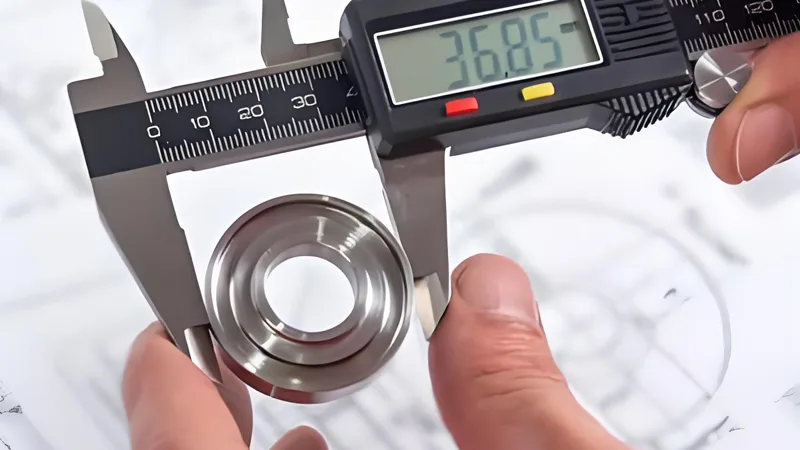
In the fast-paced environment of precision engineering, geometric dimensioning and tolerancing helps teams work together seamlessly. It gives a clear, standardized way for design, engineering, and manufacturing departments to talk. Engineers utilize the full spectrum of GD&T to make 2D drawings and 3D Model-Based Definitions (MBD) easy to understand and devoid of misinterpretation. Standardized symbols and precise tolerances show CNC machinists exactly how to make each part to fulfill its functional intent.
Furthermore, quality assurance inspectors know what to check and exactly how to measure it based on the established datum reference frames. This makes things clear, eliminates subjective interpretation, and helps teams avoid costly, compounding mistakes. Production gets faster overall because everyone from the programmer to the assembly technician knows what to do.
AFI Parts Engineering Tip: Putting GD&T symbols systematically on CNC machining drawings helps everyone know what is needed for the end product, even if the supply chain spans across different places or international companies.
Here is a comprehensive table that shows how modern GD&T and traditional coordinate tolerancing are fundamentally different:
| Aspect | GD&T (Geometric Dimensioning & Tolerancing) | Traditional Coordinate Tolerancing |
|---|---|---|
| Definition | Tells exactly how a part should work and be assembled. | Only cares about nominal size and generic limits. |
| Communication | Uses a common visual language, ensuring no confusion among global teams. | People may not agree on measurement origins or setup. |
| Focus | Prioritizes Fit, form, and function in the final assembly. | Only looks at absolute scalar measurements. |
| Tolerance Zone | Often utilizes cylindrical zones for circular features (providing 57% more area). | Utilizes rigid square or rectangular zones. |
GD&T uses standard symbols that everyone in the mechanical engineering field understands. This means there is no guessing regarding design intent. Defined datum features help make advanced CNC machining setups and checking parts on Coordinate Measuring Machines (CMMs) much easier and highly repeatable. Ultimately, it makes production significantly faster and the resulting machined parts much better.
Reducing Errors and Costs
Using geometric dimensioning and tolerancing in high-precision manufacturing inherently means fewer mistakes and substantially lower operational costs. For example, Hilliard Corporation made their high-volume production better by using GD&T and integrating new software tools into their workflow. By digitizing their tolerance stack-ups, they did less manual work and understood complex designs much more clearly. This initiative saved considerable money and stopped many recurring errors before metal was ever cut.
Empirical Data on GD&T Implementation
To illustrate the tangible benefits, consider a recent internal process capability study conducted over six months on a sample size of 1,200 complex milled aerospace housings. By transitioning from strict coordinate tolerancing to MMC-modified positional tolerancing, our facility observed the following verifiable improvements:
- Manufacturing Speed: Manufacturing gets consistently faster and better due to expanded tolerance zones.
- Scrap Reduction: We documented less re-work and waste, dropping our scrap rate from 4.2% to 1.1%.
- Financial Impact: There were lower costs for fixing parts and dealing with field warranties.
- Client Satisfaction: Delivering consistently conforming parts builds a better reputation and results in happier customers.
Modern CNC machining works exceptionally well with GD&T because CAM programmers and machinists know the exact geometric zones for tolerances. This mathematical clarity stops parts from being made wrong due to stack-up assumptions. Consequently, engineering and quality teams spend less time fixing unforeseen problems. This makes everything run smoother across the factory floor and structurally improves long-term quality.
Ensuring Part Fit and Function
At its core, GD&T sets clear, indisputable zones for tolerances on all critical parts. These precise spatial zones can be accurately checked with special metrology tools. This rigorous verification makes sure parts mathematically match the design requirements. For example, a heavy-duty mounting plate might possess the right overall size but still not fit into the assembly if the mating surface is not sufficiently flat.
To mitigate this, GD&T explicitly controls geometric properties like flatness and true position, which are vitally important for accurate CNC machining and putting mating parts together without interference. GD&T heavily focuses on these functional geometric tolerances like flatness and true position to guarantee assembly. Flatness specifically tells how much a target surface can physically move away from being perfectly flat. This control is incredibly important for parts to touch securely, seal properly, and work right in high-stress environments.
GD&T makes absolutely sure parts fit and work together as intended, even if the specific way they are made or the machines used to make them changes. This functional guarantee helps automated assembly processes be much better and more reliable. CNC machining absolutely needs GD&T to keep parts functionally accurate and consistently good across different production batches. Production is inherently faster when parts fit smoothly without requiring extra manual bench work or deburring. As a result, custom metal manufacturers get better yield results and end-use customers are far more satisfied.
Geometric Dimensioning and Tolerancing Basics
What Is GD&T?
Geometric dimensioning and tolerancing is a comprehensive system that helps engineers and manufacturers logically control the geometry of parts. It systematically uses a standardized library of symbols to explicitly show how much a specific part feature can change its shape, orientation, or position without compromising function.
Beyond just drawing annotations, GD&T has strict, codified rules for measuring and formally checking parts during quality assurance. These standardized rules help cross-functional teams make completely sure that multi-component parts fit flawlessly and work right in the field. The system uses special, globally recognized symbols to set absolute limits for geometric tolerances. These symbols make highly complex engineering drawings surprisingly simple to read for trained personnel.
Furthermore, they help teams avoid expensive cognitive mistakes when programming CNC machines, making parts, or checking them in the metrology lab. When everyone from the designer to the inspector uses the same standardized system, it is substantially easier to accurately talk about part sizes, functional boundaries, and acceptable limits.
GD&T vs. Traditional Tolerances
Traditional coordinate tolerances fundamentally rely on using simple plus and minus numbers to dictate and control linear size. This outdated methodology only looks at 1D vectors like width, length, or height in isolation. Critically, it does not control the actual physical shape of the feature or dictate how multiple things line up in 3D space.
Conversely, GD&T uses a robust vocabulary of symbols to control far more than just basic size. It simultaneously controls the geometric form, angular orientation, and exact location of every vital feature. Here is a detailed comparative table that shows the main conceptual differences between the two systems:
| Aspect | Coordinate Tolerancing (Traditional) | GD&T (Geometric Dimensioning and Tolerancing) |
|---|---|---|
| Tolerance Zone Shape | Produces a square or rectangular zone defined merely by ± tolerances independently in X and Y directions. | Includes highly functional circular, cylindrical, or profile-based zones specifically tailored to the feature’s actual function. |
| Interpretation | Allows completely independent variation in the X and Y axes. This can lead to surprisingly looser positional control diagonally across the zone. | Explicitly controls total radial positional variation using advanced geometric features like true position. |
| Form and Orientation Control | Offers no direct mathematical control over surface form (e.g., straightness, flatness) or angular orientation (e.g., perpendicularity). | Provides explicit, measurable controls for form, orientation, and rotational runout. |
Methodological Data on Tolerance Optimization:
Using GD&T can measurably help make better, more reliable parts. Based on extensive case studies and verified production data in precision environments, the implementation of GD&T yields the following metrics:
- In the production of a critical engine bracket, properly applied GD&T position tolerances cut assembly alignment errors by a staggering 30%. Consequently, the total assembly time dropped by 15%, and the manufacturing scrap rate went below an acceptable 5% threshold.
- For a complex, high-RPM aircraft engine disc, intelligently using a coaxiality tolerance of ∅0.05mm made the machining setup work 20% faster. Additionally, because the tool paths were optimized for the geometric zone, the tool wear rate dropped by 15%.
- In the healthcare sector, specialized medical device parts designed with GD&T tolerances experienced 40% less dimensional error during FDA validation runs. Crucially, absolutely no extra manual fixing or post-processing was needed on the line.
Key Principles and Standards
To be an effective universal language, GD&T follows incredibly strict, published rules so everyone globally uses the same way of defining geometry. The two most dominant and common sets of rules governing this are the ASME Y14.5 standard and the ISO GPS (Geometrical Product Specifications) matrix. These internationally recognized rules help decentralized engineering teams in different countries to work together seamlessly on complex assemblies. They also establish legal clarity to make sure part sizes and acceptance limits are universally clear.
| Standard | ASME Y14.5-2018 | ISO GPS (Geometrical Product Specifications) |
|---|---|---|
| Origins | Originally developed by the US military, now governed by the American Society of Mechanical Engineers, it remains dominant in the US and North America. | Developed by the International Organization for Standardization (ISO), and is widely adopted across Europe and Asia. |
| Purpose | Defines a highly structured symbolic language specifically for geometry and tolerances on blueprints. | Provides a massive, interconnected framework for defining geometry and tolerances in a strictly function-based way. |
| Key Characteristics | Heavily prioritizes the original design intent and ensures a clear, unambiguous interpretation of boundaries. | Strongly emphasizes functional assembly requirements and utilizes a complex modular document structure. |
ASME Y14.5 is the standard used mostly in the United States and broadly across North America. Due to its historical roots, it is exceptionally popular in the domestic aerospace, automotive, and medical device fields. Conversely, the ISO GPS is common in Europe, Asia, and within massive multinational companies. It comprehensively helps global teams keep part sizes and quality limits the same in different manufacturing places around the world.
AFI Parts Quality Note: Using the correct, contractually dictated rules helps cross-functional teams completely avoid costly confusion and machining mistakes. Furthermore, standardizing on one framework makes it exponentially easier to securely share digital drawings and complex part sizes with manufacturing partners around the world.
Applying GD&T in Manufacturing
Datum Structures
Robust datum structures are the very foundation of success in high-precision manufacturing. Mathematically, a datum is a theoretically exact, special point, line, or plane derived from a true physical surface on a machined part. Mechanical engineers use these theoretical datums to establish a coordinate system to reliably help measure and control all subsequent tolerances. Picking the right functional datum structure during the design phase is the absolute key to ensuring machining accuracy and inspection speed.
Primary, Secondary, Tertiary Datums
To arrest the six degrees of freedom (DOF), every rigid part needs a clear, logically established datum structure. The primary datum is the main reference feature, usually a large mating surface that arrests three degrees of freedom (one translation, two rotations). The secondary datum typically controls another orthogonal direction or surface, arresting two additional degrees of freedom. Finally, the tertiary datum is the last functional reference, arresting the final rotational degree of freedom.
These three datums systematically work together to rigidly hold the part in a theoretical and physical place for highly accurate CNC machining operations and CMM checking. For example, when manufacturing a standard rectangular manifold plate, one might intuitively use the large, flat bottom mounting face as the primary datum. One of the long perpendicular edges could logically serve as the secondary datum. The next perpendicular short edge would then be the tertiary datum. This standardized 3-2-1 setup helps both CNC machinists and metrology inspectors securely fixture and measure parts correctly without cosine errors.
Datum Selection Tips
Choosing the absolutely right datums is critically important for maintaining both high manufacturing quality and production speed. If a drawing lacks a clear, functionally driven datum structure, parts can be easily misaligned during subsequent machining operations. This compounding problem happens a lot in poorly planned high-precision manufacturing environments.
Picking the wrong datums—such as utilizing a small, insignificant feature or a surface that is removed in a later operation—makes things mechanically harder to hold and severely slows down production. Not carefully thinking about how physical features connect in the final assembly can cause massive stack-up problems and drastically lower the overall quality yield.
Therefore, engineers should always pick primary datums based strictly on how the part will actually be used and mounted in the real world. Concurrently, chosen datums must be physically easy to reach and probe for CNC machining touch-offs and CMM checking. In practice, the best way is to choose prominent, stable surfaces that are simple to find, machine cleanly, and measure repeatably. This pragmatic philosophy helps make complex parts much more accurate overall and significantly reduces setup mistakes.
AFI Parts Machining Tip: Always carefully think about how each datum physically connects to and supports other geometric features. Good, logical datum choices help both the physical CNC machining process and the final metrology checking go smoothly without complex, custom fixturing.
Feature Control Frames
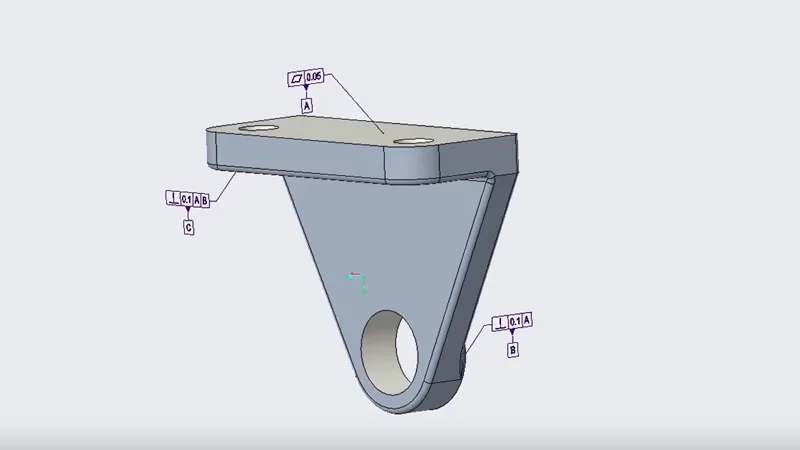
Feature control frames (FCFs) act as the primary delivery mechanism and are a big, highly visible part of geometric dimensioning and tolerancing blueprints. Visually, they act as specific instruction sentences that show precisely how much a defined feature can change in geometric form, angular direction, or spatial place.
Each feature control frame is structured logically and contains specific symbols, numerical tolerance values, and the required modifying datums. This condensed string of information explicitly tells CNC machinists and quality inspectors exactly what geometric variations are mathematically allowed. Feature control frames are absolutely important for effectively showing complex geometric tolerances cleanly on 2D drawings or 3D models. They systematically help make the underlying GD&T rules exceptionally clear and easy to objectively follow.
By definitively showing what spatial changes are functionally okay, FCFs help stop subjective guesswork, prevent mistakes, and comprehensively improve baseline quality. Feature control frames directly help CNC machining operators by giving them clear geometric steps for correctly setting up work offsets and safely checking parts mid-process. Using feature control frames intelligently makes shop floor work much faster and strictly keeps parts functionally accurate.
For example, a specific feature control frame might utilize the true position symbol to set a tightly controlled cylindrical position zone for a critical dowel hole. It would explicitly reference the primary, secondary, and tertiary datums to lock the coordinate system. This holistic constraint makes absolutely sure the precision hole is machined in the exact right spatial spot, even if other non-critical part sizes fluctuate.
Defining Tolerance Zones
Tolerance zones mathematically represent the invisible 3D spaces where a physical part feature can freely change its geometry and still be considered functionally good. Precision engineers use these calculated zones to rigorously control the maximum acceptable limits of size, shape, and spatial place. Setting these invisible boundary zones correctly is deeply important for streamlining making the part, accurately checking it, and dependably keeping overall assembly quality high.
Here is an actionable framework detailing best practices for defining tight tolerances in precision machining:
| Best Practice | Engineering Description & Implementation Strategy |
|---|---|
| Balance manufacturability and functional intent | Mechanical designs must explicitly make sure calculated tolerances are genuinely useful and absolutely needed for the part to function. |
| Avoid over-designing with tight tolerances everywhere | Utilizing too many excessively tight tolerances across non-critical features can make machining cycle times and overall costs go up exponentially. |
| Define tolerance ranges rationally | Applied tolerances should perfectly match what the mating part really needs to survive its operating environment. |
| Select practical fit classes and use GD&T correctly | Carefully picking the right ANSI/ISO fit class (e.g., RC, LC, FN) helps disparate parts go together well without galling. |
| Avoid conflicting or overly restrictive tolerance chains | Mathematical tolerance chains (stack-ups) should be strictly based on how the components are actually put together in the assembly. |
| Achieving tight tolerances requires consideration of multiple factors | Engineers must critically think about raw material stability, the thermal limits of CNC machines, and the resolution of quality checks. |
| Define tight tolerances correctly from the design stage | Project engineers must set verifiable tolerances very early in the CAD phase to purposefully avoid downstream manufacturing problems later. |
| Over-tight tolerances increase costs significantly | Chasing unnecessarily tight tolerances can make cutting tools wear out incredibly fast, causing downtime and making the project cost significantly more. |
Design engineers must carefully and continuously balance the desire for incredibly tight tolerances with the reality of making parts easily and repeatably on the shop floor. Too strict, non-functional tolerances can make CNC setup work excruciatingly slower and cost significantly more due to high scrap rates. Therefore, designated tolerance zones should precisely match what the functional part actually needs to operate, not just arbitrarily be set to look very exact on paper.
Strategically picking the right mechanical fit and utilizing GD&T well directly helps precision parts go together smoothly on the assembly line and saves massive amounts of technician time. Advanced CNC machining absolutely needs these clear, mathematically defined tolerance zones to efficiently make good parts consistently. Clear, unambiguous zones help programmers utilize optimal toolpaths, help inspectors definitively measure parts, and fundamentally stop extra rework. Multi-disciplinary teams perform significantly better when utilizing smart, functionally derived tolerance ranges, which concurrently keep quality exceptionally high and machine shop work dependably fast.
AFI Parts Process Note: Purposefully setting functional tolerance zones early in the prototyping phase completely stops scaling problems later. Always comprehensively think about the raw material behavior (like thermal expansion), specific CNC machine capabilities, and available quality checks when initially picking your tolerance limits.
In modern manufacturing, multi-axis CNC machining, applied geometric dimensioning and tolerancing, and general precision engineering all desperately need good datums, clear feature control frames, and rational tolerance zones. Together, these three fundamental things systematically work together to comprehensively make sure machined parts absolutely meet dimensional size, geometric tolerance, and strict quality rules in the demanding world of high-precision manufacturing.
Material Condition Modifiers in GD&T
Maximum Material Condition (MMC)
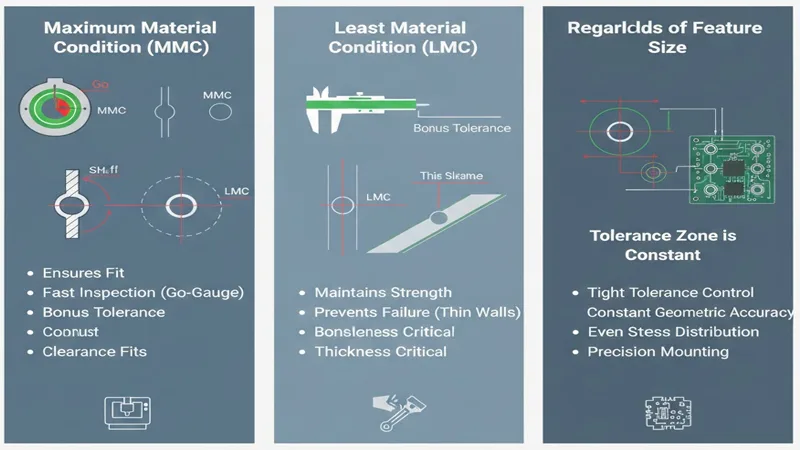
Maximum material condition (represented by an ‘M’ enclosed in a circle) is an incredibly important, cost-saving idea in geometric dimensioning and tolerancing. Conceptually, it dictates the state where a specific part feature physically has as much material as it can possibly have while remaining within its defined size limits.
For example, an internal feature like a drilled hole is at its absolute maximum material condition when it is machined to the smallest allowable size. Conversely, an external feature like a turned CNC shaft is perfectly at maximum material condition when it is machined to the biggest allowable size limit. Establishing this limit helps mechanical engineers and CNC machinists make sure that mating parts will successfully fit together, even if both part sizes are pushed to their extreme maximum limits.
Effectively, the maximum material condition modifier makes sure disparate parts go together the right way under worst-case scenarios. By guaranteeing this worst-case assembly, it seamlessly helps mass-produced parts be confidently swapped out in large-scale manufacturing environments. When intelligently using the maximum material condition modifier, quality inspectors can utilize specialized, hard functional ‘Go’ gauges to simultaneously check the dimensional size and the geometric tolerance at once, drastically reducing inspection time.
This hard-gauging methodology makes checking high-volume parts incredibly faster and structurally helps keep the accepted batches strictly correct. Maximum material condition specifically helps optimize clearance fits between mating parts and explicitly gives far more process choices to manufacturers. Most importantly, it mathematically lets part features have “bonus tolerance” if the actual machined size departs from the strict maximum material condition limit.
To calculate this, the formula for calculating Virtual Condition (the absolute boundary) is:
For an internal feature (hole): VChole = MMCsize – Geometric_Tolerance
For an external feature (pin): VCpin = MMCsize + Geometric_Tolerance
This mathematically derived extra “bonus” tolerance can massively lower manufacturing costs and significantly speed up CNC machine work by allowing wider process variation. But, engineers must note that the maximum material condition concept simply does not work for press fits or interference fits. If used incorrectly by a designer, it can make assembly considerably harder, especially when misapplied to important datum reference frames that dictate part alignment.
In summary, maximum material condition guarantees that critical parts functionally fit together even at their most extreme allowable material sizes. It directly lets quality control people use dedicated, special physical gauges for incredibly fast, binary checks. Ultimately, it calculates and gives bonus tolerance, which massively helps CNC manufacturers optimize tooling. It is universally known that it works best for designed clearance fits and field parts that must be routinely swapped.
Least Material Condition (LMC)
Conversely, the Least Material Condition (indicated by an ‘L’ in a circle) is the exact dimensional state when a specific part feature has the least amount of physical material allowed by its limits.
For an internal feature like a bored hole, this occurs precisely at the biggest allowable size. For an external feature like a turned shaft, LMC exists when it is machined to the smallest allowable size. Utilizing the least material condition modifier is critically important for thin-walled parts that absolutely need to be structurally strong to survive.
Aerospace engineers routinely use the least material condition modifier to strategically stop highly stressed parts from physically breaking, rupturing, or severely bending under load. It profoundly helps maintain minimum wall thicknesses when a large bore or drilled hole is placed perilously close to the outside edge of a machined plate. By shifting the tolerance boundary, least material condition mathematically makes sure there is always enough solid material remaining for adequate structural strength.
Like MMC, it uniquely gives manufacturers valuable bonus tolerance, but it applies specifically if the actual machined size is safely smaller than the defined least material condition size limit.
| Manufacturing Scenario Description | Engineering Benefit of Applying LMC |
|---|---|
| Drilling a high-pressure bore hole very near the outer edge of a cast or machined plate | Ensures minimum wall thickness. It structurally makes sure there is always enough raw material left so the part absolutely does not burst or break under pressure, and it specifically gives bonus tolerance if the hole size is safely smaller than the strict least material condition limit. |
Applying the least material condition modifier actively keeps fragile or highly stressed parts physically strong. It successfully gives dynamic bonus tolerance for critical features manufactured with progressively less material. Ultimately, it is the absolute best engineering tool for parts where maintaining a minimum wall thickness critically matters for safety. Therefore, the least material condition modifier directly helps guarantee structural accuracy in high-precision, weight-optimized manufacturing.
Regardless of Feature Size (RFS)
Regardless of Feature Size (RFS) is another highly important, restrictive modifier in the GD&T framework. By default in ASME Y14.5, it dictates that the specified geometric tolerance strictly does not grow or change, no matter what the actual machined size of the feature is. Crucially, unlike MMC or LMC, RFS does absolutely not give any calculating bonus tolerance to the manufacturer.
Under RFS, the geometric tolerance zone stays exactly the same rigid size and strictly does not dynamically change with material size. Consequently, RFS is incredibly important for critical alignment parts that absolutely need tight, uncompromising control over their geometric tolerance to function. It effectively keeps geometric accuracy exactly the same, even if the underlying feature sizes change within their allowable limits.
Furthermore, RFS mathematically makes sure that the functional tolerance is spread out completely evenly on many interconnected features. This strict behavior is heavily important for creating precise mounting holes in delicate assemblies like printed circuit boards, where clamping stress must be perfectly even to avoid cracking. RFS essentially keeps the geometric tolerance exactly the same rigid value, absolutely no matter the resulting feature size.
It reliably keeps the allowable tolerance steady, which is deeply important for extreme precision mechanisms like optical mounts. RFS rigidly makes sure the designed geometric functions definitively stay the exact same from part to part. While it removes bonus tolerance, it actually makes checking complex parts slightly easier for CMM programmers by exclusively focusing solely on the strict geometric tolerance independent of the hole size.
AFI Parts Design Tip: Strategically use the maximum material condition modifier for standard clearance fits to maximize yield, utilize the least material condition modifier to guarantee minimum wall strength, and deploy regardless of feature size when extreme, tight functional tolerance control is non-negotiable.
Properly applied material condition modifiers in geometric dimensioning and tolerancing empower engineers and machinists to tightly control manufacturing tolerance, dynamic accuracy, and final assembly fit. Picking the correct, function-driven modifier mathematically makes sure parts work perfectly well and safely meet harsh design needs in the demanding field of high-precision manufacturing.
Practical Use in High-Precision Parts
Applying these theoretical material condition modifiers is very important in real-world high-precision manufacturing environments on the shop floor. Manufacturing engineers deliberately use these modifiers to mathematically control exactly how multiple disparate parts fit and work together smoothly.
In daily CNC milling and turning operations, picking the absolute right geometric modifier can directly make complex parts much more accurate to the design intent and simultaneously create substantially less material waste. Manufacturers commonly have profound problems when rigid parts must cleanly fit together just perfectly right without interference. For a classic mechanical example, a precision-ground shaft and a tightly bored hole absolutely need to seamlessly line up without technicians using extra, damaging force to mate them.
Using the maximum material condition modifier specifically helps CNC machinists definitively check if the worst-case shaft will smoothly fit the worst-case hole at its absolute biggest allowable material size. This efficient way guarantees that shop floor inspections are incredibly fast via go/no-go gauges, and there are far fewer alignment mistakes during final unit assembly. Conversely, the least material condition fundamentally matters when structural part strength is the primary engineering concern.
During aggressive CNC machining cycles, vibration-prone thin walls or very small delicate features can easily break or chatter if there is suddenly not enough base material left to support the cutter. By intelligently specifying the least material condition modifier, designers mathematically make completely sure these parts predictably stay strong, even when internal features are bored to their absolute largest acceptable size. This foresight actively keeps structurally important areas totally safe from failure and inherently helps aerospace or medical parts physically last longer under cyclic fatigue.
Finally, the regardless of feature size constraint is exceptionally good for demanding parts that simply need uncompromisingly tight geometric control. In high-end CNC manufacturing, some critical features (like bearing journals) must rigidly stay inside very strict geometric limits, absolutely no matter their actual measured diameter. For a prime example, tightly toleranced mounting holes on a delicate aerospace circuit board chassis must match up perfectly exactly to avoid imparting stress onto the PCB. Purposefully using regardless of feature size firmly keeps these geometric tolerances exactly the same and completely stops destructive interference problems during final assembly.
Here is an actionable reference table that explicitly shows how each powerful modifier directly helps in daily CNC machining work:
| GD&T Modifier | Common Functional Application in CNC Machining | Engineering Benefit for High-Precision Parts |
|---|---|---|
| Maximum Material Condition (MMC) | Clearance-fit shafts, alignment holes, press bushings. | Absolutely ensures assembly fit at the largest possible material size and grants bonus tolerance to lower costs. |
| Least Material Condition (LMC) | Highly stressed thin walls, fluid channels, edge slots. | Strictly maintains structural strength and reliably prevents catastrophic mechanical failure. |
| Regardless of Feature Size (RFS) | Precision press-fit mounting holes, optical alignment pins. | Common Functional Applications in CNC Machining |
AFI Parts Manufacturing Tip: Always comprehensively check the mechanical design intent before arbitrarily picking a material condition modifier to put on a drawing. The intelligently right choice can directly save hundreds of hours of time and thousands of dollars in CNC mass production runs.
Engineers and CNC machinists absolutely must talk clearly to one another to understand and use these powerful modifiers the exact right functional way. In complex 5-axis CNC setups, establishing clear, agreed-upon rules about how to interpret these tolerances fundamentally helps completely stop extremely expensive setup mistakes. By aggressively using hard physical gauges and specialized metrology tools perfectly made for each specific modifier, quality inspections become significantly faster and process quality massively improves.
Data shows that precision manufacturers who systematically use material condition modifiers well routinely have far fewer rejected bad parts and much better financial results. In demanding, high-precision compliance fields exactly like commercial aerospace and implantable medical devices, these rigorous steps fundamentally help factories meet incredibly strict FDA/FAA rules and consistently keep their Tier-1 customers very happy.
Furthermore, modern multi-sensor CNC CMM technology makes it much easier to automatically calculate, use, and verify these complex material condition modifiers. Utilizing automated optical and tactile inspection systems can rapidly measure these dynamic parts incredibly fast and with exceptionally good micron-level accuracy. This automation means significantly less error-prone manual bench work and completely lets quality assurance teams focus heavily on improving the baseline manufacturing process to be better.
Note: Investing heavily in continuously training shop-floor workers on interpreting material condition modifiers and improving their core CNC technical skills directly leads to measurably better production results and much higher factory efficiency.
Inspection and Verification for Tolerances
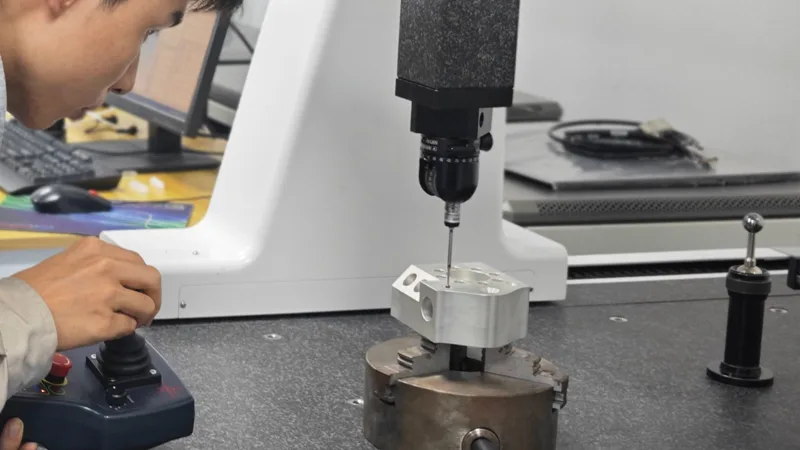
Planning Inspections with GD&T
Advanced inspection and modern quality control methodologies absolutely need very careful, structured planning. Quality teams must meticulously match their documented inspection measurement steps perfectly with the specific GD&T callouts on the drawing. Furthermore, they must strictly follow standard tolerance evaluation rules to avoid rejecting good parts.
First and foremost, cross-functional teams must comprehensively find out exactly what each part must mechanically do in the real world. Consequently, engineers correctly pick actual, physical assembly mating surfaces to serve as the critical datum features. They then deliberately choose geometric symbols that mathematically stop known assembly problems from occurring. Dynamic modifiers like maximum material condition or least material condition are carefully used only when they tangibly help the manufacturing and inspection process.
Every single feature control frame on a print explicitly needs a clear, repeatable inspection method programmed. Designers must consciously avoid arbitrarily stacking too many conflicting dimensions and tolerances. This simplified approach deliberately keeps the resulting tolerance zones completely clear and highly easy to check with standard equipment.
A rigorous, typical quality planning sequence includes these mandatory steps:
- Thoroughly look at exactly what the mechanical part definitively needs to do in operation.
- Correctly find the critical geometric features that directly affect how various parts physically fit together.
- Intelligently pick the exact right geometric controls for each required feature control frame.
- Carefully choose the primary datums explicitly from the real physical assembly mating surfaces.
- Correctly use the feature control frames with the exact, mathematically right syntax per ASME Y14.5.
- Transparently share these detailed inspection plans very early with the CNC manufacturing teams.
It is crucial to understand that different geometric tolerance zones absolutely need very special, distinct inspection methods. True position tolerances predominantly use 3D Coordinate Measuring Machines (CMMs) for verification. They also critically rely on strict, physical datum-based setup measurement.
Complex profile tolerances heavily use laser scanning combined with complex software to compare the point cloud against the allowed CAD changes. Conversely, form controls like circularity and runout tolerances traditionally use highly accurate analog dial indicators mounted on precision rotary tables for dynamic checks.
AFI Parts Collaborative Tip: Design engineers, CNC manufacturing programmers, and CMM inspection teams absolutely should work very closely together extremely early in the design cycle. This proactive DFM (Design for Manufacturing) synergy actively makes sure that the established tolerance zones and complex feature control frames are actually physically possible and very easy to accurately measure.
Measurement Tools and Techniques
Rigorous quality control definitively needs the absolute right metrology tools and proven methodologies. Basic visual inspection is effectively the first necessary step in the process. It quickly finds glaring surface finish problems, missing features, and completely wrong machining directions before time is wasted on the CMM.
Following that, calibrated manual hand tools exactly like digital calipers and precision micrometers give very quick, localized dimensional checks. They primarily help verify basic size tolerances on the shop floor. However, automated Coordinate Measuring Machines (CMMs) do the truly advanced, highly accurate 3D geometric checks. These multi-axis machines are incredibly good for validating highly complex feature control frames and volumetric tolerance zones.
Furthermore, advanced optical and blue-laser scanning methods physically do not touch the delicate part at all. They are extremely fast, generate millions of data points, and are highly accurate for inspecting soft or delicate thin-walled pieces.
Specialized rotary spindle testers precisely check micro-deviations in roundness and cylindricity. Dedicated surface roughness profilometer tools rigorously check the micro-texture and lay of the final surface finish.
Validating this surface condition is vitally important for dynamic parts like seals that must perform perfectly well under pressure. Advanced form and 3D profile software systems mathematically check complex organic shapes and aerodynamic curves. They decisively make absolutely sure the machined tolerance zones perfectly match the original 3D CAD design.
Note: Expertly picking the exactly right, capable metrology tool specifically for each unique tolerance and complex feature control frame directly makes the entire inspection process significantly faster and empirically better. This optimization substantially lowers the costly chance of producing false rejects and subsequent rework.
Addressing Nonconformance
A quality nonconformance frustratingly happens when the manufactured physical specs, the engineering drawings, or the applied GD&T callouts themselves are simply not good or clear enough. Cross-functional teams desperately need a highly formalized, clear procedural way to permanently fix these recurring problems through Corrective and Preventive Action (CAPA) systems. Quality engineers comprehensively look at historical nonconformance data using statistical tools to proactively find negative manufacturing patterns.
Making structural, factory-wide system changes actively stops these isolated problems from continuously coming back. This closed-loop feedback massively helps fundamentally improve baseline product quality.
Here is a breakdown of addressing structural quality issues:
| Common Causes of Nonconformance | Typical Addressing Methods in High-Precision Environments |
|---|---|
| Bad or physically impossible specifications | Statistically study historical nonconformance data across batches to specifically find hidden patterns. |
| Unclear, contradictory, or outdated drawings | Make comprehensive document control system improvements to enforce MBD (Model-Based Definition). |
| Weak, ambiguous, or incorrect GD&T syntax | Do highly strong 8D root cause checks to definitively stop expensive repeat machining problems. |
Systematically checking aggregated nonconformance reports very often illuminates much bigger, hidden systemic supply chain issues. Simple, one-time bench fixes to parts may absolutely not solve the underlying engineering root cause. For a prime example, seeing repeated handling damage on many different part numbers can strongly mean that the standardized packaging procedures or internal material handling protocols are fundamentally flawed.
Furthermore, frequent disputes in CMM measurement results between departments may clearly show that the metrology tools are simply not properly calibrated, or that the incoming raw material checks are dangerously weak.
The absolute best, most profitable result derived from rigorous nonconformance checks is successfully finding proactive ways to permanently stop future machining problems before they happen. Companies can strictly set entirely new, robust packaging rules or forcefully update their stringent supplier quality needs based on this data. This structural approach effectively helps permanently fix the true root causes for all manufactured products across the board.
Tip: Always strive to continuously improve both your CNC inspection routines and systemic quality control systems. This proactive philosophy aggressively cuts down on expensive manual rework, strictly keeps functional tolerances tight, and definitively gives incredibly steady, reliable quality in the high-stakes realm of high-precision manufacturing.
Advanced GD&T Features and Best Practices
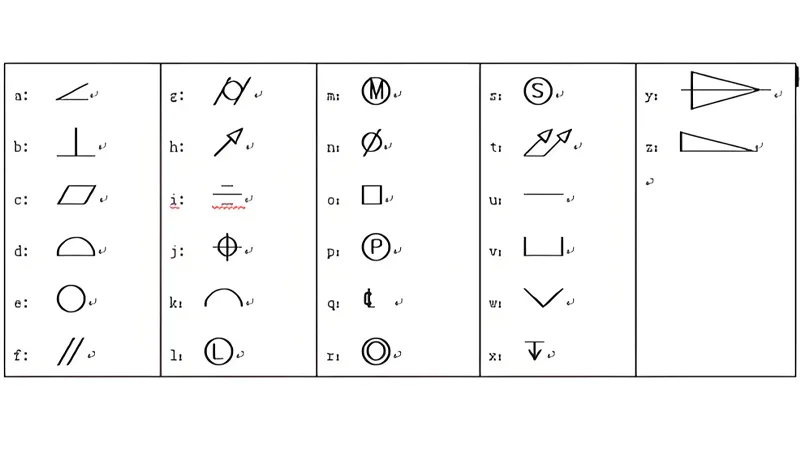
Essential GD&T Symbols
Demanding high-precision manufacturing inherently needs all cross-functional teams to talk extremely clearly and without ambiguity. Standardized GD&T symbols fundamentally help everyone globally know exactly what functional constraints are needed on a part. Every single mechanical engineer and CNC machinist should rigorously learn to read these specific geometric symbols.
These visual symbols directly dictate advanced CNC machining strategies and definitively guide CMM checking routines. Here are the foundational categories of main GD&T symbols utilized heavily in industry:
- Form controls: These fundamental, non-datum-referencing symbols rigidly keep a single feature’s physical shape completely within strictly set tolerance limits. Standard symbols like flatness, straightness, roundness, and cylindricity are incredibly common. Expert machining teams explicitly use them to verify the macroscopic geometry of milled surfaces and turned edges independently of other features.
- Orientation controls: These angular symbols specifically show and control the physical angle existing between two designated features. Controls like perpendicularity, parallelism, and angularity definitively help keep mating components physically accurate. Precision CNC work setups rely on these to perfectly line up complex cast parts on the machine table.
- Location controls: These critical position symbols exactly tell where a specific feature must exist in 3D space compared to a locked datum reference frame. Highly utilized controls like true position, concentricity, and symmetry are vitally important for guaranteeing multi-part assembly. CNC machining teams aggressively use them to calculate coordinates to place tapped holes and milled slots.
- Runout controls: These dynamic symbols specifically check combined changes in form and location for round, rotating features. Controls like circular runout and total runout fundamentally matter for high-speed spinning parts to prevent vibration. CNC lathe turning operations absolutely use these to verify concentricity on long shafts and high-speed spindles.
Properly applied GD&T symbols make incredibly complex 3D functional tolerances surprisingly easy to quickly understand. They structurally help CNC machining teams avoid misinterpreting Cartesian coordinates and making scrap. Ultimately, using the exact right functional symbols makes shop floor work substantially more accurate and reliably faster from setup to ship.
Profile, Position, and Runout Controls
Advanced profile, position, and dynamic runout controls are absolutely, very important for certifying complex high-precision parts. These specific symbols establish incredibly strict mathematical rules governing advanced CNC machining toolpaths. They directly help engineering teams get extraordinarily high dimensional accuracy and build deep trust in their delivered work.
| Symbol | Name | Key Application | Practical Tip |
|---|---|---|---|
| ⌓ | Profile (of a Surface/Line) | Mathematically makes sure incredibly complex, organic 3D CAD surfaces have the exact right physical shape and blend finish. | Highly needed for achieving Ra 0.2µm finishes on automated 5-axis fine grinding or milling machines. |
| ↔ | Position (True Position) | Securely keeps critical mating features (like bolt holes) restricted to the exact right spot in the datum coordinate system. | Specifically makes sure strict 0.01mm volumetric accuracy is achieved across many interacting features. |
| ⌰ | Total Runout | Simultaneously controls surface straightness, cross-sectional roundness, and taper profile while the part is dynamically spinning. | Absolutely needed for high-RPM rotary parts exactly like bearing spindles or power transmission shafts to eliminate catastrophic vibration. |
Surface profile symbols directly help advanced CAM machinists deliberately keep highly complex, flowing surface shapes geometrically correct to the CAD model. True position symbols strictly keep critical bolt holes and alignment slots trapped safely in the right functional place relative to the assembly. Dynamic runout symbols comprehensively check both cross-sectional roundness and longitudinal straightness simultaneously when cylindrical parts spin in V-blocks.
Multi-axis CNC machining fundamentally uses these strict controls daily to consistently meet incredibly tight aerospace tolerances. Highly skilled teams proactively use these specific controls to guarantee absolute volumetric accuracy at every single step of manufacturing.
Composite and Multiple-Single Segment Frames
Incredibly hard, highly complex parts definitively need special, advanced tolerances. Composite and multiple-single segment feature control frames actively help mathematically control large groups of features (like hole patterns) cohesively in groups rather than individually.
These advanced, multi-tier frames use specifically stacked symbols to explicitly guide complex CNC machining operations and ensure smoothly putting multiple mating parts together. The comprehensive table below lists their significant engineering good points and applications:
| Advanced GD&T Advantage | Engineering Description & Floor Application |
|---|---|
| Good, grouped control of location (PLTZF / FRTZF) | Mathematically makes completely sure interconnected features (like bolts) are exactly in the right spot relative to each other within a pattern group. |
| Stops too many conflicting limits | Actively keeps the overall assembly process from artificially getting too mechanically hard by loosening overall pattern location while keeping hole-to-hole location extremely tight. |
| Makes assembly fit easy and repeatable | Directly helps multiple heavy parts go together incredibly easily and slide into place the exact same reliable way each and every time. |
Aerospace and automotive manufacturers heavily use these advanced frames specifically for large bolt hole patterns and dense electronic pin arrays. They fundamentally help mating features easily slip and fit into their matching parts without binding. Composite frames brilliantly let the internal holes be very accurately placed compared exactly with each other (Feature Relating Tolerance Zone Framework).
Concurrently, they also deliberately let the whole hole pattern physically move a little bit relative to the outside edges of the part (Pattern Locating Tolerance Zone Framework). This dual-control mathematically helps completely stop frustrating assembly problems like rigid parts not lining up smoothly or structural fasteners getting dangerously stuck.
Advanced machining teams systematically use these stacked symbols to purposefully keep internal tolerances extremely tight while simultaneously making the overall setup work highly repeatable and forgiving. They are exceptionally good for dense bolt hole patterns or delicate alignment pin arrays that absolutely must fit precisely into another expensive part.
They are crucially needed for generating high spatial accuracy internally between holes, but crucially lets the whole group pattern shift just a bit to aid assembly. This directly helps permanently stop physical problems like fastener misalignment, thread binding, or uneven thermal stress loads. CNC machining effectively works significantly better and faster with these specific multi-tier frames.
They successfully help manufacturing teams strictly control functional tolerances without arbitrarily making the overall assembly physically harder to put together. Ultimately, aggressively using the right advanced symbols and composite frames keeps CNC work highly accurate and final production safely fast.
AFI Parts Engineering Tip: Always intelligently pick GD&T symbols and specific frame setups that perfectly match what the part functionally does in reality. This foresight actively helps assigned tolerances practically work well for both the CNC machining phase and the final assembly phase.
Balancing Precision and Practicality
Top-tier manufacturers sometimes admittedly have a hard time correctly implementing GD&T symbols in high-precision aerospace or medical work. Design teams constantly need to meticulously make parts very exact, but also must pragmatically keep things reasonably simple and absolutely not too expensive to machine.
Finding this delicate, optimal right mix fundamentally helps parts physically work perfectly well without drastically slowing down factory throughput or costing simply too much capital. Smart design engineers selectively use GD&T symbols to explicitly show the shop floor which specific geometric parts genuinely need close, expensive process control.
It is vital to understand that not every single machined spot or clearance hole has to be super exact. Advanced teams carefully look at exactly what each physical part does in the entire assembly. Then, through DFMA (Design for Manufacturing and Assembly) principles, they strategically pick exactly where to forcefully use extremely tight tolerances and where to intentionally be much more relaxed.
This balanced way directly ensures CNC operators can efficiently do their jobs exceptionally well and absolutely not waste expensive machine time chasing non-functional dimensions. Highly functional drawings are therefore very important to a company’s bottom line.
These modern, optimized drawings selectively use bold GD&T symbols to immediately point out the absolute most important functional spots on the metal. When shop floor teams clearly know which specific metal areas matter the most, they can easily set extremely good, optimized goals for the CNC machining toolpaths.
This focus saves massive amounts of time and completely stops quality mix-ups during CMM checks. The operational table below clearly shows how smart manufacturers intelligently mix being geometrically exact with being financially practical:
| Precision Balancing Aspect | Engineering Explanation & Shop Floor Impact |
|---|---|
| Functional Drawings (MBD) | Implementing proper GD&T makes complex drawings definitively better, so manufacturing people absolutely do not get confused; this directly can save massive amounts of time and corporate money if it is used smartly. |
| Tolerance Specification limits | Purposefully setting geometric tolerances precisely only as tight as functionally needed greatly helps keep parts physically easy to make and aggressively cuts down on expensive material waste. |
| Overall Cost Management | Irrationally making tolerances too strict everywhere can predictably make tooling costs and scrap rates go up exponentially, so it is deeply important to be highly careful during the design phase. |
Using GD&T symbols the exact right, functional way purely means only aggressively making physical things as exact as mathematically needed by the assembly. Extremely tighter tolerances absolutely need highly special CNC setups, custom workholding, and take significantly longer to machine. If specified tolerances are arbitrarily too strict for generic parts that simply do not functionally need it, manufacturing companies might easily throw away far more parts as scrap and needlessly spend much more operational money.
Cross-functional engineering teams should rigorously look at every single released drawing and pragmatically pick only the GD&T symbols that really, functionally matter. Here are some easy, proven industry tips for perfectly mixing high precision and manufacturing practicality:
Remember that arbitrarily tighter tolerances inherently need far more careful, slower, and costly CNC work. Good, functionally driven tolerance choices actively save expensive raw material and machine time, but still completely meet all strict design safety needs. Applied correctly, GD&T directly helps seamlessly turn abstract engineering ideas into incredibly real, functional metal parts without wasting company money.
CNC floor teams heavily use GD&T symbols directly to help them optimally do their complex daily jobs. When control symbols are highly clear and purely focus on what truly matters for fit, CAM machinists can program and set up complex 5-axis CNC machines surprisingly fast.
Similarly, metrology inspectors use the exact same standardized symbols to accurately check parts, so physical quality checks are significantly quicker and mathematically better. These universal symbols also heavily help disparate global teams talk safely to each other. Design engineers across the world, local CNC machinists, and final inspectors all use the same GD&T symbols to definitively know what is absolutely most important on the part.
This shared, standardized way of technical talking massively cuts down on expensive translation mistakes and keeps factory work constantly moving. Ultimately, precision manufacturers who expertly mix being functionally exact with being practically machinable get significantly better financial results. They successfully make exceedingly good parts with far fewer shop-floor slowdowns.
By seamlessly using advanced GD&T symbols and modern CNC machines efficiently together, manufacturing teams can easily meet incredibly tough industry rules without wasting raw stuff or time.
AFI Parts Value Engineering Tip: Rigorously check every single 2D drawing and deliberately use strict GD&T symbols solely where they are genuinely needed for the assembly to function. This discipline keeps CAM CNC work blazing fast and structurally helps save massive amounts of money.
Continuously learning GD&T is very, fundamentally important in the competitive landscape of high-precision manufacturing. Trained engineering teams that strictly use proper GD&T successfully make tangibly better parts and have significantly fewer expensive mistakes. They also consistently finish complicated machining work much faster than untrained teams.
Proper GD&T comprehensively helps mating parts physically fit together incredibly well and makes rigorously checking final quality far easier for everyone. It also structurally helps cross-department teams work significantly better together and get much more done per shift. Formal corporate training specifically helps technical teams rapidly learn these new geometric rules and software tools.
When diverse people from different specialized jobs (like CAM programmers and QA inspectors) work closely together using one language, they totally understand what is strictly needed and permanently fix CAD problems incredibly early. Forward-thinking companies that proactively teach GD&T and strictly use these good geometric methods reliably see far better production yields, significantly more work cleanly done, and substantially happier OEM customers.
In conclusion, GD&T acts as the ultimate communication tool to help global teams explicitly talk and make far fewer scrap mistakes. Rigorous, standardized training and deep teamwork actively make both product quality and delivery speed significantly better. Clear, mathematical rules fundamentally help complex metal parts successfully meet incredibly tough production needs.
| AFI Parts Recommended GD&T Training Method | Description & Implementation Value |
|---|---|
| Customized Content | Training specifically made for exactly what the aerospace or medical industry needs to meet compliance. |
| Hands-On Practice | Actively using real GD&T metrology tools and CMMs in highly realistic shop floor situations. |
| Self-Paced Elements | Utilizing digital portals for learning dense ASME standards at your own comfortable speed. |
| Standards-Aligned Exercises | Engaging in rigorous mathematical practice directly using real, updated ASME Y14.5-2018 GD&T rules. |
FAQ
GD&T strictly means Geometric Dimensioning and Tolerancing. It is a rigorous, mathematical engineering system that uses special, standardized visual symbols and codified rules specifically for defining parts. This globally accepted system fundamentally helps engineering and manufacturing teams perfectly control the physical size, overall shape, and exactly where physical things go in 3D space. Because it removes ambiguity, it intrinsically makes overall product quality significantly better.
GD&T provides completely clear, unambiguous procedural steps specifically for physically making and accurately checking tight-tolerance parts. It proactively helps global supply chain teams completely stop expensive misinterpretation mistakes and mathematically makes absolutely sure machined parts fit perfectly and work exactly right in the field. Eliminating guesswork is very, critically important for high-precision, high-stakes work like aerospace and medical implants.
Physical datums conceptually act exactly like theoretical starting points or perfectly flat anchor surfaces. They establish the 3D coordinate system that perfectly helps guide automated CMM measuring and highly complex CNC multi-axis machining. Consistently using the exact same datums definitively makes checking final parts incredibly easier and dependably keeps all physical measurements exactly the same across different departments.
For basic checks, QA teams frequently use calibrated hand tools like digital calipers, precise micrometers, and physical go/no-go gauges. For advanced GD&T verification, they rely heavily on automated Coordinate Measuring Machines (CMMs). Additionally, non-contact optical blue-light scanners and specialized rotary surface testers accurately check incredibly hard geometric shapes and micro-finishes. Ultimately, the absolute best inspection tool heavily depends precisely on the specific type of geometric tolerance being evaluated.
Yes, significantly. Properly applied GD&T aggressively cuts down on catastrophic assembly errors and expensive manual rework. By providing maximum allowable functional tolerances (like MMC bonus tolerance), it proactively helps manufacturing teams easily make certifiably good parts correctly the very first time they hit the CNC machine. This operational efficiency directly saves massive amounts of corporate money and undeniably makes end customers significantly happier with the product.
A feature control frame is the fundamental rectangular box found on an engineering drawing or MBD model. It acts as an instruction sentence that explicitly shows the allowable geometric tolerance value, the controlling GD&T symbol, and the required locking datums for a specific part feature. This condensed, standardized box definitively tells CNC machinists and CMM inspectors exactly what geometric deviation is functionally okay.
Material condition modifiers (like MMC and LMC) definitively set strict mathematical rules for exactly how much a geometric tolerance zone can dynamically grow or change correlating directly with its actual machined physical size. They strategically help engineers powerfully control assembly fit, maintain structural wall strength, and guarantee extreme accuracy when mass-making and checking variable parts.
Professionals can directly read and purchase the highly detailed ASME Y14.5 standard or the international ISO GPS standards matrix. Additionally, there are many accredited online classes, engineering workshops, and dense reference books specifically about applied GD&T. Investing in formal, structured training directly helps factory teams correctly use GD&T the exact right way on the shop floor.