
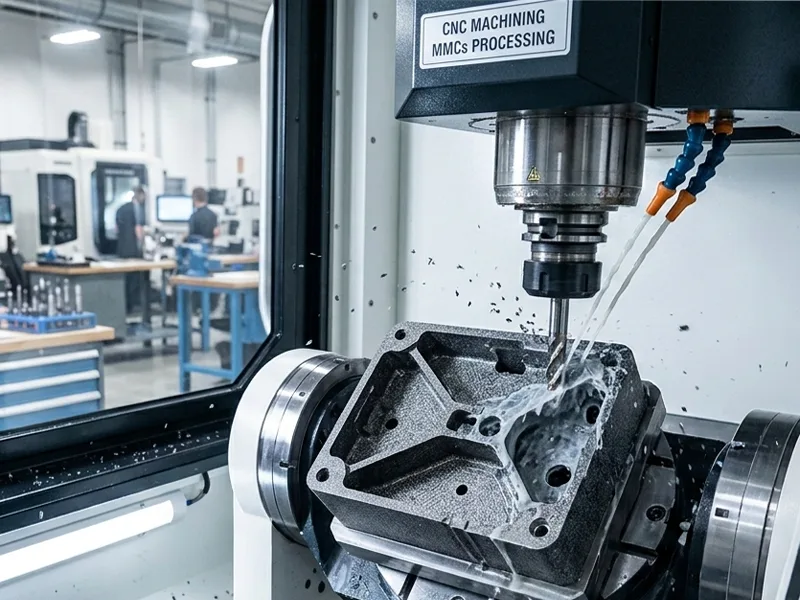
The process of machining metal matrix composites (MMCs) presents significant thermomechanical and tribological challenges, pushing standard tooling and conventional methodologies to their limits. These advanced materials are characterized by extreme hardness, high abrasiveness, and complex microstructures, which dramatically accelerate tool wear and complicate chip formation dynamics. To maintain dimensional accuracy and surface integrity, cutting tools require specialized edge geometries, optimized rake angles, and superior fracture toughness to withstand prolonged cutting forces.
Despite these machining difficulties, the demand for MMCs is surging. In the 2025 statistical report, Market.us notes that the automotive industry currently accounts for 44.3% of the metal matrix composites market, utilizing them for high-performance engine and braking components, while the aerospace sector relies heavily on MMCs for their exceptional strength-to-weight ratios and superior thermal stability. In these mission-critical sectors, absolute precision, zero-defect tolerance, and rigorous metallurgical integrity are non-negotiable.
As a manufacturer of custom metal parts, AFI Parts leverages decades of machining experience and deep metallurgical knowledge to design machining solutions specifically tailored to the rigorous requirements of metal matrix composites.
Key Takeaways
- Inherent Machinability Challenges: Machining metal matrix composites (MMCs) is fundamentally difficult due to the severe abrasiveness and intermittent cutting forces generated by hard ceramic reinforcing phases.
- Advanced Tool Materials: Superhard cutting tools, specifically polycrystalline diamond (PCD), exhibit exceptional wear resistance, lasting significantly longer than conventional cemented carbide tools, making them the industry standard for MMC machining.
- Kinematic Optimization: Selecting precise cutting speeds (Vc) is critical.
- Production Trade-offs: While slower speeds enhance tool longevity, they inversely impact material removal rates (MRR) and increase cycle times, necessitating a delicate optimization balance. Constant tool changes are often a reality when working with MMCs due to aggressive abrasive wear mechanisms.
- Cost-Quality Dynamics: Proactive tool management and optimized replacement intervals keep overall part quality high and prevent catastrophic tool failures that inflate scrap costs.
- Surface Integrity Requirements: Achieving a sub-micron surface finish and tight geometric tolerances requires meticulous tool selection, rigid workholding, and optimized feed rates.
- CNC Integration: High-rigidity CNC machining platforms are essential to suppress vibration, thereby making parts more accurate and highly repeatable across large production batches.
- Repeatable Excellence: This automated, high-precision approach guarantees steady quality and dimensional stability for all MMC components.
- Strategic Partnerships: Partnering with a highly capable custom metal parts maker ensures access to state-of-the-art tooling, advanced engineering skills, and stringent quality control frameworks.
Table of Contents
Machining Challenges of Metal Matrix Composites
Metal matrix composites are notoriously difficult to work with due to their heterogeneous microstructures. These materials combine ductile metal matrices (such as aluminum, magnesium, or titanium) with ultra-hard ceramic reinforcing particles, yielding exceptionally hard, highly wear-resistant materials. Furthermore, they boast significantly higher specific strength and fatigue resistance than their unreinforced, regular metal counterparts. However, It is precisely these mechanical properties that make them extremely difficult to machine. Manufacturers and CNC engineers must possess a deep understanding of these tribological problems to successfully machine conforming, high-quality precision parts.
Hardness and Abrasiveness
The primary factor reducing MMC machinability is that metal matrix composites are vastly harder than normal metals. The incorporation of ceramic reinforcement phases—such as silicon carbide (SiC), alumina (Al2O3), or boron carbide (B4C)—amplifies the bulk hardness and local abrasiveness exponentially.
For example, when silicon carbide or alumina particulate is added to an aluminum matrix, the resulting composite becomes significantly harder than standard aluminum alloys. The exact degree of this hardness increase is dependent on the specific type, volumetric fraction (Vf), and particle size distribution of the added reinforcement material. While standard unreinforced aluminum alloys are relatively soft and highly machinable, adding a ceramic reinforcement phase can make the resulting composite almost 47% harder.
This much hardness provides immense functional benefits; reinforced composites can lose up to 70% less material from abrasive wear in their final application. These metallurgical changes are highly beneficial in operational environments where parts must withstand high friction and last a long time, but the same hard materials make physical machining exceedingly rough and destructive to cutting edges. The ceramic particles embedded within the matrix can exhibit extreme micro-hardness levels, often reaching between 2,000 and 3,000 Knoop (HK). When the cutting tool encounters these particles, it experiences severe micro-shocks and two-body abrasion, which makes tools wear out remarkably fast, and cutting becomes exponentially harder.
Tool Selection
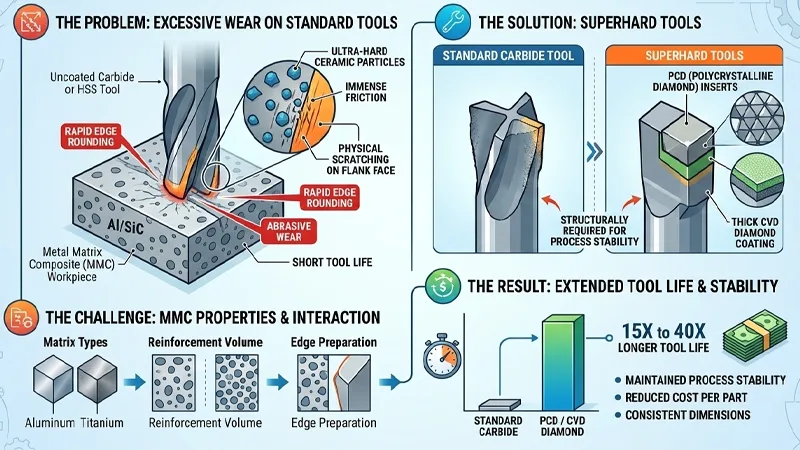
Given the abrasiveness of the workpiece, picking the right cutting tool material and geometry is critically important for machining MMCs. Standard cutting tools fabricated from uncoated cemented carbide or HSS wear out unacceptably fast due to rapid edge rounding. During chip formation, the ultra-hard ceramic particles cause immense friction and physically scratch the tool flank face (abrasive wear). For these demanding jobs, superhard tools like polycrystalline diamond (PCD) are structurally required to maintain process stability.
Thick CVD diamond coatings or solid PCD inserts can make tools last 15 to 40 times longer than standard, regular carbide tools when turning or milling MMCs. Ultimately, selecting the absolute best tool substrate, edge preparation, and coating architecture depends heavily on what kind of matrix is used, and exactly how much reinforcement volume is present in the composite.
Machining Speed
To control thermal loads and mechanical shock, machining speed (cutting velocity, Vc needs to be watched closely and strictly regulated. Going too fast drastically increases temperatures at the cutting zone, which softens the tool binder and makes tools wear out quickly due to the high-velocity impact with rough ceramic particles. Conversely, slower cutting speeds can significantly help cutting tools last longer, but they directly slow down the material removal rate and extend the overall work cycle time.
Manufacturers must perform rigorous cost-benefit analyses to find a good balance between optimum cutting speed and acceptable tool life. Using the right combination of spindle speed, feed rate (f), depth of cut (ap), and a highly optimized tool shape with positive rake angles helps engineers successfully process these tough materials.
Tool Wear Issues
Accelerated tool wear remains the most significant, persistent problem when working with MMCs. As the tool shears the metal matrix, the ultra-hard ceramic particles (like silicon carbide) violently rub against the tool’s flank and rake faces. This relentless rubbing and abrasive plowing make the cutting tool break down and lose its edge quickly.
Frequent Changes
Due to these severe wear mechanisms, changing inserts and cutting tools often is considered standard operating procedure and completely normal with these materials. Regular, conventional tools do not last long enough to complete complex geometries because of the abrasive nature of the rough ceramic particles. While superhard tools like PCD significantly help tools last longer and stabilize the process, even these premium tools need to be systematically checked via machine vision or lasers, and changed often to prevent catastrophic failure.
Cost Impact
The rapid rate of tool wear makes the process of machining MMCs significantly more costly than traditional subtractive manufacturing. Changing cutting tools a lot means spending more capital on consumable tooling inventory and physically stopping the CNC work more often, leading to costly machine downtime. To remain competitive, companies need to proactively buy better, higher-performance tools and continuously improve their machining process to optimize material removal and save money. Ultimately, the specific tool type, the application of advanced coatings, and exactly how you program the machine toolpaths all dynamically change the total cost of production.
Surface Finish and Precision
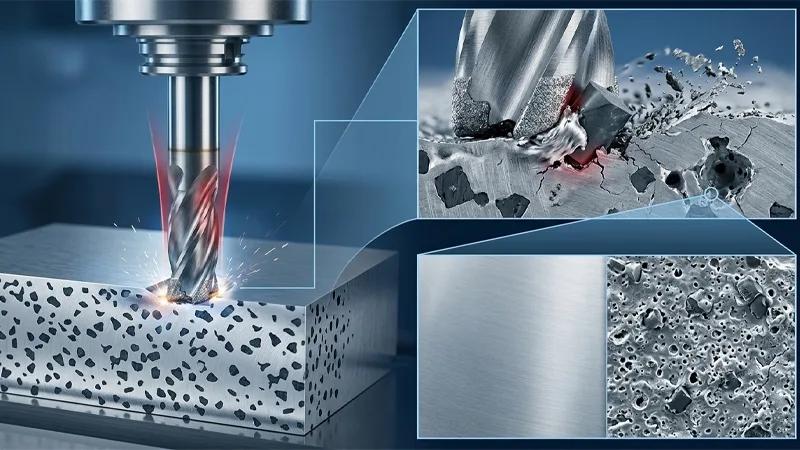
Achieving a high-quality, smooth surface and maintaining exact dimensional size is exceptionally hard with MMCs due to tool deflection and particle pull-out. During cutting, the tool can drag or fracture the hard particles rather than shearing them clean, which can make the machined surface rough and cause small micro-void defects or pits.
Achieving Smoothness
Standard tooling cannot shear ceramic particles cleanly; special tools are fundamentally needed to make the surface finish smooth and compliant with aerospace or automotive specifications.
- High-grade PCD tools, when running at optimized feeds, can make surfaces with excellent roughness values between 0.11 and 0.4 micrometers (Ra).
- Advanced TiAlN-coated solid carbide tools also perform relatively well in certain low-volume composite matrices, keeping surface roughness tightly controlled from 0.3 to 0.55 micrometers.
- Conversely, using tools without specialized coatings makes for much rougher surfaces, resulting in unacceptable roughness parameters ranging from 0.7 to 7.8 micrometers.
Ultimately, the inherent sharpness of the tool, its wear state, and how precisely you machine the part completely dictate how smooth the final part is.
Tolerance Control
Due to the high cutting forces required, keeping exact sizes and geometric dimensioning and tolerancing (GD&T) is also very hard with MMCs. The intermittent impacts against rough, hard particles can induce severe vibration, bend the cutting tool (deflection), and cause the cutting edge to wear unevenly across its profile. This unpredictable wear makes it incredibly tough to keep the right size, cylindricity, and shape over a long production run.
To combat this, companies need highly rigid machine tools, sophisticated real-time metrology checks, and deeply skilled CNC workers to actively compensate for tool wear and keep quality high. This systematic process control helps manufacturers meet the strict, zero-defect needs of modern car and airplane makers.
Note: Machining metal matrix composites is fundamentally hard because they are a complex hybrid mix of ductile metal and ultra-hard ceramic particles. These materials are structurally strong and last a long time in the field, but they absolutely need special superhard tools, highly careful workholding, and extensive metallurgical expert knowledge to machine well.
Solutions from Custom Metal Parts Manufacturer
Specialized Tooling
Diamond and Carbide Tools
A metal parts manufacturer exclusively uses special tools engineered specifically for metal matrix composites. Diamond tools, primarily polycrystalline diamond (PCD), are the gold standard because their extreme hardness allows them to cut through hard ceramic matrix parts easily. These tools maintain their sharp cutting edges and dimensional stability significantly longer than regular conventional tooling.
However, advanced carbide tools are also an important part of the tooling arsenal for making certain types of composites, particularly during roughing operations. High-performance carbide costs less than PCD and, with the right geometry, lasts a good amount of time in low-reinforcement matrices. Furthermore, utilizing precision-ground carbide inserts with specialized chip breakers makes smoother surfaces and better chip control than outdated high-speed steel tools. Ultimately, choosing between diamond and carbide depends entirely on evaluating how hard the specific composite is and exactly how smooth the final surface finish needs to be. Manufacturers rely on tool life data to pick the most cost-effective tool for each distinct job to consistently get good results.
CNC Machining
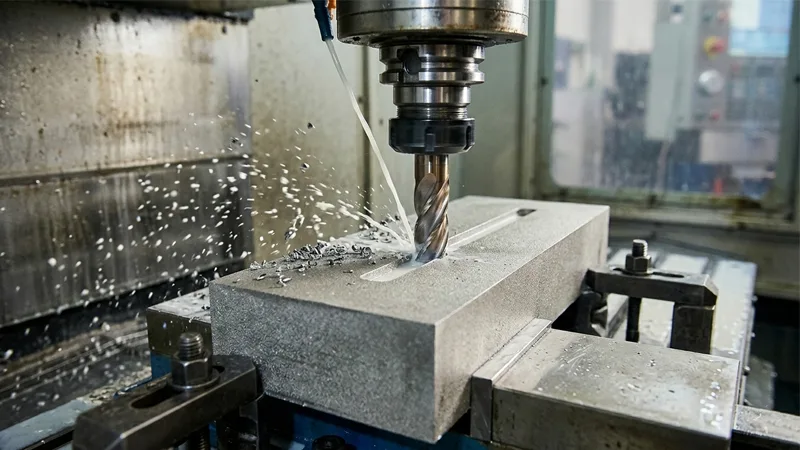
The integration of multi-axis CNC machining completely changed how precision metal matrix composites are made and scaled. These rigid, computer-controlled machines follow highly exact, optimized toolpaths for cutting, drilling, interpolating, and trimming tough materials. This programmatic control makes for burr-free edges and accurate bores and holes.
Fundamentally, CNC machining gives engineers high volumetric accuracy and makes complex parts the same way every single time, drastically reducing scrap rates. This machine automation inherently lowers human-induced mistakes and keeps every produced part perfectly matching the CAD design. Modern high-torque CNC machines are stiff enough to prevent chatter and can cut very close to the right size, holding tolerances in the single-digit micron range. Because the CNC controller is highly precise, they repeat identical cuts perfectly, so every part looks and measures the same.
Comparative Analysis: Machining Methodologies
| Aspect | CNC Machining | Manual Machining |
| Control | Computer-controlled | Human-controlled |
| Precision | Very precise, tight tolerances | Dependent on skill, more variation |
| Repeatability | High, virtually identical parts | Low, more variability between parts |
| Error Rate | Reduced human error | Higher due to human factors |
An advanced custom metal parts manufacturer utilizes multi-axis CNC machining for completing complex, tough jobs mandated by performance cars and modern planes. This sophisticated technology helps machinists smoothly make complex 3D shapes and mill tiny, critical details into unyielding composites without inducing thermal damage.
Process Optimization
Adaptive Strategies
Making metal matrix composites at scale needs smart, data-driven planning and CAM programming. Advanced manufacturers use sophisticated mathematical models and simulations to estimate tooling costs and predict final surface roughness before cutting a single chip. These predictive models help manufacturing engineers decide the best way to cut each specific composite blend.
Furthermore, the implementation of deep neural networks and machine learning makes wear predictions much better and helps NC programmers dynamically adjust the machining process on the fly. During process engineering, Response Surface Methodology (RSM) is frequently utilized; this statistical tool finds the most important kinematic variables—like exactly how deep to cut (ap) and at what feed rate (f)—that most heavily affect how much material is efficiently removed and how beautifully smooth the machined surface is. Even with advanced modeling, specific high-shear carbide insert tools are often picked over others simply because empirical data proves they make smooth final finishes.
Real-Time Monitoring
Operating blind is not an option; real-time monitoring of machine kinematics is very important in making expensive composites. Modern CNC centers utilize embedded sensors to continuously check tool wear levels, spindle temperature, and harmonic vibration (chatter) while actively machining. This live information helps machine operators and automated systems fix tooling problems fast and physically stop the machine before it causes irreversible part defects.
Continuous monitoring also helps maximize tool life, ensuring tools last longer and ultimately saves money. By watching spindle loads and acoustic emissions closely, manufacturers can confidently keep product quality high and avoid costly, sudden tool-breakage surprises. This rigorous, sensor-driven way guarantees that every single metal matrix composite part meets the needed industry standards.
Material Expertise
Application Guidance
A custom metal parts manufacturer knows a massive amount of metallurgical data about various composites. In-house materials experts directly help customers thoroughly analyze and pick the exact right metal matrix composite formulation for their specific engineering needs. They carefully look at required tensile strength, mass/weight restrictions, and targeted wear resistance profiles.
This upfront engineering advice makes completely sure the chosen composite matrix perfectly fits the mechanical demands of the job. Following material selection, these manufacturers also utilize their shop-floor experience to suggest the best way to structurally make and machine each distinct material.
Custom Process Development
Because reinforcement ratios vary, each composite billet is highly specialized and behaves uniquely under a spindle. Therefore, manufacturers must create custom, highly specific ways to handle and machine each material grade.
This involves rigorous pre-production development where they test dozens of different tools, spindle speeds (Vc), and feed rates (f) to definitively find what parameters work best for chip evacuation and surface finish. This scientific approach includes full-scale trial runs and making precise CNC program changes based on actual, measured real-world results.
The ultimate engineering goal is to construct a stable, repeatable machining process that gives geometrically good, stress-free parts every single time. This dedication to custom process development helps foster new design ideas and lets OEM customers reliably get the absolute most performance out of these advanced composites.
Tip: Working closely with an elite custom metal parts manufacturer instantly gives your engineering team access to special tools, advanced 5-axis machines, and critical expert metallurgical help. These three things are absolutely needed to make metal matrix composites well.
Quality Control
Stringent quality control protocols are very important when making high-stakes metal matrix composites. AS9100-certified manufacturers use strict ways to dimensionally and structurally check each finished part. This uncompromising approach makes sure every delivered piece is fundamentally safe and works perfectly well in its final assembly.
Inspection Methods
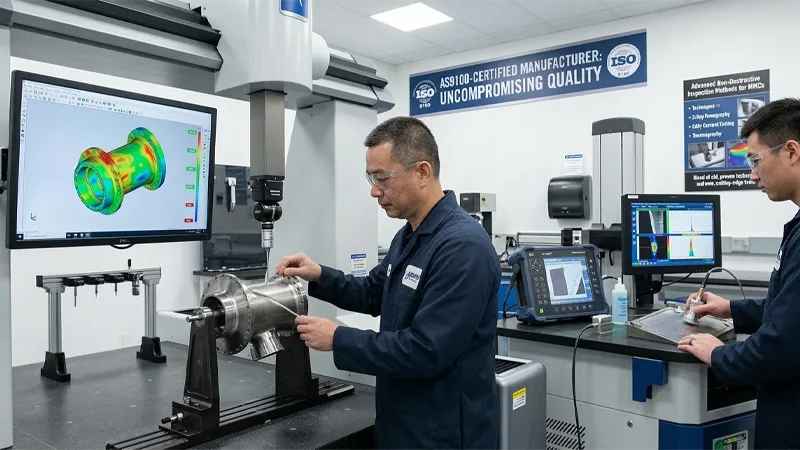
Advanced non-destructive inspection methods help metrologists find micro-structural problems and definitively check overall part quality. Because of their mixed microstructures, metal matrix composites can sometimes hide critical flaws deep inside the matrix. So, advanced diagnostic tools are absolutely needed. Manufacturers utilize a blend of old, proven techniques and cutting-edge inspection tools.
Advanced Ultrasonic Inspection Techniques for MMCs
| Inspection Technique | Technical Description |
| Pulse-Echo | Finds internal reflections bouncing back from hidden flaws or matrix interfaces. |
| Through-Transmission | Checks for structural signal loss between a sender and receiver across the part. |
| Phased Array Ultrasonic Testing (PAUT) | Uses many active elements to electronically steer, sweep, and precisely focus the sound beam. |
| Full Matrix Capture (FMC) and Total Focusing Method (TFM) | Processes massive data to give highly clear, high-resolution internal images for deep flaw checks. |
Beyond standard checks, Ultrasonic C-scan imaging is highly effective as it finds internal volumetric issues like layer delamination, micro-porosity, or matrix peeling. It works well for detecting both sub-surface and deep inside defects. However, technicians must be careful, as the specific frequency of the ultrasonic transducer (e.g., 5MHz vs 15MHz) can physically limit exactly how deep it sees into the composite.
Furthermore, anisotropic MMC materials are inherently tricky to scan because they act acoustically differently in each directional axis. This causes many false reflections and scattered ultrasonic waves that can easily hide real internal flaws. NDT technicians know exactly how to change the focal laws and scanning process to account for these specific acoustic problems.
To ensure 100% compliance, manufacturers also heavily use:
- High-magnification visual inspection under polarized light to spot tiny surface defects.
- Coordinate Measuring Machines (CMM) with sub-micron scanning probes to verify complex GD&T sizes.
- Non-destructive testing (NDT), such as eddy current or dye penetrant, to keep finished parts structurally safe while thoroughly checking for surface-breaking flaws.
These integrated metrology methods make absolutely sure every shipped part explicitly meets the needed, rigorous aerospace or automotive standards.
Certification
In the B2B machining sector, formal certification acts as objective proof that parts securely meet all industry rules. Elite manufacturers strictly follow and are audited against rules from global groups like ISO, ASTM, and SAE.
Possessing a current certification proves without a doubt that the company uses good, repeatable manufacturing steps and meticulously checks each part.
Key operational points in maintaining certification are:
- Writing down and controlling every single standard operating procedure (SOP) and step of making parts.
- Keeping permanent, traceable digital records of all dimensional checks and NDT test results.
- Successfully passing rigorous, multi-day quality audits from independent outside groups.
- Consistently meeting all exact customer and stringent industry regulatory needs.
Ultimately, fully certified manufacturers confidently give their OEM customers profound trust and peace of mind. They prove through documentation that every single machined metal matrix composite part is structurally safe and perfectly ready for tough, high-stress jobs like aerospace flight and automotive racing.
Tip: For liability and performance reasons, always explicitly ask for current quality certification documents (like ISO 9001 or AS9100) when picking a custom metal parts manufacturer for your supply chain. This upfront vetting helps you guarantee you get parts that strictly meet the absolute best global quality standards.
Applications of Metal Matrix Composites
Metal matrix composites are heavily utilized in many advanced engineering fields. Because these materials mix ductile metals with incredibly hard ceramic particles, this tailored mix gives them highly specialized mechanical features designed specifically for surviving tough, high-stress jobs. Many leading engineering companies specifically pick them because they are simultaneously exceptionally strong and remarkably light. In highly abrasive environments, they also objectively last much longer than standard, normal monolithic metals.
Automotive Components
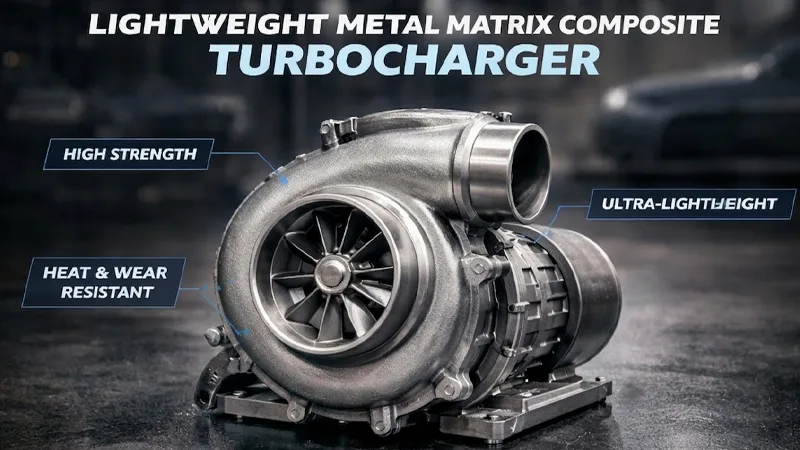
Modern automotive car engineers continually use lightweight metal matrix composites to design significantly better, high-efficiency powertrain parts. These advanced materials physically help internal combustion and electric cars work exceptionally well and vastly outlast traditional cast iron components.
Wear Resistance
High-performance Aluminium Metal Matrix Composites (AMCs) are frequently used in extreme-friction zones, such as vented brake rotors and high-compression engine pistons. Due to the ceramic reinforcement, these specific parts do not wear out fast from extreme thermal heat or aggressive kinetic rubbing. This reduction in friction means that vital car parts inherently last much longer before needing replacement. As a direct result, drivers benefit from vastly safer cars that brake consistently and work reliably well under heavy loads.
Performance Gains
By replacing heavy steel components, lightweight composites fundamentally make cars much lighter. As governed by physics, lighter cars use significantly less combustible fuel and can go much faster. Specifically, Aluminium metal matrix composites drastically lower the unsprung and rotational weight of high-revving engines and suspension wheels. This massive weight reduction directly helps sports cars and commercial vehicles speed up faster and perform much better. Furthermore, shedding this chassis weight ensures car makers can easily meet increasingly strict government regulations for fuel economy and tailpipe pollution.
Aerospace Parts
The global aerospace field desperately needs ultra-strong and exceptionally light materials to overcome gravity and atmospheric friction. Custom-machined metal matrix composites are a perfect, highly engineered good fit for these parameters. By replacing titanium in certain structural bulkheads, they drastically lower aircraft mass, which explicitly helps passenger planes fly significantly farther on a tank of jet fuel and safely carry more cargo payload.
Longevity
In the upper atmosphere, aerospace parts constantly face extreme thermal heat and intense mechanical stress. Specialized Aluminium metal matrix composites are heavily favored because they rigidly keep their exact dimensional shape and high tensile strength for a very long time, even under thermal cycling. This incredible material stability means critical airplane parts organically last longer and need far fewer expensive, time-consuming maintenance fixes on the tarmac.
Reliability
In commercial and defense aviation, absolute structural reliability is very critically important to prevent catastrophic failure. Because of their excellent fatigue limits, composites do not propagate micro-cracks or wear out fast under high vibration. This predictable durability keeps massive passenger planes highly safe on long, transoceanic trips. Aerospace mechanical engineers frequently use them to forge and machine robust landing gear components and rigid fuselage structural frames.
Industrial Equipment
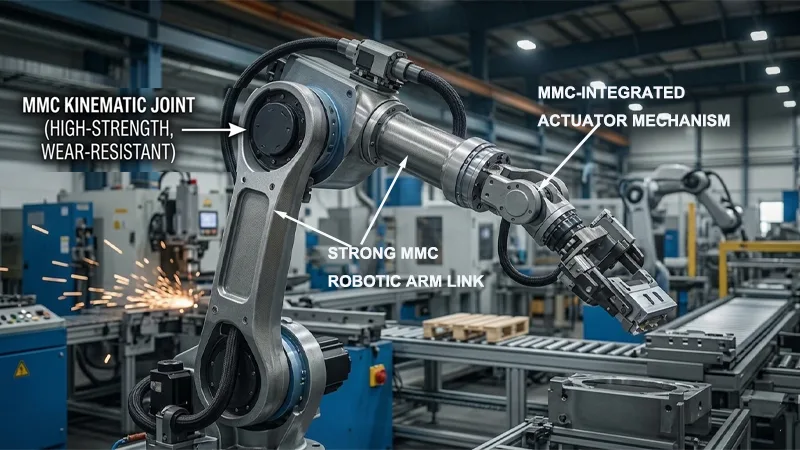
Beyond transportation, heavy-duty factories and automated production machines desperately need strong, wear-resistant kinematic parts. Metal matrix composites are increasingly utilized to give special, highly durable engineering solutions for these brutal, high-cycle needs.
Custom Properties
Unlike standard alloys, metallurgists and manufacturers can precisely change the MMC reinforcement mix to perfectly get the exact right mechanical features needed. By adjusting the ceramic matrix, some specialized composites can be made to heavily resist intense thermal heat. Alternatively, others are engineered to be very hard against abrasive wear or exceptionally light for fast robotic arms. Highly versatile Aluminium metal matrix composites are actively used for creating durable industrial cutting tools and vital internal machine parts that simply must last through millions of cycles without failing.
Cost Considerations
It is an industry fact that raw MMC billets cost significantly more to procure than normal, unreinforced metals. The complex metallurgical process of making them (via powder metallurgy or stir casting) is a highly specialized process and undeniably adds to the initial upfront price. However, because they are so durable, they last exponentially longer in the field and work much better, which can definitely save massive amounts of maintenance money and downtime later in the product’s life cycle.
Procurement teams and engineering companies must carefully think about balancing the higher initial capital cost with the highly valuable, long-term functional things they reliably get out of the composite.
Note: Advanced metal matrix composites are objectively great material choices for next-generation cars, advanced planes, and high-speed industrial machines. Their highly special mechanical features and incredible tensile strength make them an incredibly smart engineering pick for tough, demanding jobs, effectively returning their value even if they initially cost more to machine.
Choosing a Custom Metal Parts Manufacturer
Picking the exact right machining company for sourcing complex metal matrix composite parts is a very important supply chain decision. Because of the abrasive tooling challenges, absolutely not every conventional job shop company has the right rigid machines, superhard tools, or NC programming skills for these incredibly tough materials. The absolute best manufacturing company to partner with is one that has strong metallurgical knowledge, lots of hands-on spindle experience, and extensive engineering expertise to guarantee your MMC project will work flawlessly.
Selection Criteria
Technical Capabilities
A good manufacturer continually invests in and uses advanced 5-axis machines and specialized tooling. When auditing suppliers, procurement managers should look strictly for companies equipped with modern, high-torque CNC machines and highly accurate, climate-controlled measuring tools like CMMs.
The shop must have proven, documented experience where they actively work with ultra-hard materials and successfully make complex, tight-tolerance 3D shapes. During the quoting phase, specifically ask if they utilize high-grade diamond (PCD) or specialized carbide tools for their internal MMC workflows. Employing these premium superhard tools helps manufacturers consistently get the absolute best geometric results.
MMC Experience
Direct, hands-on shop experience with cutting MMCs is what definitively makes some elite companies much better than standard job shops. Machining companies that routinely use and cut abrasive aluminum matrices, silicon carbide, or other strong metals inherently know exactly what the thermal and tribological problems are before they start.
Their machinists already know precisely how to dynamically stop premature tool wear and how to tweak feeds and speeds to keep final machined surfaces perfectly smooth. To verify this, always ask for specific case studies or examples of their past MMC production work. A verifiable, documented history of delivering good MMC projects strongly shows they can reliably make high-quality, conforming parts.
Key Questions
Process Transparency
Maintaining clear, honest engineering communication helps build deep B2B trust. When evaluating a supplier, ask the engineering team at the company to thoroughly explain each manufacturing step they intend to take. They should be highly willing to transparently tell you exactly how they strategically pick PCD tools, how they optimize and set CNC spindle speeds, and the rigorous metrology methods they use to check quality. Providing access to open, detailed inspection reports helps you clearly see production progress and enables both teams to collaboratively find and fix mechanical problems early in the prototype phase.
Quality Assurance
Maintaining uncompromising quality is universally the most important factor in sourcing parts for tough, critical aerospace jobs. Therefore, thoroughly ask about their in-house inspection methods and check their ISO certifications.
Do their inspectors utilize advanced ultrasonic testing machines or 5-axis CMMs for performing GD&T checks? True, AS9100-certified companies religiously follow highly strict aerospace rules. They meticulously keep inspection records and actively encourage and allow deep audits from your quality team. This intense, unwavering focus on quality management means you will receive vastly safer parts and suffer far fewer assembly-line mistakes.
Tip: As a best practice in procurement, always formally ask for documentation papers showing dimensional quality checks and ISO/AS certifications long before you issue a PO and start your project.
Value-Added Services
Design Support
Top-tier custom metal parts manufacturers go beyond just cutting metal; some highly capable companies actually help with upfront DFM (Design for Manufacturability) design. Their internal manufacturing engineers can proactively suggest subtle CAD changes to make your complex parts vastly easier to machine or structurally stronger.
Securing this early, expert design help ultimately saves massive amounts of time and tooling money. Importantly, it also permanently stops manufacturing problems in the CAD phase, long before expensive physical production even starts.
Prototyping
Rapid CNC prototyping lets your engineering team physically assemble and test a new part design before financially committing to making many in bulk. An agile, good company can efficiently make small, rapid batches or single, high-fidelity testing samples.
This critical validation step thoroughly helps you check the mechanical fit, the physical function, and the final surface finish. If needed, CAD changes can be seamlessly made before committing to big, expensive production orders, which drastically lowers your financial risk and overall project cost.
Strategic Advantages of Value-Added Manufacturing Services
| Manufacturing Service | Core Engineering Benefit |
| Design Support (DFM) | Results in significantly better part performance and reduced cycle times. |
| Prototyping | Ensures vastly lower financial risk and allows for much faster physical design validation. |
Strategically picking a manufacturing company equipped with these specific engineering strengths massively helps your MMC project efficiently reach its functional and budgetary goals. Partnering with the absolute right company brings immense technical skill, clear and documented steps, and invaluable extra engineering help to every complex machining job.
Impact of Advanced Manufacturing on MMCs
Performance Improvements
The integration of advanced manufacturing paradigms has totally changed how modern companies structurally work with metal matrix composites. Utilizing new, highly precise methods like 5-axis precision CNC machining and industrial additive manufacturing (3D printing) directly helps engineers mathematically make vastly better, stronger parts.
At a microscopic level, precise nanoindentation testing conclusively shows that localized matrix areas heavily reinforced with silicon carbide get phenomenally stiffer, measuring up to an incredible 92.85% more rigid than the base metal. This intense localized stiffness means that specific, high-stress spots in a mechanical part are vastly stronger precisely where they need to be.
However, metallurgical engineers note that when looking at the entire bulk of the whole part, standard macro-level tensile testing sometimes shows only relatively small overall strength gains. This macroscopic discrepancy happens primarily because tiny micro-defects or poor bonding interfaces between the ceramic and metal materials can physically stop the composite from reaching its full theoretical benefit.
Still, utilizing highly controlled advanced manufacturing processes absolutely helps metallurgists perfectly control the internal microstructure, which ultimately makes advanced metal matrix composites work significantly better in highly important, load-bearing places.
Cost and Lead Time
Leveraging modern manufacturing technologies helps ambitious companies save massive amounts of time and money when dealing with expensive metal matrix composites.
Specifically, industrial additive manufacturing (such as Direct Energy Deposition or Powder Bed Fusion) brings many profound supply chain benefits:
- It drastically cuts production costs by intelligently combining multiple parts into one print and massively reducing raw material waste.
- For rapid automotive development, 3D printing shortens expensive tooling lead times dramatically, slashing schedules from several weeks down to just a few days.
- By using topological optimization, the printer puts expensive MMC material strictly only where structurally needed, which massively lowers the buy-to-fly ratio and efficiently saves precious raw resources.
- Furthermore, digital manufacturing supports distributed local production near the assembly line, which physically shortens global supply chains and significantly speeds up final part delivery.
By embracing these profound technological changes, forward-thinking companies can reliably deliver complex MMC parts much faster and for significantly less total cost. As a result, end customers definitely get much quicker engineering service and enjoy much more highly efficient overall production cycles.
Future Trends
Driven by aerospace and EV demands, the future of intelligently machining metal matrix composites looks incredibly bright and highly innovative. Many converging technological trends will rapidly shape how the industry evolves over the next five years:
- Metallurgists are focusing on making bio-based metal matrix composites to provide greener, highly sustainable engineering solutions.
- Researchers are aggressively using advanced nanotechnology to fundamentally improve how atomic parts are made and how the microstructures dynamically work under stress. There is a massive industry shift focusing heavily on sustainable, low-waste manufacturing to actively help protect the environment.
- Material scientists are actively creating highly complex “hybrid composites” that intricately mix advanced MMCs with advanced polymers or exotic ceramics for multi-functional use. Simultaneously, there is a massive push for growing additive manufacturing capabilities specifically for making geometrically complex MMC parts without any traditional tooling.
- The development of better, vacuum-assisted liquid infiltration techniques makes the subsequent machining process slightly easier while ensuring the cast parts are internally stronger. Additionally, the industry is heavily moving toward utilizing discontinuous reinforcements like jagged silicon carbide and ultra-hard boron carbide particles for better isotropic strength.
- Finally, expanding sophisticated multi-laser 3D printing technologies is allowing engineers to make consolidated parts with impossible, highly complex internal cooling shapes.
Note: The continuous evolution of advanced manufacturing decisively makes metal matrix composites perform physically better while simultaneously costing less to produce. This technological synergy also heavily helps promote new design ideas and fosters green, sustainable practices. Progressive companies that aggressively adopt and use these specific technologies will absolutely lead their respective sectors in both engineering innovation and product quality.
Elite custom metal parts manufacturers purposefully use the most advanced PCD tools and highly smart, data-driven methodologies to permanently overcome the incredibly hard, tribological problems associated with machining metal matrix composites. These dedicated machining experts directly help OEM companies reliably procure incredibly strong and highly dependable, tight-tolerance parts for next-generation cars, advanced airplanes, and heavy industrial machines. Specialized metallurgical skills ensure that every component maintains strict high quality and exact dimensional accuracy. Furthermore, modern multi-axis CNC machines help engineers easily navigate tricky geometric designs and tough industry regulations, and ultimately, partnering with the right custom manufacturing expert gives your project the absolute best chance to succeed and scale with advanced MMCs.
FAQ
From a metallurgical standpoint, metal matrix composites are ductile base metals (the matrix, often Aluminum or Titanium) homogeneously mixed with ultra-hard ceramic or other reinforcing particles (like SiC or Al2O3). This engineered mix vastly makes the resulting hybrid material structurally much stronger and stiffer than normal, unreinforced metals. It also critically helps the material last much longer without wearing out under friction. MMCs are heavily used by engineers when critical parts need to be exceptionally tough, highly thermally stable, and incredibly light. Accordion content.
MMCs are difficult to cut because they have ultra-hard ceramic particles embedded deep inside them. When the cutting tool engages, these abrasive particles make the material behave in a highly rough manner, making it incredibly hard to cleanly cut or shear. Because of this two-body abrasion, conventional tools get aggressively worn out fast, losing their edge geometry in minutes. Therefore, machining MMCs absolutely needs specialized superhard tools, rigid setups, and highly careful CNC planning to reliably get good dimensional results.
Industry data proves that Polycrystalline diamond (PCD) inserts and highly specialized coated carbide tools work the absolute best. Because diamond is the hardest known material, PCD tools easily slice through ceramic matrices, which means they last exponentially longer and consistently make vastly smoother machined surfaces ($Ra$). Conversely, premium carbide tools cost significantly less upfront and are generally good for easier, lower-volume roughing jobs. Ultimately, the absolute best tool choice heavily depends on exactly how hard the specific composite reinforcement is, and exactly how microscopically smooth the final aerospace part needs to be.
Top-tier manufacturers systematically use highly advanced, calibrated ways to definitively check part quality. Their quality labs use internal ultrasonic testing to find hidden voids, sub-micron coordinate measuring machines (CMM) for strict GD&T verification, and they train inspectors to look at the machined parts closely under magnification. Furthermore, holding an active, audited certification from global aerospace groups like ISO or ASTM formally shows that their produced parts strictly meet all safety rules and regulations.
Yes, MMCs are extensively and successfully used in both modern high-performance cars and commercial airplanes. Because of their thermal and tribological properties, they are commonly found in heat-resistant brake rotors, forged racing pistons, heavy-duty aircraft landing gear, and rigid fuselage structural frames. Their incredible tensile strength and extremely light mass directly help performance cars and massive planes work vastly better, consume less fuel, and stay completely safe during operation.
Advanced 5-axis CNC machining gives manufacturers incredibly high volumetric accuracy and mathematically makes complex parts the same way every single time. Because rigid, computer-controlled machines rigidly follow highly exact, optimized G-code paths for cutting, there is zero human deviation. This automated consistency strictly keeps the surface quality high and ensures the geometric sizes are 100% correct for every part in the batch.
Experienced manufacturers strategically pick superhard cutting tools (like PCD) and actively watch for signs of tool wear using spindle-load sensors as they work. They also program the machines to dynamically change how fast they cut ($V_c$) and optimize the feed per tooth to minimize thermal shock and help delicate cutting tools last much longer. These systematic, data-driven steps drastically help job shops save tooling money and keep their precision tools working exceptionally well throughout the shift.
Yes, raw MMC billets generally cost more upfront because they physically use highly specialized, engineered materials and require complex, energy-intensive metallurgical casting processes to make. But, because they last exponentially longer under stress and physically work much better in abrasive environments, they can effectively save massive amounts of long-term money by drastically reducing the need for expensive system repairs and constant part replacements.