
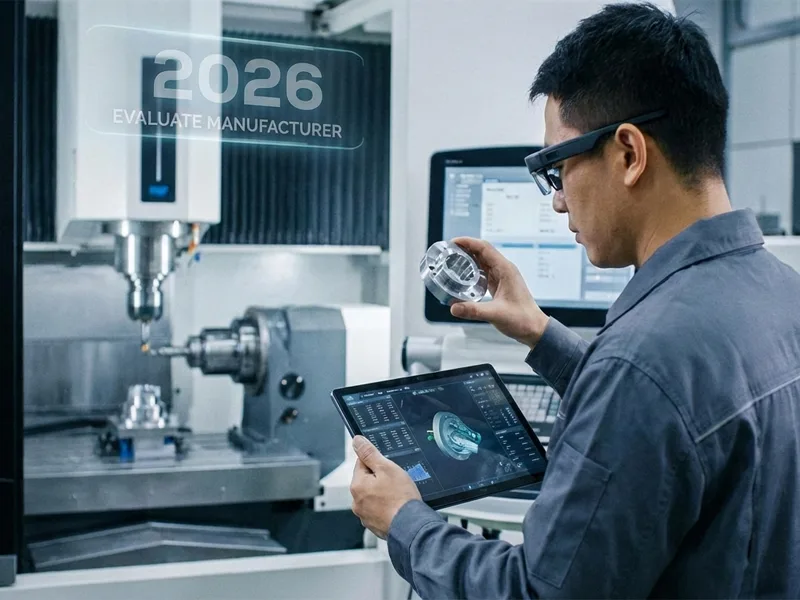
In the industrial landscape of 2026, CNC machining has evolved beyond simple subtractive manufacturing into a sophisticated ecosystem of AI-driven predictions, digital twins, and high-precision engineering. For mechanical engineers, industrial designers, and international procurement specialists, choosing a partner capable of navigating this technological leap is the key to project success.
Here is a professional guide on how to evaluate and select a custom metal parts manufacturer in 2026.
Table of Contents
Assess CNC Machining Manufacturer Technical Expertise
In 2026, a top-tier machine shop is defined not just by its hardware, but by its “data intelligence.”
Advanced Equipment and Technology
A leading manufacturer must possess 5-axis machining capabilities as a baseline. This is essential for handling complex geometries, reducing setups, and enhancing precision. Furthermore, inquire about their use of AI-adaptive machining—technology that uses real-time sensor feedback to adjust feed rates and spindle speeds, optimizing surface finish and tool life.
Handling Complex Parts and Advanced Materials
- High-Precision Equipment: Assess whether they utilize premium machining centers (e.g., DMG MORI, Mazak) capable of maintaining stable tolerances of $\pm 0.0025\text{ mm}$ ($\pm 0.0001″$).
- Material Science Expertise: The 2026 supply chain demands expertise in aerospace-grade Titanium, Inconel, and modern lightweight composites.
Digital Capabilities
Digital Twin technology is a prerequisite in 2026. A forward-thinking partner should simulate the entire machining process in a virtual environment before a single chip is cut. This eliminates collision risks and optimizes tool paths, significantly shortening lead times.
Reviewing Quality Control and Compliance
Quality is the lifeline of precision machining, particularly in the medical, aerospace, and EV sectors.
Quality Management Systems (QMS)
Beyond the standard ISO 9001:2015, look for industry-specific certifications based on your requirements:
- AS9100D: For Aerospace and Defense.
- IATF 16949: For Automotive supply chains.
- ISO 13485: For Medical device manufacturing.
Material Traceability and Inspection
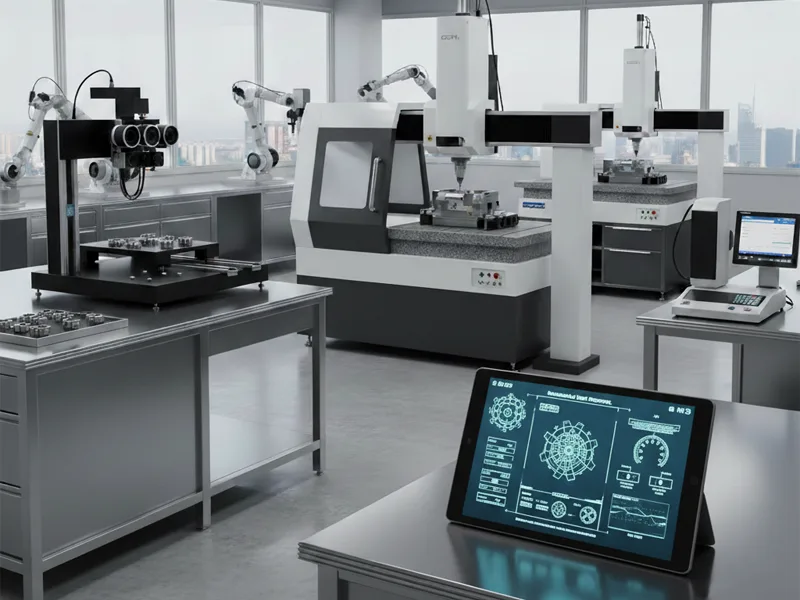
In 2026, Material Traceability has gone fully digital. Suppliers should provide comprehensive Material Test Reports (MTRs) and heat treatment logs. Additionally, ensure their lab is equipped with automated Coordinate Measuring Machines (CMM), vision systems, and surface profilometers (for Ra/Rz testing).
Assessing Communication and Engineering Support (DFM)
A top-tier manufacturer acts as an engineering consultant, not just an executor.
DFM Review (Design for Manufacturing)
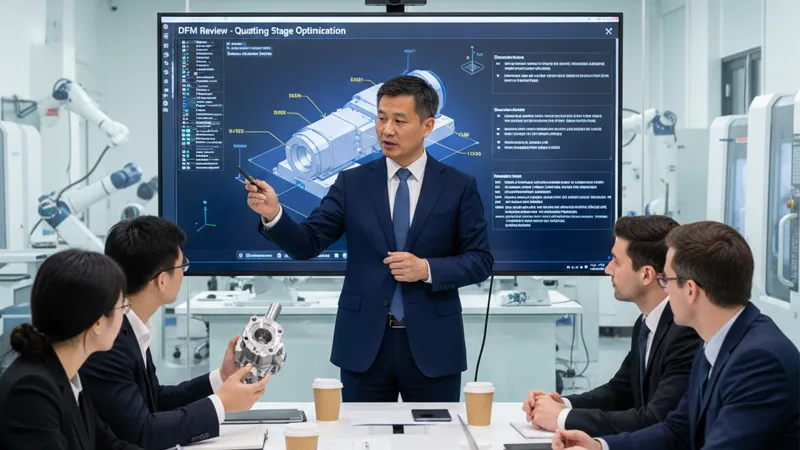
A reliable partner provides a deep DFM review during the quoting stage. They should identify potential cost drivers or manufacturing risks in your design and suggest optimizations to improve yield and performance.
Responsiveness and Project Management
International procurement in 2026 requires extreme transparency. Evaluate whether the supplier uses cloud-based project management platforms that allow you to track real-time machining progress, quality status, and logistics updates.
Analyzing Value and Flexibility in Machining
Low initial quotes often hide high “total costs.” Focus on the Total Cost of Ownership (TCO).
Pricing and Cost Transparency
Look for suppliers who provide detailed cost breakdowns (material, labor, surface treatment, and inspection). Be wary of vague quotes or prices significantly below the market average, as these often signal quality risks or hidden surcharges.
Reliability and Sustainability
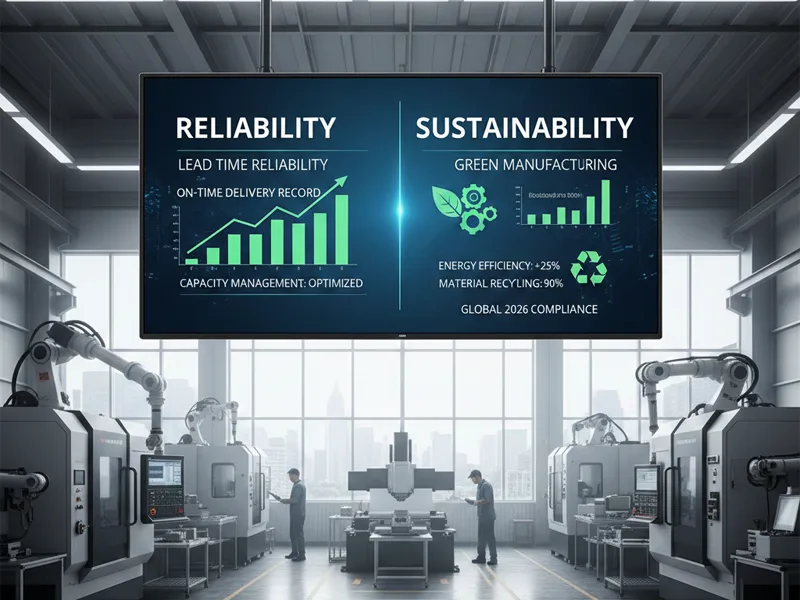
- Lead Time Reliability: Assess their capacity management and track record for on-time delivery.
- Green Manufacturing: With 2026 global standards (such as carbon footprint reporting), manufacturers must focus on energy efficiency and material recycling. This is no longer just “nice to have”—it is a compliance necessity.
Lead Times and Delivery Reliability
Lead times change when your project finishes. Good manufacturers use fast prototyping and make parts when needed. This helps them deliver faster. They do not waste time on long checks or changing tools. This lets them react fast if the market changes. Real-time tracking and automatic schedules help keep deliveries on time. Clients can check their orders and change plans if needed. Getting parts on time builds trust and helps companies work around the world.
Customization and Adaptability
CNC machining often means making custom parts. Projects start with a meeting to look at designs and pick materials. This step helps stop mistakes and saves money. Custom work matches what the client wants. It lets companies check quality and change things if needed. Real-time orders mean less waiting and less extra stock. Manufacturers can change plans fast if clients ask. This keeps supply chains strong and reliable.
Note: When picking a machining partner, check their prices, delivery, and if they can handle custom jobs. These things help your project do well in a busy market.
Picking a CNC machining manufacturer needs a clear plan. You should check their machines, skills, quality checks, how they talk, and what you get for your money. Some mistakes are asking for parts to be too exact, picking the wrong materials, or not thinking about what makes things cost more. Using a list of rules helps match the supplier to your project. It also makes things open and fair. Good relationships with suppliers help you do well for a long time. Looking closely at each choice lowers risk and saves money.
FAQ
A professional CNC machining manufacturer can produce a vast array of components ranging from simple brackets to complex, high-precision geometries. Common custom metal parts include:
- Automotive components: Engine blocks, valves, and custom fittings.
- Aerospace parts: Manifolds, housings, and structural brackets.
- Medical devices: Implants, surgical instruments, and equipment casings.
- Industrial hardware: Gears, shafts, and specialized fasteners. At AFI, we utilize multi-axis CNC milling and CNC turning to ensure even the most intricate designs meet your exact specifications.
The “best” material depends on your part’s application (strength, weight, or corrosion resistance). Popular choices in custom metal parts manufacturing include:
- Aluminum (6061, 7075): Ideal for lightweight, high-strength applications.
- Stainless Steel (304, 316): Best for corrosion resistance and durability.
- Carbon Steel: Cost-effective for structural parts.
- Brass & Copper: Excellent for electrical conductivity and aesthetic appeal. We provide expert guidance on material selection to balance performance with your production budget.
Quality assurance is critical in precision metal fabrication. We employ a rigorous inspection process that includes:
- Initial Design Review: Checking for Design for Manufacturability (DFM).
- In-Process Inspection: Real-time monitoring of dimensions during the machining cycle.
- Final Metrology: Using CMM (Coordinate Measuring Machines) to verify tolerances as tight as $\pm 0.01mm$.
- Material Certification: Providing full traceability for all raw metals used in your project.
Lead times vary based on part complexity and order volume. For rapid prototyping, we can often deliver custom metal parts within 3 to 7 business days. For full-scale production runs, lead times typically range from 2 to 4 weeks. We optimize our CNC machining workflows to ensure your project moves from CAD file to finished part as quickly as possible without compromising quality.
Yes. A key value of partnering with an experienced CNC machining manufacturer is receiving DFM feedback. Our engineers analyze your 3D models to identify potential production issues, such as:
- Deep internal corners that are difficult to mill.
- Overly thin walls that might vibrate or deform.
- Unnecessarily tight tolerances that drive up costs. Optimizing your design for custom metal manufacturing can significantly reduce lead times and production expenses.
Absolutely. We understand that innovation requires flexibility. Our CNC machining services are designed to handle everything from single-unit prototypes to small-batch production and high-volume runs. This allows you to test your designs and iterate quickly before committing to large-scale capital investments.
To lower the cost of your custom metal parts, consider the following strategies:
- Simplify Geometry: Avoid complex internal features that require specialized tooling.
- Standardize Tolerances: Only apply high-precision tolerances where necessary for the part’s function.
- Choose Common Materials: Standard alloys like Aluminum 6061 are usually more affordable and easier to machine than exotic metals.
- Increase Order Volume: Larger batches lower the “per-part” cost by spreading out the initial machine setup time.