
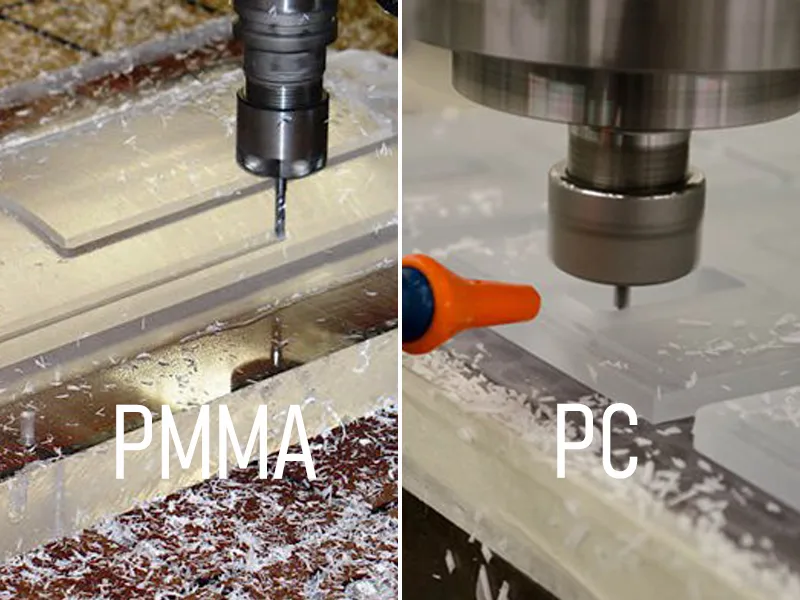
In the precision manufacturing industry, achieving optical clarity in machined plastic components is as much an art as it is a science. At AFI Parts, we understand that the biggest difference in clear plastic machining for PMMA (Acrylic) and PC (Polycarbonate) lies in the post-processing and polishing methodologies required to achieve a transparent, artifact-free surface.
While both materials can replace glass in various applications, their response to friction, heat, and chemical solvents differs fundamentally. PMMA generally requires labor-intensive manual polishing with graduated abrasives to maximize light transmission. Conversely, Polycarbonate, being a softer and more ductile polymer, responds best to vapor polishing and wet sanding techniques to remove tooling marks without inducing stress. Mastering these distinctions is critical; using the correct process ensures not only the clearest optics but also the strongest final component.
Table of Contents
Clear Plastic Machining Materials Overview
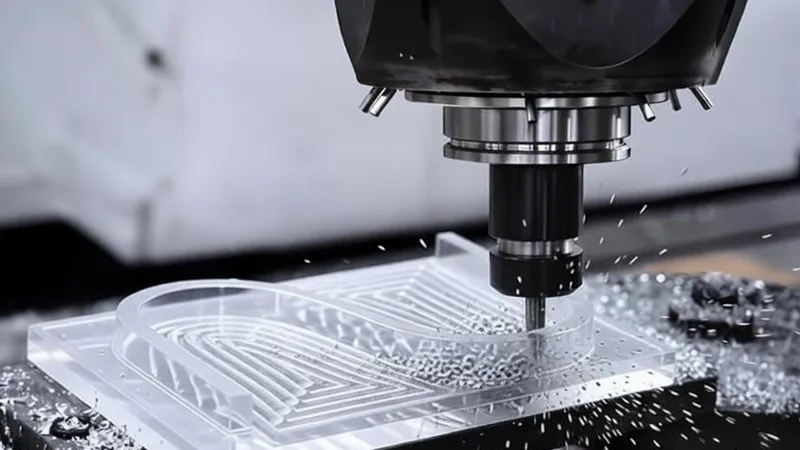
CNC machining uses special engineering plastics designed to offer optical transmission rates comparable to glass while providing superior impact resistance and weight reduction. While a variety of resins are available, Acrylic (PMMA) and Polycarbonate (PC) are the industry standards for transparency.
Selecting the correct substrate is the first step in the engineering cycle, as the material choice dictates the machining parameters, coolant strategy, and permissible polishing techniques. At AFI Parts, our senior engineering team evaluates the molecular morphology—specifically the amorphous nature of these polymers—to determine the optimal manufacturing pathway.
Acrylic (PMMA) Properties
Transparency and Machinability
Acrylic (Polymethyl Methacrylate) is renowned for its superior optical properties. It offers exceptional clarity, allowing approximately 92% of visible light to pass through the material, which is the highest transmission rate among standard engineering plastics. This optical performance is rigorously tested and verified against the ASTM D1003 standard for light transmission and haze. This makes PMMA the preferred choice for applications requiring critical visual inspection or light diffusion.
From a machinist’s perspective, Acrylic is stiff and rigid. This rigidity makes it dimensionally stable and easy to cut and shape, holding tight tolerances well. However, this stiffness comes with a trade-off: brittleness. If the chip load is too heavy or the tool geometry is incorrect, Acrylic can break, chip, or craze. It requires a “gentle” cutting strategy—high RPMs with moderate feed rates—to prevent catastrophic failure during the milling process.
Furthermore, untreated PMMA has low surface hardness, making it prone to scratching easily and rapidly degrading its clear appearance if not handled with care.
AFI Parts Case Data: PMMA Machining
- Tensile Strength (ISO 527-2): 70 – 80 MPa
- Flexural Modulus (ISO 178): 3,200 MPa
- Refractive Index (ISO 489): 1.490
Common Uses
Due to its high gloss and light transmission, Acrylic is the standard for cosmetic applications:
- Optical display panels and touchscreens.
- Light guides and fixtures.
- Retail signage and point-of-purchase displays.
- Protective barriers where impact is low but visibility is paramount.
Polycarbonate (PC) Properties
Impact Resistance
Polycarbonate is an amorphous thermoplastic chosen primarily for its toughness. It is approximately 250 times stronger than glass, making it virtually unbreakable in standard industrial applications. Unlike Acrylic, which may shatter under high stress, Polycarbonate yields, absorbing energy without catastrophic failure. This is evidenced by its exceptional Notched Izod impact strength, often exceeding 600 J/m depending on the specific resin grade.
It boasts excellent thermal stability, maintaining its structural integrity and shape even when exposed to temperatures up to 140°C (284°F). (Note: While its Heat Deflection Temperature (HDT) at 0.45 MPa reaches 140°C, its recommended continuous service temperature is typically capped at 120°C). Optically, it is impressive, though slightly less transparent than Acrylic, letting up to 90% of light through.
Application Scenarios
Polycarbonate is specified for functional, high-stress environments where safety is non-negotiable:
- Safety glasses, face shields, and ballistic laminates.
- Machine guards and containment enclosures.
- High-temperature optical lenses.
- Heavy equipment glazing.
Other Clear Plastics for CNC Machining
While PMMA and PC dominate the market, advanced engineering applications often require specialized clear resins. The table below outlines the main plastics utilized in our CNC facility:
| Plastic Type | Key Properties | Typical Applications | Material Cost Index (USD/kg)* |
|---|---|---|---|
| Acrylic (PMMA) | High clarity, UV resistance | Displays, light fixtures | $4.00 – $6.00 |
| Polycarbonate (PC) | Toughness, transparency | Safety glasses, machine guards | $6.50 – $9.00 |
| Acetal (POM) | Low friction, high stiffness | Precision gears, bearings | $5.50 – $8.00 |
| Nylon (PA) | Good wear resistance, moderate clarity | Bushings, insulators | $6.00 – $10.00 |
| ABS | Impact resistance, moderate clarity | Prototypes, enclosures | $3.50 – $5.00 |
| PEEK | Great thermal stability, high-stress tolerance | Aerospace, medical parts | $90.00 – $120.00 |
| PTFE | Non-stick, chemical resistance | Seals, chemical equipment | $15.00 – $25.00 |
| HDPE | High strength-to-density, chemical resistance | Tanks, cutting boards | $2.50 – $4.00 |
| Polypropylene | Moisture and chemical resistance | Laboratory equipment, containers | $2.00 – $3.50 |
*Note: Material cost indexes are approximate market averages and fluctuate based on supply chain variables.
Each material presents unique machining challenges. For instance, PTFE offers incredible chemical resistance but is notoriously difficult to hold tight tolerances on due to creep, while PEEK serves as a metal replacement in aerospace but requires hardened tooling due to its stiffness.
CNC Machining and Polishing Methods
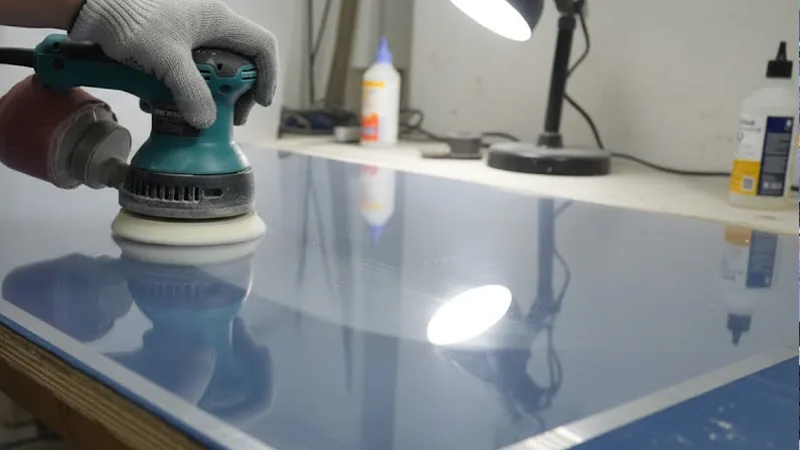
CNC machining for clear parts requires a holistic approach that integrates precise toolpath programming with specialized post-processing. You must match the polishing method to the specific polymer chemistry to avoid chemical attack or thermal degradation. Because each plastic reacts differently to the friction of cutting and finishing, machining strategies must be customized. Understanding these differences is the key to producing parts that are both optically clear and structurally sound.
To optimize material removal rates without thermal degradation, our engineers calculate the precise chip load using the fundamental kinematic equation:
Where fz is feed per tooth (chip load), vf is the linear feed rate, n is spindle speed (RPM), and z is the number of flutes.
Acrylic Polishing Techniques
Acrylic is selected for its aesthetic potential, and polishing is the critical step that restores the material to a transparent state after the CNC process leaves the surface opaque with tool marks.
Mechanical Polishing
Mechanical polishing is the industry standard for restoring high-gloss clarity to PMMA. This process uses abrasive compounds to physically level the surface.
- The Process: Operators apply an abrasive compound (typically aluminum oxide or specialized plastic polishes) to a spinning buffing wheel made of cotton or flannel. The wheel rotates at a moderate speed to prevent overheating.
- Technique: The machinist moves the acrylic part against the wheel in circular or cross-hatch motions. This friction abrades the peaks of the surface roughness (Ra), removing scratches and generating a shine. At AFI Parts, we verify this reduction in surface peaks using ISO 21920 compliant optical profilometers.
- Engineering Note: This method is labor-intensive. It requires a progression of sanding steps (wet sanding from 400 to 2000 grit) before the final buffing stage to ensure true planarity.
Flame Polishing
Flame polishing utilizes a high-temperature hydrogen-oxygen flame to momentarily liquefy the surface of the Acrylic.
- The Physics: The heat melts the microscopic ridges left by the cutting tool. Surface tension then pulls the molten plastic flat, resulting in a smooth, clear surface upon cooling.
- Best Application: This method is fast and cost-effective, making it ideal for long, straight edges or simple exterior contours.
- Risk: It is generally unsuitable for precision internal features or complex geometries, as the intense localized heat can cause warping or dimensional distortion.
Vapor Polishing
Vapor polishing involves exposing the plastic to a solvent vapor, typically Dichloromethane (DCM) or Acetone.
- The Reaction: The solvent vapor chemically attacks the surface, reflowing the polymer chains at a molecular level to create a mirror-like finish.
- Benefits: It provides a uniform finish on internal features (like threaded holes or manifolds) that mechanical tools cannot reach, without applying physical stress to the part.
- Safety: This process requires strict environmental controls and ventilation due to the toxicity of the solvents. Note that while effective, vapor polishing Acrylic can sometimes induce stress crazing if the material has not been properly annealed.
Polycarbonate Polishing Techniques
Polycarbonate is stronger than acrylic but possesses a lower surface hardness and a different chemical resistance profile, requiring alternative polishing strategies.
Mechanical Polishing
While possible, mechanical polishing of Polycarbonate is more difficult than Acrylic. The material is “gummy” and tends to smear rather than cut cleanly if the buffing wheel generates too much heat. It requires wet sanding with fine-grit papers and lower RPM buffing to avoid overheating. The final shine is typically less brilliant than that of Acrylic.
Vapor Polishing
Vapor polishing is the premier choice for Polycarbonate optical clarity.
- Why it works: PC responds exceptionally well to solvent vapors. The process smoothes surface irregularities and restores transparency to near-molded quality.
- Procedure: Parts must be thoroughly dehydrated (baked) before exposure; moisture trapped in the plastic will boil off during the chemical reaction, creating white “splay” marks.
Chemical Polishing
This involves dipping the component directly into a solvent bath. The chemicals react with the surface to smooth it out. While it can improve clarity, it is aggressive and difficult to control dimensionally compared to vapor polishing. It is often reserved for parts requiring a preparatory surface for hard-coating.
Process Steps and Tooling
Achieving aerospace-grade clarity is not a single event but a sequence of controlled steps. Every phase, from the initial roughing pass on the CNC machine to the final wipe-down, affects the optical quality.
Preparation and Cleaning
Contamination is the enemy of optics. Before any polishing begins, parts must be meticulously cleaned. Residual plastic chips, coolant oil, or shop dust can become trapped in the polishing media, turning a buffing wheel into a sanding disc that introduces new scratches.
- Protocol: We utilize ultrasonic cleaning or soft, lint-free cloths with mild detergents. Crucially, for vapor polishing, parts must be chemically clean and completely dry to prevent surface defects.
Tool Selection & CNC Parameter Windows
The geometry of the cutting tool determines the surface finish straight off the machine.
- Acrylic: We utilize monocrystalline diamond (MCD) tools or polished carbide bits. High rake angles (typically 5°) and sharp cutting edges are essential to shear the material rather than plow it.
- AFI Parts PMMA Parameters: Spindle 18,000 – 20,000 RPM; Feed Rate 2,200 – 2,800 mm/min; Depth of Cut 2.0 – 3.0 mm.
- Polycarbonate: Requires tools with specific clearance angles (10° – 15°) to prevent chip welding. PC is highly susceptible to heat buildup, so maintaining a higher feed-per-tooth ratio is critical to evacuate heat through the chip.
- AFI Parts PC Parameters: Spindle 12,000 – 16,000 RPM; Feed Rate 3,000 – 3,500 mm/min; Depth of Cut 1.5 – 4.0 mm.
Polishing Tools: For Acrylic, cotton wheels with aluminum oxide compounds are standard. For Flame polishing, we use hydrogen torches with precision tips. Vapor polishing requires sealed stainless steel chambers resistant to DCM.
Newer CNC centers at AFI Parts utilize smart sensors and AI-driven monitoring to detect tool wear in real-time. This ensures that the surface finish remains consistent, reducing the workload during the manual polishing phase.
Polishing Technique Selection Matrix
| Polishing Technique | Description | Tools Required | Standard Compliance |
|---|---|---|---|
| Flame Polishing | Smooths edges and restores clarity. | Precision flame polishing equipment | Commercial Aesthetic |
| Vapor Polishing | Uses solvent vapor for a mirror-like finish. | DCM or acetone, heat-resistant chamber | ISO 21920 (Ra < 0.1㎛) |
| Buff Polishing | Achieves high-gloss finish. | Aluminum oxide compound, buffing wheel | ASTM D1003 |
| Scratch-Resistant Coatings | Increases durability. | Specialized coating equipment | MIL-PRF |
Surface Quality and Optical Clarity
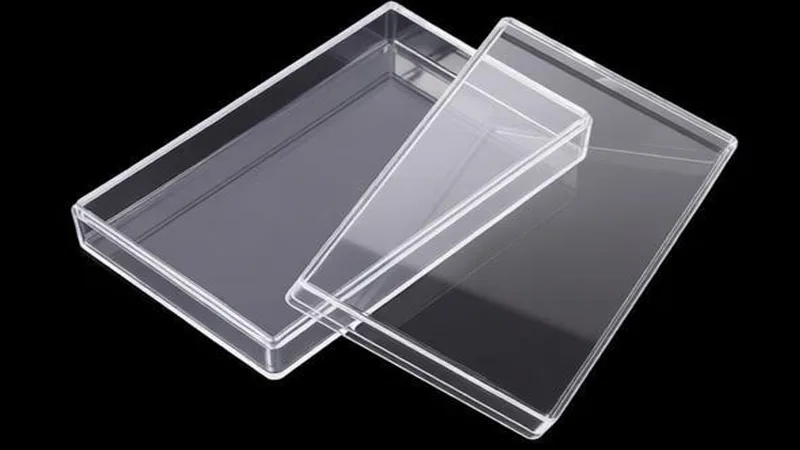
The definition of “clear” varies by application. An engineered manifold needs internal clarity for flow inspection, while a museum display case needs perfect surface reflectivity. Modern metrology relies on the comprehensive ISO 21920 standard (which recently replaced ISO 4287) to mathematically define surface texture parameters across primary, waviness, and roughness profiles.
Acrylic Finish Results
Gloss and Transparency
Acrylic is the benchmark for optical plastics. When polished correctly, it achieves a light transmission of approximately 92%, indistinguishable from crystal glass. This property makes it the automatic choice for display panels, lenses, and light guides.
Polishing acts as a surface restoration process, removing the “haze” of micro-scratches and tool marks. By using progressively finer abrasives, we lower the surface roughness (Ra) until the surface is planar enough to permit specular reflection. The result is a component that is not just see-through, but brilliant.
Scratch Resistance
While harder than many plastics, Acrylic is susceptible to surface abrasion. Mechanical polishing is unique in that it is also a repair process; it can remove handling scratches and restore the part to a “like-new” condition. For high-traffic applications, we recommend applying a hard-coat (polysiloxane) after polishing to increase surface hardness.
Polycarbonate Finish Results
Clarity and Impact Resistance
Polycarbonate is an engineering workhorse. While it transmits slightly less light (up to 90%) and may have a slight grayish or blue tint in thick sections, it is virtually indestructible. The dispersion of light in PC is characterized by an Abbe number of roughly 34, which is lower than that of PMMA’s 58, indicating higher chromatic dispersion.
Vapor polishing is the most effective method for PC, significantly improving clarity by chemically smoothing the surface topography. However, even with the best polishing, PC rarely achieves the “wet look” or high brilliance of polished Acrylic. Its value lies in its durability; it maintains its integrity under impact loads that would shatter Acrylic.
Durability and Environmental Exposure
Polycarbonate is highly ductile, stretching 60-70 MPa before failure. However, it is sensitive to UV radiation and chemicals. Without UV stabilizers or coatings, polished PC can yellow over time. Polishing prepares the surface for these necessary protective coatings, ensuring the part remains functional in harsh environments.
Comparison: Acrylic vs. Polycarbonate
| Property | Acrylic (PMMA) | Polycarbonate (PC) |
|---|---|---|
| Optical Transparency | ~92% | ~88-90% |
| Gloss Finish | High (Mirror-like) | Medium to High |
| Scratch Resistance | Medium (Repairable) | Low (Requires Coating) |
| Impact Resistance | Medium | Very High |
| Best Use Case | Displays, light fixtures | Safety windows, machine guards |
Challenges in Clear Plastic Machining
Machining clear plastics is unforgiving. Unlike opaque materials, where tool marks can be hidden by bead blasting or anodizing, clear parts show every defect inside the material structure. Quality inspection requires rigorous illumination testing and cross-polarized light analysis to detect internal defects.
Acrylic Polishing Issues
Cracking and Crazing
The most common failure mode in Acrylic is “crazing”—a network of tiny, hair-line cracks that appear below the surface. This is caused by residual stress.
- Root Cause: The heat and physical force of CNC machining introduce stress into the material. When solvents (like cleaners or vapors) contact this stressed material, the bonds snap, creating cracks.
- Solution: Stress-relieving (annealing) cycles are mandatory. At AFI Parts, we heat the parts to a specific temperature below the glass transition point (typically ramping at 15°C/hour to 80°C) and cool them slowly to relax the molecular chains.
Overheating
PMMA has poor thermal conductivity. Friction from dull tools or aggressive polishing builds up heat that cannot escape, leading to melting or “gumming” of the surface.
- Prevention: Maintain strict control over cutter feeds and speeds. Ensure continuous air or mist coolant to evacuate chips and heat.
Polycarbonate Polishing Issues
Stress Cracking
Like Acrylic, PC is susceptible to stress cracking, particularly when exposed to chemical vapors during polishing. If the part has high internal stress from machining, the aggressive solvents used in vapor polishing will cause immediate structural failure.
- Mitigation: Annealing is even more critical for PC before any vapor polishing is attempted. We hold PC components at 120°C for 1 hour per millimeter of wall thickness to ensure complete stress relief before DCM exposure.
Yellowing and Swirl Marks
Polycarbonate absorbs moisture from the air. If not dried before processing, this moisture creates steam voids (splay) inside the plastic during heat generation. Furthermore, excessive heat during machining can degrade the polymer, causing a permanent yellow tint.
Troubleshooting and Best Practices
| Defect | Cause | Solution | AFI Parts Engineering Standard |
|---|---|---|---|
| Splay/Blisters | Moisture trapped in material | Dry plastic thoroughly in an oven before machining | Bake at 120°C for 4-6 hours |
| Burn Marks | Trapped gases or dull tooling | Improve chip evacuation; use sharp, polished flutes | Implement 50 PSI directional air blast |
| Weld Lines | Rapid cooling in injection/molding | Use rapid heating and cooling techniques | Optimize CAM toolpath step-overs |
| Yellowing | Excessive heat generation | Reduce spindle speed/feed rate; check coolant flow | Utilize thermal imaging during prototyping |
CNC Plastics Selection Guide
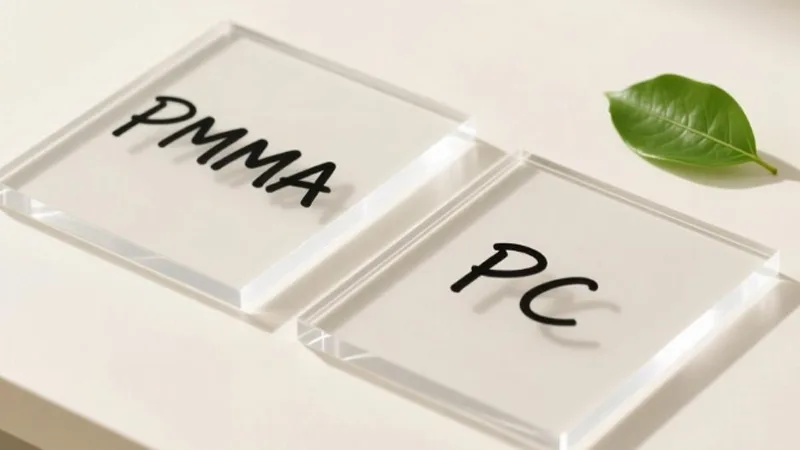
Matching Material to Application
The choice between Acrylic and Polycarbonate often comes down to a balance of optical requirements versus environmental durability.
Optical vs. Structural Needs
Select Acrylic if the primary function is visual. If the part must look like glass, act as a light pipe, or serve as a cosmetic faceplate, PMMA is the superior choice.
Select Polycarbonate if the part is structural. If it must withstand hammer blows, high pressure, or high temperatures, the slight loss in optical transmission is an acceptable trade-off for the safety factor PC provides.
Cost and Lead Time Considerations
Generally, Acrylic is more cost-effective and faster to machine due to its chip-breaking characteristics. Raw material costs for standard PMMA billets are substantially lower, and the reduced post-processing time keeps overall labor overhead manageable.
Conversely, Polycarbonate raw material is more expensive, and the post-processing (annealing + vapor polishing + coating) adds significant time and cost to the manufacturing cycle. Engineers must factor in the 24-48 hour annealing cycles when projecting delivery timelines for high-stress PC components. However, factoring in Total Cost of Ownership (TCO), PC’s immunity to catastrophic fracture often saves money in long-term maintenance and replacement costs for heavy-duty applications.
Summary Table: Acrylic vs. Polycarbonate
| Property | Acrylic (PMMA) | Polycarbonate (PC) |
|---|---|---|
| Transparency | 92% light transmission | 88–90% light transmission |
| Impact Resistance | 17x stronger than glass | 250x stronger than glass |
| Scratch Resistance | Excellent | Moderate |
| UV Resistance | High (naturally stable) | Very high (only with UV coating) |
| Heat Resistance | Up to 160°F (70°C) | Up to 250°F (120°C) |
| Workability | Easy to cut; brittle | “Gummy” to cut; tough |
| Polishing Outcome | High gloss, mirror finish | Clear, functional finish |
FAQ
Acrylic achieves its best optical results through mechanical polishing (sanding and buffing), which yields a high-gloss, mirror finish. Polycarbonate is difficult to buff mechanically and responds best to vapor polishing, which chemically smooths the surface for functional clarity.
No, you should not use flame polishing on polycarbonate. Flame polishing works for acrylic but can hurt polycarbonate. Polycarbonate can bend or change color if you expose it to fire. Try vapor or chemical polishing for polycarbonate instead.
Cracking (crazing) is caused by residual stress. To prevent it:
- Use sharp, specific geometry tools to reduce heat generation during cutting.
- Anneal (heat treat) the parts after machining but before polishing to relieve internal stress.
- Avoid using aggressive solvents on non-annealed parts.
Polycarbonate can turn yellow if it gets a lot of sun. A UV-resistant coating helps stop this from happening. Keep finished parts out of sunlight if you can.
Acrylic is naturally UV stable and resists yellowing in sunlight better than untreated Polycarbonate. If Polycarbonate is required for outdoor structural applications (like heavy equipment windows), it must have a UV-resistant hard coat applied to prevent degradation.
For acrylic, use fine sandpaper and then a polishing cream. For polycarbonate, try vapor polishing or a plastic polish. Always clean the plastic before you start.
Yes. Vapor polishing utilizes volatile organic compounds (VOCs) such as Dichloromethane (DCM) or Acetone. These chemicals are hazardous. The process must be performed in a dedicated fume hood or sealed chamber with appropriate filtration systems, and operators must wear PPE, including organic vapor respirators.