
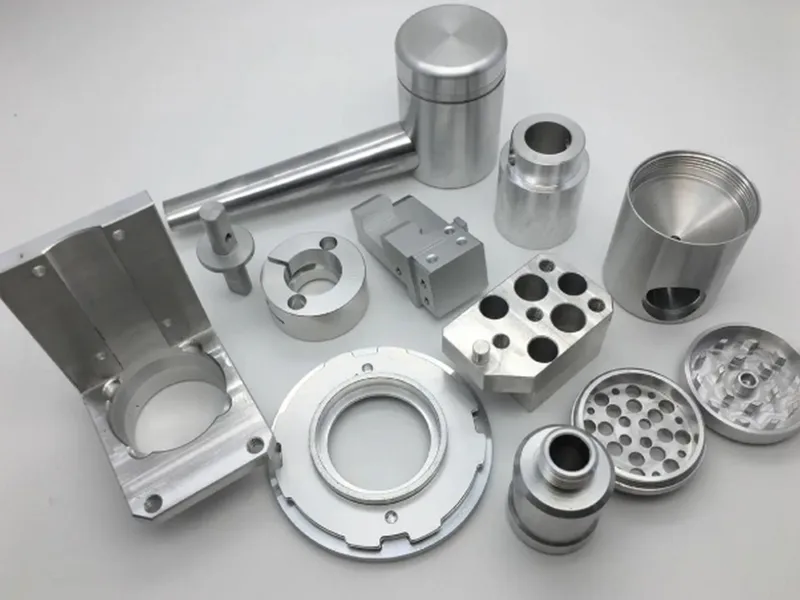
Modern engineering isn’t just about making parts; it’s about optimizing the strength-to-weight ratio (specific strength). At AFI Parts, we see a daily demand for lightweighting—not just for aerospace applications, where every gram counts toward fuel savings, but increasingly in EV (Electric Vehicle) components and high-end robotics.
CNC machining offers a distinct advantage over casting or additive manufacturing in this realm: the ability to achieve tight tolerances (±0.01mm) on high-strength alloys while removing up to 60-70% of the initial stock mass. This guide details the specific machining strategies, parameters, and material selections we use on the shop floor to deliver lightweight metal parts without compromising structural integrity.
Table of Contents
Lightweight Metal Parts in Modern Manufacturing
Industry Need for Lightweight Components
The drive for lightweighting is quantifiable. In aerospace, a 1kg weight reduction translates to approximately $3,000 in fuel savings over the life of an aircraft. Similarly, in the EV sector, reducing unsprung mass (wheels, suspension arms) directly correlates to extended battery range and improved handling dynamics
At AFI Parts, we recently transitioned a client’s suspension control arm from a solid steel weldment to a CNC-machined 7075-T6 Aluminum component, achieving a 42% weight reduction while maintaining a safety factor of 1.5. This performance gain is achieved not by magic, but by leveraging advanced CNC strategies to remove material strictly from non-load-bearing zones.
Common Performance Metrics
When evaluating a design for lightweighting, we don’t just look at “weight.” We evaluate these critical engineering metrics:
| Metric | Engineering Definition | Target Value (Typical) |
|---|---|---|
| Specific Strength | Yield Strength / Density (kN \•m/kg) | > 200 for Aerospace |
| Specific Stiffness | Young’s Modulus / Density | Critical for preventing buckling |
| Machinability Rating | Ease of cutting relative to 1212 Steel (100%) | Al 6061: ~270% | Ti-6Al-4V: ~15% |
| Fatigue Limit | Maximum stress amplitude for infinite life | Essential for cyclic loading parts |
Challenges in Lightweighting
Lightweighting is a battle against physics. As we remove material, we reduce stiffness. The primary challenge on the shop floor is thin-wall instability.
- Chatter & Vibration: When wall thickness drops below 1.5mm (or a height-to-width ratio > 30:1), cutting forces can cause the wall to deflect, leading to chatter marks and dimensional failure.
- Thermal Distortion: Materials like Aluminum 6061 have a high thermal expansion coefficient (23.6㎛ /m • K). Aggressive material removal generates heat, which can warp a lightweight part out of tolerance before it even leaves the machine.
Field Note: For Titanium (Ti-6Al-4V), low thermal conductivity means heat concentrates at the cutting edge. We must use high-pressure coolant (minimum 70 bar) to prevent work hardening, which can compromise the fatigue life of a lightweight part.
CNC Weight Reduction Techniques
To reduce weight effectively, we employ three primary subtractive strategies: Topology Optimization (Pocketing), Thin-Wall Machining, and Isogrid/Rib Structuring.
Pocketing and Internal Cavities
Designers often default to simple pockets, but the geometry of the pocket dictates the machining cost and quality.
- Corner Radii: Avoid sharp internal corners. A CNC tool is cylindrical. If a pocket has a 90° corner, the tool must stop and pivot, increasing cycle time. We recommend a Corner Radius (R)≥ 1/3 × Pocket Depth (D).
- Example: For a 30mm deep pocket, use at least an R10mm fillet. This allows us to use a larger, stiffer Φ20mm end mill, reducing deflection.
- Wall Thickness: Maintain a standard wall thickness where possible. Variable wall thicknesses induce uneven residual stresses during stress relief.
Efficient Toolpaths: Trochoidal Milling
For deep cavity material removal, we utilize Trochoidal Milling (Dynamic Milling). Unlike traditional offset paths, trochoidal milling maintains a constant tool engagement angle (typically 10-40 degrees).
- Benefits: This reduces radial cutting forces, allowing us to increase axial depth of cut (Ap) to 2x – 3x tool diameter while keeping the thin walls stable.
- Result: We can remove mass faster with less heat transfer to the part, critical for maintaining the dimensional accuracy of lightweight structures.
Structural Integrity: Ribs and Gussets
Simply thinning a wall reduces its buckling strength by a cube function. To counteract this, we machine integral ribs and gussets.
- Isogrid Structures: A triangular rib pattern machined into a thin wall. This mimics the efficiency of a truss, providing high stiffness with minimal weight penalty.
- Fillet Radii: All ribs must connect to walls with generous fillets (e.g., R3mm) to reduce stress concentration factors, preventing fatigue cracks under load.
Thin Wall Machining
Machining walls down to 0.5mm – 1.0mm thickness requires specific “High-Efficiency Machining” (HEM) parameters to avoid scrapping the part.
Machining Parameters for Stability
| Parameter | Strategy | Engineering Rationale |
| Step-Down (Ap) | Large | Engage more of the flute length to distribute the force. |
| Step-Over (Ae) | Small (<10% Dia) | Reduces radial push-off force on the wall. |
| Spindle Speed | High (Harmonic Control) | Tuned to avoid the natural frequency of the thin wall. |
| Tool Geometry | High Helix (45°) | Engage more of the flute length to distribute the force. |
AFI Parts Best Practice: We use a “waterline” strategy with varying Z-levels, machining the wall in steps to maintain structural rigidity as long as possible.
Multi-Axis CNC for Lightweight Parts
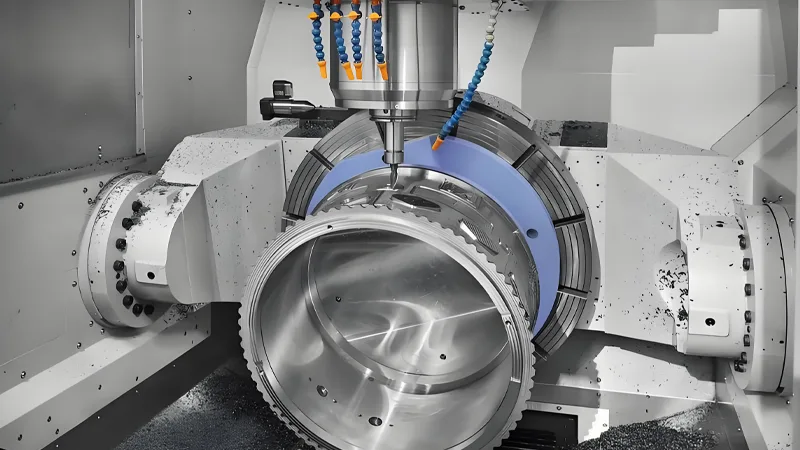
Standard 3-axis machines struggle with the undercuts and complex contours required for organic, topology-optimized parts. This is where our 5-Axis CNC Machining centers excel.
- Single Setup Precision: By rotating the part, we can access 5 sides in one setup. This eliminates the “stack-up error” of multiple fixtures, ensuring that the thin walls on Side A perfectly align with Side B.
- Shorter Tools: 5-axis allows us to tilt the tool, letting us use shorter, stiffer cutters for deep pockets. A shorter tool deflects less, allowing for tighter tolerances on lightweight features.
Material Selection for Lightweight Metals
Selecting the right material is 80% of the battle. We categorize lightweight materials based on their Specific Strength.
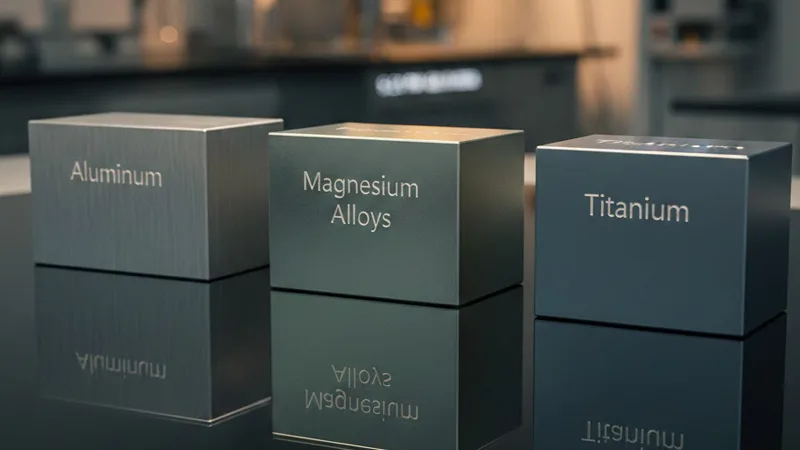
Aluminum Grades (The Workhorse)
Aluminum offers the best balance of cost, machinability, and density ( ~2.7 g/cm³).
- Al 7075-T6: The “Aircraft Grade.” Yield strength (~503 MPa) rivals some structural steels. Ideal for stressed structural components.
- Al 6061-T6: The general-purpose standard. Excellent corrosion resistance and anodizing response. Best for electronics enclosures and housings.
- Al 2024: High fatigue resistance, commonly used in aircraft wing skins under tension.
Magnesium Alloys (The Ultralight)
Magnesium is ~33% lighter than aluminum ( ~1.74 g/cm³) but requires strict safety protocols due to flammability.
- AZ31B / AZ91D: Excellent vibration damping properties. We machine these dry or with specific oil-based coolants to manage fire risk.
- Use Case: Gearbox housings for drones or handheld camera gimbals where every gram affects performance.
Titanium (The High-Temp Performer)
- Ti-6Al-4V (Grade 5): High density ( ~4.4 g/cm³) compared to Al, but superior strength-to-weight ratio at elevated temperatures (>400℃).
- Use Case: Jet engine brackets, exhaust components, and medical implants.
Hybrid and Composite Metals
We are seeing an uptick in Metal Matrix Composites (MMCs), such as Aluminum Silicon Carbide (AlSiC). These materials offer the thermal conductivity of metal with the low expansion of ceramics.
- Machining Challenge: These materials are extremely abrasive. We utilize PCD (Polycrystalline Diamond) tools to maintain edge life, as standard carbide wears out within minutes.
Design Tips for Lightweight Metal Parts
To ensure your design is manufacturable (DFM) and cost-effective:
- Limit Pocket Depth: Keep length-to-diameter (L:D) ratios under 5:1. Deep pockets require long tools, which chatter and leave poor surface finishes.
- Standardize Radii: Use standard metric radii (e.g., R3, R6, R10) to avoid custom tooling charges.
- Use “Near-Net” Stock: Starting with a forging or casting closer to the final shape reduces machining time and material waste.
Cost-Effective Prototyping
Before committing to a production run of 1,000 units, we recommend a Proof of Concept (POC) prototype.
- Strategy: Use Aluminum 6061 for the initial fit-check prototype, even if the final part is Titanium. It allows you to validate geometry at 20% of the cost.
- Rapid Iteration: Our 3-axis CNC cells are dedicated to quick-turn prototypes, delivering functional metal parts in as little as 3 days.
Lightweight Metal Parts: Case Studies
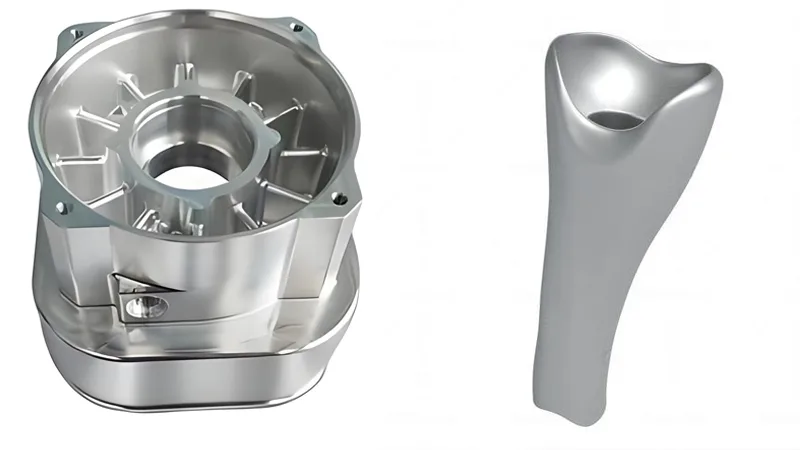
Project: Aerospace Bracket Optimization
Challenge: Reduce the weight of a legacy steel engine bracket (1.2 kg) by >40% without losing load capacity.
Solution: Redesigned for Ti-6Al-4V using topology optimization (organic ribs). Machined on 5-axis centers to minimize fixture weight.
Result: Final weight 0.68 kg (43% reduction). Stress analysis confirmed a Safety Factor of 1.8.
Project: High-Speed Robotics Arm
Challenge: Reduce inertia for a pick-and-place robot to increase cycle speed.
Solution: Switch from cast aluminum to machined Magnesium AZ31B with thin-wall pocketing (0.8mm walls).
Result: 30% reduction in arm inertia, allowing the robot to increase cycles per minute from 120 to 150.
FAQ
We routinely machine down to 0.5mm in Aluminum and 0.8mm in Titanium. However, walls thinner than 1.0mm may require specialized vacuum fixtures to prevent vibration.
Yes. While you save on material weight, removing large volumes of material (high “buy-to-fly” ratio) increases machine time. The goal is to balance weight savings with machining efficiency.
Al 7075-T6 has almost double the yield strength of 6061. This allows engineers to design thinner walls and smaller sections to hold the same load, resulting in a lighter overall part.
At AFI Parts, we don’t just cut metal; we engineer solutions. Upload your CAD file today for a free DFM analysis and let’s discuss how we can reduce the weight of your next project.