
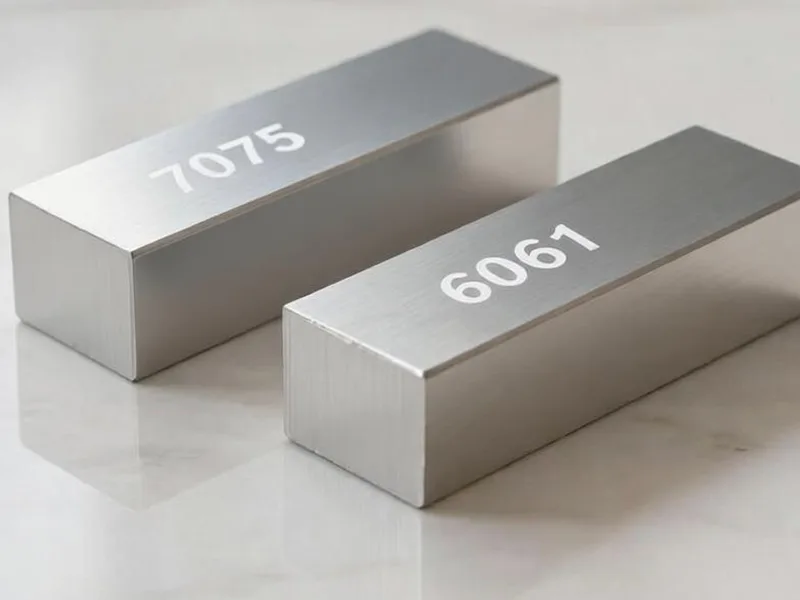
In the world of precision manufacturing, material selection is rarely a binary choice between “strong” and “weak.” It is a complex calculation of fatigue limits, thermal conductivity, corrosion resistance, and total landed cost. At AFI Parts, we bridge the gap between design concepts and production reality. Through thousands of machining hours on both 7075 and 6061 aluminum alloys, we have observed that choosing the right material is the first step in ensuring the success of aerospace and structural components.
While many engineers know that 7075 is “stronger” and 6061 is “more versatile,” the nuances of their behavior under the CNC cutter, in the welding booth, and in harsh environments often dictate the success or failure of a project. This comprehensive guide provides the technical data, workshop insights, and comparative analysis necessary to optimize your Bill of Materials (BOM) and Design for Manufacturing (DFM) strategies.
Table of Contents
7075 vs 6061 aluminum: Key Differences
Understanding the divergence between these two alloys begins at the molecular level. While both are aluminum-based, their alloying elements drive significantly different microstructural behaviors, which in turn dictate their suitability for high-precision CNC machining and structural integrity.
Comparison Table: Technical Specifications
The following engineering-grade comparison is based on standard ASTM B209 and AMS specifications, focusing on the most common tempers used in our facility (T6/T651).
| Property | 7075-T651 Aluminum Alloy | 6061-T651 Aluminum Alloy | AFI Parts Engineering Insight |
| Primary Alloying Elements | Zinc (5.1-6.1%), Magnesium, Coppe | Magnesium (0.8-1.2%), Silicon, Copper | Zinc creates high-strength precipitates (MgZn2); Silicon promotes formability (Mg2Si). |
| Ultimate Tensile Strength | ~83,000 psi (572 MPa) | ~45,000 psi (310 MPa | 7075 offers superior failure resistance, essential for safety-critical parts. |
| Yield Strength | ~73,000 psi (503 MPa) | ~40,000 psi (276 MPa) | The critical limit for elastic deformation, 7075, allows for slimmer geometries. |
| Strength-to-Weight Ratio | Very High | Moderate | 7075 is the standard for “Buy-to-Fly” optimization in aerospace. |
| Corrosion Resistance | Moderate (Prone to SCC) | Excellent (Atmospheric & Seawater) | Determines the necessity of protective coatings like Anodizing or Chem-Film. |
| Machinability | Challenging (Harder) | Highly machinable (Softer) | 7075 produces brittle chips; 6061 can be “gummy” and prone to built-up edge (BUE). |
| Weldability | Poor (Crack sensitive) | Excellent (Arc welding compatible) | Dictates assembly method: 6061 for welded frames, 7075 for bolted assemblies. |
| Cost Factor | Zinc (5.1-6.1%), Magnesium, Copper | More cost-effective | The critical limit for elastic deformation, 7075, allows for slimmer geometries. |
Tip: When evaluating these alloys, consider not just the static loads but the dynamic environment. Airplanes demand the fatigue resistance of 7075, while marine structures require the passivation layer stability of 6061.
Strengths and Weaknesses
To make an informed decision, engineers must look beyond the datasheets and understand the operational pros and cons of each material in a manufacturing context.
7075 Aluminum Alloy
Known in the industry as “aircraft aluminum,” 7075 achieves its mechanical properties through precipitation hardening of Zinc and Magnesium.
Strengths:
- Exceptional Specific Strength: With a density roughly equal to other aluminum alloys but strength comparable to some structural steels (like A36), 7075 is the ultimate choice for weight reduction.
- High-Stress Performance: It exhibits excellent fatigue strength, meaning it does not “tire” easily under cyclic loading, making it ideal for rotating shafts and wing spars
- Superior Surface Finish Potential: From a machinist’s perspective at AFI Parts, the hardness of 7075 allows for cleaner chip breaking, often resulting in better as-machined surface roughness (Ra) compared to softer alloys.
Weaknesses:
- Corrosion Susceptibility: Without proper protection (like Anodizing), 7075 degrades faster than 6061, particularly exhibiting exfoliation corrosion in saline environments.
- Weldability Constraints: Fusion welding causes micro-cracking in the heat-affected zone (HAZ). It is generally considered non-weldable for structural applications unless advanced techniques like friction stir welding are used.
- Cost & Processing: It is harder to cut, increasing machine spindle load and accelerating carbide insert wear.
6061 Aluminum Alloy
6061 is the “workhorse” of the aluminum family, utilizing Magnesium and Silicon to form Magnesium Silicide precipitates.
Strengths:
- Versatility: Its balanced chemistry allows it to be extruded, rolled, forged, and machined with ease.
- Corrosion Resistance: It naturally forms a stable oxide layer that resists atmospheric corrosion, which can be further enhanced with simple coatings.
- Excellent Weldability: It is the standard alloy for welded assemblies, compatible with both TIG (GTAW) and MIG (GMAW) processes.
- Cost-Effectiveness: Its abundance and ease of processing make it the economical choice for large-scale production runs.
Weaknesses:
- Lower Tensile Limit: With a tensile strength roughly half that of 7075, it is unsuitable for primary load-bearing structures in high-performance aerospace applications.
- Machining Challenges: While “easy” to cut, its ductility can lead to material smearing or “gumminess” if cutting speeds are not optimized, potentially affecting tolerance holding.
7075 aluminum: Properties and Applications
Chemical Composition
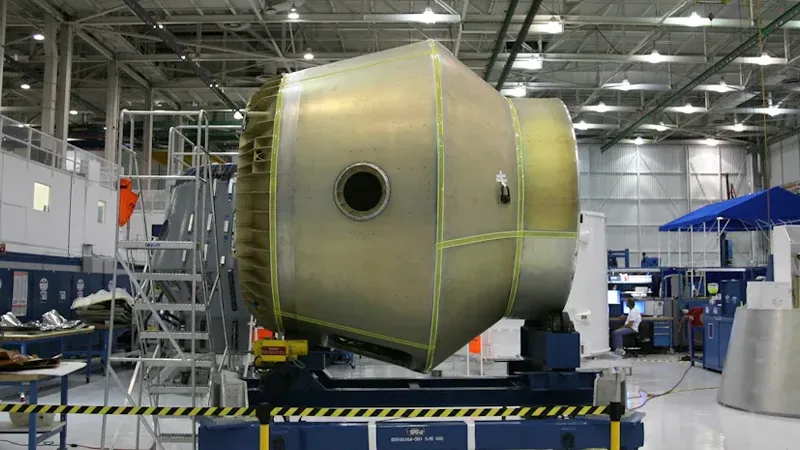
The defining characteristic of 7075 aluminum is its high Zinc content (5.1–6.1%) combined with Magnesium (2.1–2.9%) and Copper (1.2–2.0%). This specific ratio creates the Eta phase (MgZn2) precipitates during heat treatment, which blocks dislocation movement within the crystal lattice, granting the alloy its immense strength. The addition of Chromium (0.18–0.28%) acts as a grain structure controller, preventing recrystallization and maintaining toughness.
AFI Parts Note: We strictly monitor Iron and Silicon impurities in our raw material, as excess amounts can form brittle intermetallic phases that reduce fracture toughness.
Mechanical Properties
Strength and Hardness
7075-T6 boasts a tensile strength of approximately 572 MPa (83,000 psi) and a yield strength of 503 MPa (73,000 psi). This high yield point means the material can withstand significant stress without permanent deformation, a non-negotiable requirement for aerospace actuators and high-pressure hydraulic manifolds. The Brinell hardness is significantly higher than that of 6000-series alloys, contributing to its wear resistance.
Fatigue Resistance
Fatigue failure is the enemy of aviation. 7075 is engineered to withstand millions of load cycles—bending, vibration, and pressurization—without propagating micro-cracks. This makes it the standard for wing spars and fuselage frames where cyclic loading is constant.
Corrosion Resistance
The trade-off for high strength is reduced corrosion resistance. The presence of Copper creates galvanic cells within the microstructure, making 7075 prone to pitting and Stress Corrosion Cracking (SCC), especially in the T6 temper. Engineering Solution: For marine or exposed applications, AFI Parts recommends specifying the T7351 temper, which over-ages the material slightly to drastically improve SCC resistance, or applying Mil-Spec Type III Hard Anodizing.
Machinability
While 7075 is harder, it is often preferred for high-precision CNC parts. Its brittle chip formation allows for excellent chip evacuation, preventing the re-cutting of chips that damage surface finish. However, the high cutting forces generate significant heat. At AFI Parts, we utilize high-pressure coolant systems and specific carbide substrates to manage this thermal load. Achieving tolerances of ±0.001” (0.025mm) is standard practice with 7075, provided residual stress is managed (typically by using T651 stress-relieved plate).
Aerospace Uses
7075 is synonymous with flight. Its strength-to-weight ratio allows engineers to shave kilograms off the airframe, directly translating to fuel efficiency and payload capacity.
- Wing Structures: Spars, ribs, and longerons that bear the lift load.
- Landing Gear: Components requiring high compressive strength.
- Military Ordnance: Missile bodies and fuse parts requiring rigidity under extreme acceleration.
Structural Uses
Beyond aerospace, 7075 is utilized in industries where “failure is not an option.”
- Mold Making: Used for blow molds and prototype injection molds due to its hardness and thermal conductivity.
- Sports Equipment: High-end bicycle gears, rock climbing carabiners, and lacrosse shafts, where weight directly impacts performance.
6061 Aluminum: Properties and Applications

Chemical Composition
6061 aluminum relies on a balanced mix of Magnesium (0.8–1.2%) and Silicon (0.4–0.8%) to form Magnesium Silicide (Mg2Si), the primary hardening precipitate. It also contains Copper (0.15–0.40%) to boost strength, but in lower quantities than 7075 to preserve corrosion resistance. Chromium (0.04–0.35%) is added to refine the grain structure during casting and heat treatment.
Mechanical Properties
Strength and Versatility
6061-T6 offers a tensile strength range of 276-310 MPa (40,000-45,000 psi). While significantly lower than 7075, this strength is comparable to mild steel, making it sufficient for structural beams, base plates, and heavy-duty equipment frames. Its elongation at break (8-10%) is superior, allowing it to deform slightly under overload rather than snapping catastrophically.
Fatigue Resistance
6061 exhibits respectable fatigue limits for general industrial applications. It is widely used in automotive suspension components and bicycle frames, where it endures road vibration effectively. While it lacks the infinite life capabilities of 7075 in high-stress zones, its toughness makes it reliable for parts subject to shock loading.
Corrosion Resistance
One of 6061’s defining features is its ability to withstand the elements. It forms a robust, self-repairing oxide layer. In salt spray tests, 6061 consistently outperforms 7000-series alloys. This makes it the default choice for semiconductor vacuum chambers, marine hardware, and outdoor architectural facades.
Machinability and Weldability
Machining: 6061 is highly machinable, but “gumminess” can be an issue. To achieve a mirror finish, high spindle speeds and sharp, polished inserts are required to shear the metal cleanly rather than tearing it.
Welding: This is 6061’s superpower. It is readily weldable via TIG and MIG processes.
- Caution: Welding reduces the strength in the Heat Affected Zone (HAZ) by up to 50%. Post-weld heat treatment (solutionizing + aging) may be required to restore full T6 properties.
Aerospace Uses
While not used for primary load-bearing structures like wing spars, 6061 is ubiquitous in aviation secondary structures.
- Interior Components: Seat frames, galley structures, and overhead bins where weight and cost are balanced.
- Hydraulic Tubing: Its ductility allows it to be bent into complex routing shapes without cracking.
Structural Uses
6061 is the backbone of modern infrastructure and machinery.
- Construction: Curtain wall extrusions, window frames, and bridge railings.
- Automotive: Chassis sub-frames, ABS brake housings, and drive shafts.
- Electronics: Heat sinks and enclosures, leveraging its thermal conductivity (167 W/m-K), which is superior to 7075.
6061 vs 7075: Performance Comparison
Strength and Weight
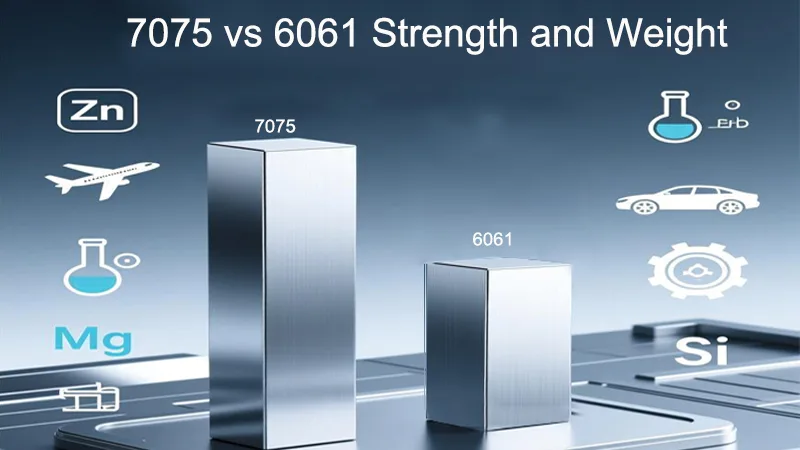
The Strength-to-Weight ratio is the primary metric for aerospace engineering.
6061: While lighter in density than steel, it requires thicker cross-sections to match the load-bearing capacity of 7075.
7075: Offers a ratio approximately 80% higher than 6061. This allows engineers to design thinner walls and lighter components without sacrificing safety.
Decision Metric: If your part is moving (dynamic mass) or flying, the premium for 7075 is justified by the energy savings. If the part is static (a machine base), 6061 is the logical choice.
Fatigue and Toughness
7075 is the king of fatigue resistance, capable of handling high-frequency vibrations in turbine engines and rotorcraft. However, it is less “tough” in terms of notch sensitivity—a small scratch can become a crack initiator more easily than in 6061. 6061 offers better fracture toughness in terms of ductility. In a crash scenario (like an automotive bumper), 6061 will absorb energy by bending; 7075 is more likely to fracture.
Corrosion and Durability
The environment dictates the lifespan.
- 6061: Contains Magnesium and Silicon, which do not promote rapid galvanic corrosion. It is suitable for “naked” use in many environments or with simple Type II anodizing.
- 7075: The Zinc and Copper content acts as a sacrificial anode in the wrong conditions. It must be protected. At AFI Parts, we rarely ship 7075 parts without Alodine (Chem-Film) or Anodizing protection.
Machinability and Weldability
Machining: 6061 removes material faster (higher Metal Removal Rates – MRR) but requires attention to surface finish quality due to BUE. 7075 requires more power and rigidity but delivers superior dimensional stability and surface finish.
Welding: If your design requires welding, 6061 is the answer. Attempting to arc weld 7075 will result in hot cracking and structural failure.
Cost and Availability
- Raw Material: 7075 typically commands a price premium of 200-300% over 6061 due to the complexity of its production and the cost of Zinc/Copper.
- Processing: While 7075 material is expensive, for complex precision parts, the machining cost might be lower because it deburrs easily and holds tolerances better, reducing scrap rates.
- Availability: 6061 is available in every conceivable form (sheet, plate, tube, angle, bar). 7075 is primarily available in plate and round bar stock.
Choosing Between Aluminum 6061 and 7075
Project Needs Checklist (DFM Evaluation)
Before finalizing your design, run your requirements through the AFI Parts DFM Checklist:
Strength Requirement: Do you need Yield Strength > 50 ksi?
- Yes: Go with 7075-T6.
Assembly Method: Will the parts be welded?
- Yes: 6061-T6 is mandatory.
Environment: Is the part exposed to saltwater or corrosive chemicals?
- Yes: 6061 is preferred. If 7075 is needed for strength, budget for Hard Anodizing.
Cosmetics: Do you need a consistent, bright color via anodizing?
- Yes: 6061 provides a more uniform cosmetic finish. 7075 can appear yellowish or inconsistent due to alloy elements.
Budget: Is this a mass-produced consumer item?
- Yes: 6061 will significantly lower BOM costs.
Decision Workflow
Use this logic flow to streamline your material selection:
| Decision Factor | Select 6061 If… | Select 7075 If… |
|---|---|---|
| Load Type | Static, structural loads | Dynamic, cyclic, high-impact loads |
| Geometry | Complex extrusions, welded frames | Precision machined billets, gears, and shafts |
| Environment | BWet, marine, outdoor architectural | Controlled environment, oil-submerged, or coated |
| Cost Sensitivity | High (Consumer goods) | Low (Performance is priority) |
Common Mistakes in Material Selection
1. Over-Engineering with 7075 Engineers often default to 7075 “just to be safe.” However, if the application is stiffness-driven (Young’s Modulus), 7075 and 6061 are nearly identical (~10,000 ksi). Using 7075 for a low-stress cover plate wastes money without adding rigidity.
2. Ignoring Residual Stress (The “Warping” Issue) Machining deep pockets in standard 7075-T6 plate often releases internal stresses, causing the part to warp or “potato chip.” AFI Solution: Always specify T651 or T7351 temper. The “51” indicates the material has been mechanically stretched to relieve these internal stresses before machining.
3. The Welding Trap: Attempting to fix a 7075 design mistake by welding it. This inevitably leads to micro-cracking. 7075 assemblies must be bolted, riveted, or bonded.
4. Neglecting Galvanic Corrosion: Bolting a 7075 part to a Stainless Steel chassis in a humid environment without isolation (washers/primers) will cause the aluminum to corrode rapidly.
Conclusion
The choice between 7075 and 6061 aluminum is a foundational decision that impacts the safety, cost, and longevity of your product.
- 7075 Aluminum: The elite athlete. Uncompromisingly strong, fatigue-resistant, and tailored for high-performance aerospace and defense applications where weight is the enemy.
- 6061 Aluminum: The dependable universal soldier. Corrosion-resistant, weldable, and versatile enough for everything from boat hulls to semiconductor manufacturing equipment.
At AFI Parts, we specialize in extracting the maximum potential from both alloys. Whether you require the extreme precision of 5-axis machined 7075 aerospace components or the high-volume production of 6061 industrial housings, our engineering team is ready to optimize your design for manufacturing.
Next Step: Do not leave your material selection to chance. Contact AFI Parts today for a comprehensive design review and quote. Let us help you choose the right alloy to ensure your project performs safely and efficiently.
FAQ
7075 is significantly stronger (almost double the tensile strength) and harder, designed for high-stress aerospace uses. 6061 is softer, more corrosion-resistant, and weldable, making it ideal for general construction and marine use.
Generally, no. Conventional arc welding (TIG/MIG) causes hot cracking and destroys the alloy’s mechanical properties. It should be joined using fasteners. 6061 is the correct choice for welded structures.
Yes. Its magnesium-silicon chemistry forms a stable oxide layer that resists corrosion in wet and salty environments, especially when anodized.
It contains expensive alloying elements like Zinc and Copper, and its production process (heat treatment and stress relief) is more energy-intensive. Additionally, it wears out CNC cutting tools faster, adding to the total manufacturing cost.
7075 aluminum can rust faster than 6061, especially in wet or salty places. Using a coating or anodizing helps stop rust and makes it last longer.
6061 aluminum is used for frames, car parts, bike frames, boat parts, and building pieces. It is easy to use and shape, so many people like it for lots of jobs.
Start with the AFI Parts DFM Rule: If it needs to fly or hold massive loads, use 7075. If it needs to be welded, exists in seawater, or fits a tight budget, use 6061. Always consult your manufacturer for availability and machining advice.