
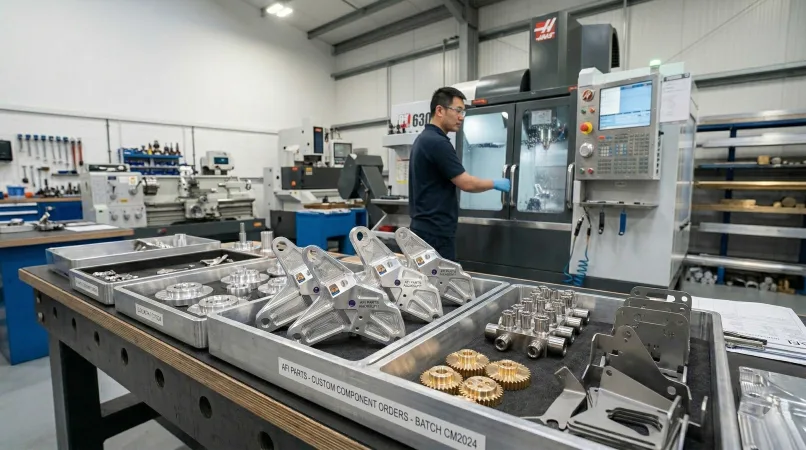
Industrial manufacturing needs things to be exact and dependable. In modern supply chains, if one part is wrong or late, the whole production line can stop, leading to catastrophic financial losses and delayed time-to-market. As a senior engineering team at AFI Parts, we have seen firsthand how selecting the right partner mitigates these risks.
Professionals often face these problems: Engineering drawings and specifications are sometimes unclear or misinterpreted by inexperienced shops. There are persistent problems with quality control for materials and finishes, leading to unpredictable batch consistency. Furthermore, suppliers can have issues with being reliable and communicating efficiently, while compliance paperwork can cause severe delays. It is not always clear how many parts get rejected or how defects are handled within the facility. People may not agree on how long things will take or how things should be done when project scopes shift.
Picking the right custom metal parts manufacturer helps you build a partnership that lasts, effectively eliminating these operational headaches. The senior engineering team at AFI Parts uses many years of experience in precision machining to help you with this critical selection process.
Key Takeaways
- Ask about what the manufacturer does best and see if they have proven experience in precision machining specific to your industry.
- Check if they have many past projects; this helps you know if they can realistically do your job under tight deadlines.
- Ask how they check for quality, as good systems help stop mistakes and make sure every part is made right.
- See if they can make just a few parts or many, because this flexibility helps save time.
- A scalable partner also lowers problems when making your parts; learn how they handle their supply chain.
- A good supply chain means parts come on time, and it also means the quality stays the same across multiple production runs.
- Talk about how they keep your ideas safe; strong NDAs and safe data handling protect your designs from intellectual property theft.
- Ask for inspection reports and certificates; these papers help you trust them and show the manufacturer cares about quality.
- Check how they talk with customers; a dedicated project manager can help your project go well and can fix problems fast.
- Find a manufacturer with experience in your industry; if they know aerospace or medical devices, your parts may be better and more reliable.
Table of Contents
Question 1: “What Are Your True Core Capabilities and tolerances? “
Having the right experience makes a custom metal parts manufacturer special. This means the team has fixed problems like yours before. It shows they can give you parts that meet your needs every time. A good portfolio lets you see what the manufacturer can do. You should look for things like Precision CNC machining services, custom metal fabrication, and tight tolerance metal machining. These examples show the company can do hard jobs. If you only see easy parts or nothing about custom metal stamping or custom metal casting manufacturers, that is not a good sign. It could mean the company does not have the right skills or machines for tough work.
Ask them to show proof of their past jobs; a good metal fabrication partner will give you comprehensive case studies or pictures of finished parts. They should have done high-volume metal manufacturing and low-volume CNC machining. If they do not want to share or cannot give details, you should be careful.
Always ask what metals and finishes they have used. A real expert will have worked with challenging alloys like aluminum, stainless steel, titanium, and brass. They should also offer custom metal surface finishing and sheet metal fabrication services. See if the manufacturer gives DFM (Design for Manufacturability) custom metal parts advice. This means the company helps you make your design better, so it costs less and has fewer problems. This shows they are a turnkey metal manufacturing partner who genuinely wants you to do well.
Use this checklist to check their experience:
- Do they have many finished projects?
- Can they show work in both rapid prototyping of metal parts and high-volume production?
- Do they talk about OEM metal fabrication or global metal parts supplier skills?
- Are they clear about their CNC machined parts inspection and Custom metal parts quality control steps?
- Do they offer Secure custom metal manufacturing and NDA custom machining for secret projects?
A custom metal parts manufacturer with real experience will answer these questions easily. They will help you stop expensive mistakes and give you the quality you want.
Why It Matters
Picking the right custom metal parts manufacturer is very important. You need more than just good machines for Precision CNC machining services. The team must have strong skills and good quality systems. They should have worked in areas like aerospace, medical devices, and defense. Tolerance limits show how close a part is to its design. Even small mistakes can make things not fit or cause safety problems. Good metal fabrication partners use special checks to make sure every part is right.
A good custom metal parts manufacturer helps early in the design. They give DFM custom metal parts advice and work directly with your engineers. Sharing CAD files lets them check for problems and make sure things can be made efficiently.
| Capability | Description | AFI Parts Methodology |
|---|---|---|
| Equipment capabilities | Machines that are more accurate than what the project needs | Utilization of top-tier 5-axis CNC centers with thermal compensation. |
| Quality systems maturity | Using checks and managing quality before problems happen | Predictive maintenance and real-time SPC (Statistical Process Control). |
| Technical expertise | Helping with materials, making parts, and measuring them | In-house metallurgists and senior machining engineers reviewing every CAD. |
| Industry experience | Success in making things for medical, aerospace, or defense | Decades of compliant manufacturing across highly regulated sectors. |
| Certification compliance | Following the rules and standards for the industry | Strict adherence to ISO frameworks and continuous internal auditing. |
Deep Dive Subtopics
Machine Fleet
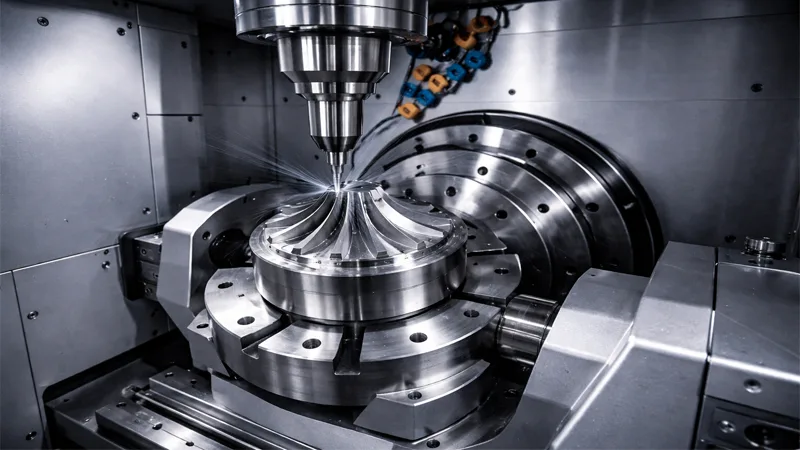
The CNC machines a company uses decide what they can make. Three-axis machines do simple shapes and holes. Four-axis machines can turn parts, so they can make more complex parts. Five-axis machines move in many ways and make very detailed parts. OEM metal fabrication jobs often need these machines. A good machine fleet helps with both quick samples and big orders.
Tolerance Realities
Tolerances are the small differences allowed between the plan and the finished part. Most standard parts use a tolerance of ±0.05 mm (±0.002″). Aerospace and medical parts need tighter tolerances, like ±0.025 mm (±0.001″) or even ±0.013 mm (±0.0005″). Tight tolerances help parts fit and work safely under extreme conditions. Custom metal stamping, custom metal casting manufacturers, and sheet metal fabrication services must know these rules inside and out. Checking CNC-machined parts and custom metal parts for quality control is needed to meet these goals.
Material Expertise
A good metal fabrication partner works with many metals. Aluminum 6061 and 7075 are strong and easy to shape. Stainless steel 304 and 316L do not rust and are used for food and medical applications. Titanium is light and strong, so it is incredibly good for planes. Brass is easy to shape and carries electricity. Custom metal surface finishing, heat treating, and NDA custom machining keep parts working well and protect ideas.
Expert Insight/Pro-Tip: How to Spot a Manufacturer Who Over-Promises on Tolerances
Some manufacturers say they can always make very tight tolerances. But only those with great machines, highly skilled workers, and strong quality checks can do this all the time. Watch out if they give unclear answers about their machines, do not have certifications, or only show easy parts in their portfolio.
Early choices in manufacturing may look safe, but can cause big problems later. Good teams see risks early and talk honestly about what they can really do. A turnkey metal manufacturing partner will always tell you what they can and cannot do. They care more about quality than saving money, and they give clear papers at each step. This way, secure custom metal manufacturing is possible, and trust grows for future work.
Question 2: “How Do You Enforce Quality Control and Traceability?”
Why It Matters
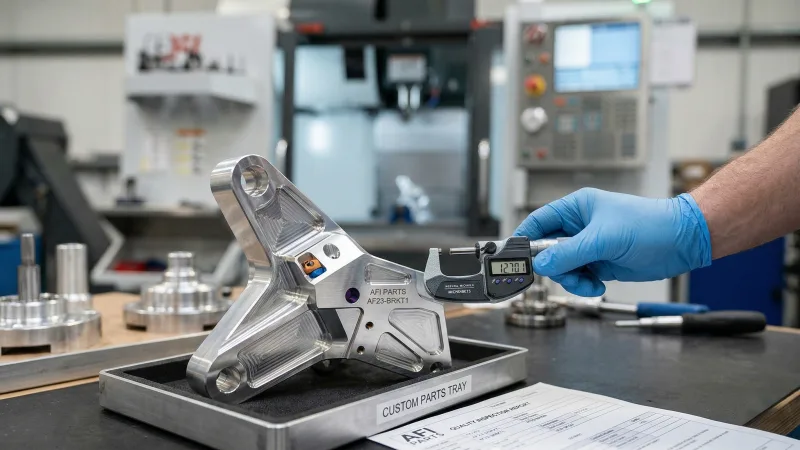
Quality control and traceability are very important for a custom metal parts manufacturer. If there are no strict systems, good designs can fail. Customers want every part to match the exact specs. This is extra important in aerospace, automotive, and medical devices. Traceability means you can track every material and step. This helps keep things safe and follow rules. It also helps with audits later. Strong quality control lowers the chance of defects and recalls. It also stops costly downtime.
Deep Dive Subtopics
Certifications
Certifications show a company cares about quality; ISO 9001:2015 is a common certification. It means the company follows strict quality rules, which include risk management and keeping processes steady. They also focus on making customers happy. Some industries need more specialized credentials, like AS9100 or IATF 16949, which require regular checks and tighter controls. Material certifications, like Type 3.1 or 3.2, prove metals meet high standards. Some top companies have ITAR certificates for defense jobs.
Inspection Equipment
Advanced inspection equipment helps check parts for precision. Leading companies use CMMs to measure complex shapes and tight tolerances. CMMs use probes to measure parts very accurately. Optical comparators and surface roughness testers find surface flaws. They also check if the finishes are correct. Some companies use 2D and 3D laser scanners for fast, comprehensive checks. X-ray inspection finds hidden flaws inside metal parts. It does not damage the parts. These tools help with first article and in-process inspections. They make sure every batch meets the standards.
Material Traceability
Traceability starts with raw material certificates (MTCs), which show that metals meet the specs needed. First Article Inspection (FAI) reports prove that the first part matches all design and quality needs. RoHS and REACH rules make sure materials are safe and good for the environment. Part Submission Warrants (PSW) sum up the whole process, confirming all customer needs are met. Capability studies (CpK) show the process can make parts reliably within the right tolerances over time. Always ask your custom metal parts manufacturer for detailed inspection reports and traceability papers to build trust and help stop problems later.
Checklist for the Reader: “5 QA Documents to Request Before Placing a PO.”
| Document Type | Purpose | AFI Parts Standard |
|---|---|---|
| Capability Studies (CpK) | Check if the process can make parts within tolerances. | We target a Cpk of >1.33 for critical dimensions. |
| Production Samples | Test if parts work, look good, and meet specs. | Provided with complete dimensional layout data. |
| Material Certifications | Make sure materials meet the standards and specs. | Full trace to original mill test reports (MTR). |
| Part Submission Warrant (PSW) | Sum up the process and confirm the product meets all needs. | Integrated deeply into our ERP system for transparency. |
| First Article Inspection (FAI) Report | Prove the first part meets all design and quality needs. | AS9102 formatted reports available upon request. |
A strong quality control system uses process control, visual checks, and advanced measuring tools. These steps make sure every part meets high standards, and they also help catch problems early.
Question 3: “Can You Seamlessly Scale from Prototyping to High-Volume Production?”
Why It Matters
Moving from one prototype to many parts is a big test for any custom metal parts manufacturer. Being able to go from checking a design to making lots of parts quickly saves time and lowers risk. Companies that are good at this use digital tools and new machines. These help keep data safe and make the process smooth. Rapid prototyping metal parts and low-volume CNC machining let teams try ideas and fix mistakes before making lots of parts. Low volume CNC machining helps make prototypes fast. Digital tools make scaling up easier and keep data safe. Multi-axis machining and fast cutting make complex parts cheaper and more accurate.
Deep Dive Subtopics
Rapid Prototyping
Speed is important when testing a new design. Top manufacturers use different methods to make working prototypes in just a few days. This quick work lets engineers check if parts fit and work before making many. Quick prototyping with CNC machined parts, inspection, and custom metal surface finishing finds problems early. This stops expensive changes later.
Technology Speed & Application Table
| Technology | Lead Time | Applications |
|---|---|---|
| CNC Machining | 1 to 3 days | Testing parts that need precision |
| CNC Tube Bending | 2 to 4 days | Making tubes for fluids or frames |
| Urethane Casting | 3 to 5 days | Models for looks or products |
| Rapid Injection Molding | 5 to 15 days | Checking parts for production use |
| Gear Manufacturing | 3 to 6 days | Making gears for machines |
| Sheet Metal Fabrication | 2 to 4 days | Making covers, brackets, and frames |
Design for Manufacturability (DFM)
A good metal fabrication partner will look at your CAD files and suggest ways to make them easier to build. DFM custom metal parts advice can mean changing tolerances, making features simpler, or picking better materials. These changes can make parts cheaper and faster to produce. Turnkey metal manufacturing teams often help with this.
Case Study (EEAT Element)
A global OEM metal fabrication client asked AFI Parts to make a tricky bracket. The original design needed tight tolerance metal machining and several complex finishing steps. AFI Parts’ engineers checked the design and suggested small changes to hole sizes and surfaces. By switching to sheet metal fabrication services and making the design better for high-volume metal manufacturing, the customer cut costs by 30%. The project also got better custom metal parts quality control and faster delivery.
Evaluating Material Options and Manufacturing Capabilities
Picking the right material and process is very important. Things like how many parts you need, how hard they are to make, and how easy it is to get materials all change cost and timing.
Key Factors Influencing Production:
- Order volume and complexity: Hard jobs need more setup and checks, so they cost more.
- Production model: Jobs with many changes take longer because of setup.
- Supply chain and seasonality: Materials may be harder to get at certain times, slowing delivery.
- Capacity and scale: Companies with lots of materials can deliver faster and cheaper.
- Process efficiency: Lean processes help finish jobs more quickly and cost less.
In-House vs Outsourced Production
| Approach | Pros | Cons |
|---|---|---|
| Contract Manufacturing (Outsourced) | Lower Overhead & Improved Profits; Greater Control; Technical Expertise. | Partner Reliability; Higher Long-Term Costs. |
| In-House Production | Gives more control and keeps NDA custom machining and secure custom metal manufacturing safe. | Demands massive capital investment in machinery and training. |
In-house production gives more control and keeps NDA custom machining and secure custom metal manufacturing safe. Outsourcing can save money, but may cause problems if the partner does not have enough experience or good quality checks.
Checklist for Material and Capability Fit
- Experience and Industry Knowledge: Check how long the company has been around and what they know.
- In-House Capabilities and Technology: Look for services like custom metal stamping, custom metal casting manufacturers, and finishing.
- Engineering and Design Support: Make sure they help with design and DFM.
- Quality Control and Certifications: Check for strong inspection and the quality control of custom metal parts.
- Scalability, Lead Time, and Communication: See if they can scale up and keep you updated.
A custom metal parts manufacturer with good prototyping, DFM, and scalable production will help you avoid mistakes and get reliable results.
Question 4: “What Is Your Approach to Supply Chain and Secondary Operations?”
Why It Matters
A strong supply chain helps a custom metal parts manufacturer do good work. If finishing or shipping is late, the whole project can get messed up. When a company handles these steps well, you get your parts on time. The quality stays the same, and there are no surprise costs. This matters a lot for jobs that need tight tolerance metal machining or rapid prototyping of metal parts. It is also important for high-volume metal manufacturing. A good supply chain keeps secure custom metal manufacturing and NDA custom machining safe. This protects your ideas and designs.
Deep Dive Subtopics
In-House vs. Outsourced Finishing
Finishing steps like anodizing, powder coating, passivation, heat treating, and bead blasting are very important. If a company does these in-house, you get some big benefits:
- All work is done together, so it costs less and is faster.
- One team checks quality, so results are steady.
- Fewer companies are involved, so there are fewer mistakes.
- Parts go from CNC machined parts inspection to custom metal surface finishing without problems.
If finishing is sent to other companies, there are risks:
- Quality Control Issues: Less checking can make the final product different.
- Lead Time Delays: More steps and shipping can slow things down.
- Potential Hidden Costs: Extra fees can surprise you and hurt your budget.
- Other problems can happen, too, like data leaks or someone copying your design. Sometimes, parts take longer, get lost, or need to be fixed at the last minute.
Supply Chain Resilience
A custom metal parts manufacturer needs to get raw materials on time. This is even harder when there are shortages around the world. Good metal fabrication partners use smart systems to handle both low-volume CNC machining and high-volume metal manufacturing. They use digital tools and online quotes to work with you quickly. These tools help orders go faster and make fewer mistakes. Cloud-based project management and workflow automation help track orders and keep things moving. Doing more steps together helps make parts faster and better. Fewer handoffs mean fewer mistakes or missed deadlines, and it is easier to make changes and see what is happening.
Global Logistics
Knowing how to ship parts around the world is important. Top OEM metal fabrication companies know about export packaging, customs, and shipping rules like FOB, CIF, and DDP. They send parts ready to use, whether you need sheet metal fabrication services, custom metal stamping, or custom metal casting. This skill is needed for global metal parts suppliers who work with customers in many countries.
Checklist for Clarifying Lead Time Expectations
Before you start, talk about these things with your custom metal parts manufacturer:
- What the project is for
- Drawings or 3D models
- What materials do you need
- How the part should work
- Tolerances and quality rules
- How many parts do you want
- When you need the parts
- How much can you spend
Tip: Always talk clearly and write things down. This stops confusion and keeps your project going well. Pick a turnkey metal manufacturing partner who gives updates and tells you what is happening at every milestone.
Question 5: “How Do You Handle IP Protection and Project Communication?”
Why It Matters
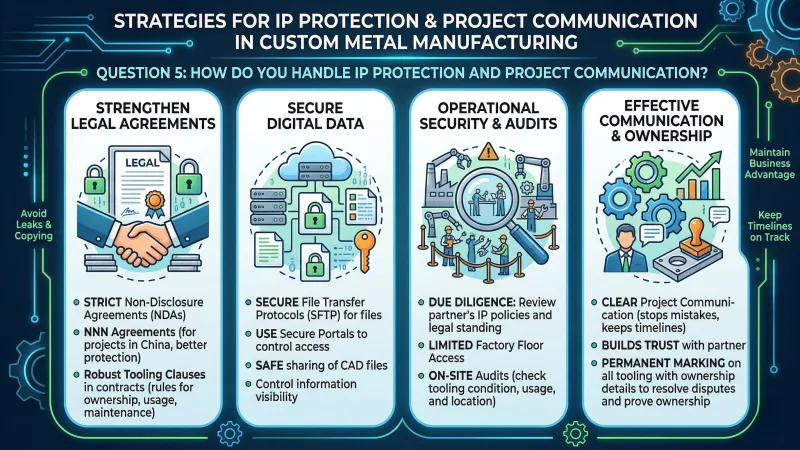
Intellectual property is very important for every engineering project. When you share CAD files or drawings, you trust your partner to keep your ideas safe. If your designs leak or get copied, your business can lose its advantage. Clear project communication helps stop mistakes and keeps timelines on track. It also builds trust between you and your manufacturer. A good custom metal parts manufacturer will protect your IP and keep you updated at every step of the journey.
Deep Dive Subtopics
Intellectual Property (IP)
Protecting IP starts with strict Non-Disclosure Agreements (NDAs). For projects in China, NNN agreements are better than regular NDAs. Secure file transfer protocols like SFTP keep your files safe when sending them. Using secure portals helps control who can see your information. Limiting factory floor access stops people from seeing or copying your designs.
Best ways to protect IP include:
- On-site audits: Check tooling condition, usage, and location often.
- Due diligence: Review your partner’s IP policies and legal standing before starting.
- Robust tooling clauses: Add clear rules in contracts about who owns, uses, and maintains tooling.
- Permanent marking: Mark all tooling with ownership details to help resolve disputes and prove ownership.
Always ask how your partner handles secure custom metal manufacturing and NDA custom machining; these steps show they care about your IP. Secure file transfer protocols (SFTP) protect sensitive data. NNN agreements give stronger protection than NDAs, especially in China, while secure portals stop unauthorized access to your CAD files.
Dedicated Project Management
Project communication works best with a dedicated technical manager. This person knows engineering language and can answer detailed questions, ensuring you avoid confusion that can happen with sales reps. A technical manager will update you on progress, handle changes, and solve problems quickly. This helps with DFM custom metal parts advice, tight tolerance metal machining, and Custom metal parts quality control.
Why References and Testimonials Matter
References and testimonials show how a manufacturer performs in real projects. They reveal strengths in engineering support, batch stability, and process control. You can check if the company has experience with Precision CNC machining services, custom metal fabrication, or high-volume metal manufacturing. Testimonials also show if the supplier can handle your batch sizes and meet your quality standards.
Tips for Evaluating References and Reputation
Look for feedback on CNC machined parts inspection, surface finish, and material expertise. Check if the company has worked with aluminium, steel, titanium, brass, or custom alloys. Visit the factory if possible to see quality control tools like CMMs and bore gauges in action.
Checklist for Verifying Reputation
- Who controls critical steps—in-house or subcontractors?
- Do they have buffer capacity for urgent orders?
- Are quality certifications current and active?
- Can they verify your specs with advanced inspection equipment?
- How do they handle non-conformance and prevent repeat issues?
- Who provides DFM and cost-reduction advice?
- How do they manage revision control?
- Who owns and maintains tooling?
- What costs are included in quotes?
- Can they adjust schedules for changes?
- Do they have long-term customers?
- Have they succeeded with similar projects?
A reliable metal fabrication partner will answer these questions honestly and show proof of their skills. Picking the right custom metal parts manufacturer gives you a real partner. The best teams work with your engineers and help with every step. They make sure your designs fit well in big systems and help parts stay strong in hard situations. They work easily with your engineering team, keeping parts strong and safe through meticulous design processes. Their support fits what your project needs; AFI Parts is known for being exact, honest, and able to grow with you.
Are you ready to start your next project with a trusted metal fabrication partner? You can send your CAD files and get a free DFM custom metal parts check and expert feedback in just 24 hours from our team at AFI Parts.
FAQ
Custom metal parts manufacturers help many industries. They work with aerospace, automotive, medical, electronics, and industrial equipment. They use Precision CNC machining services and custom metal fabrication. They also do tight tolerance metal machining for prototypes and production runs.
Look for CNC machined parts inspection and certifications for Custom metal parts quality control. Good metal fabrication partners will show you tolerance data. They will also give inspection reports from past projects.
Yes, they can. A turnkey metal manufacturing partner should scale up easily. They can go from rapid prototyping metal parts to high-volume metal manufacturing. Ask about their machine fleet and how they schedule production. Check if they have experience with both small and big batches.
You can get custom metal surface finishing and anodizing. They also offer powder coating and heat treating. Many suppliers offer sheet metal fabrication services. They provide custom metal stamping and custom metal casting services for full solutions.
DFM advice helps make your part design better. It makes production easier and cheaper. OEM metal fabrication experts look at your CAD files. They suggest changes to improve manufacturability and lower costs.